 Serving NC, SC, VA & GA — 26 Years of Experience, Comprehensive Maintenance Services, Multi-Location Support
 If you manage a commercial property in Wilmington, you already know the humidity is relentless. What's less obvious – until you're looking at rust stains on your brick facade or pitting in your parking lot concrete – is how much of that damage traces back not to rain or heat, but to salt.
Carolina Sweepers has maintained commercial properties across North Carolina and the Southeast for over 25 years. We work inland sites in Raleigh, coastal sites in Wilmington, and plenty in between. The difference is real, and it shows up in how fast surfaces degrade, how quickly mold takes hold, and how often a property needs professional cleaning to stay ahead of the decay.
This article is for property managers and HOA boards dealing with coastal conditions. We're going to explain what's actually happening to your building, where it shows up first, and how to structure a maintenance calendar that makes sense for Wilmington specifically – not for a generic commercial property in Charlotte or Greensboro.
Table of Contents
- What Salt Air Actually Does to Your Building
- Surface-by-Surface: Where the Damage Shows Up First
- Why Coastal NC Properties Need 2-3× More Frequent Cleaning
- Building an Annual Maintenance Schedule Around Wilmington's Seasons
- When to Bundle Pressure Washing With Other Services
- How Carolina Sweepers Approaches Coastal Properties
- FAQ
What Salt Air Actually Does to Your Building
Salt doesn't just drift in off the ocean and settle harmlessly on your roof. It's hygroscopic – it pulls moisture out of the air and holds it against whatever surface it's sitting on. That persistent moisture is what drives corrosion, and in a coastal environment, it's essentially happening around the clock.
Research consistently shows that salt spray can travel more than 50 miles inland from the coast. That means even if your property is several miles from the Cape Fear waterfront, your surfaces are still accumulating sodium chloride deposits from prevailing winds, storm systems, and the general coastal atmosphere. The closer you are to the water, the heavier the load – but no commercial property in the Wilmington metro escapes it entirely.
Here's how it plays out in practice: salt deposits land on a surface. They hold moisture. That moisture penetrates micro-cracks in concrete, stucco, and masonry. When the temperature shifts – even slightly – that trapped moisture expands and contracts. Over time, what started as hairline cracking becomes spalling, flaking, and structural compromise. On metal surfaces, the salt accelerates oxidation. On painted or coated surfaces, it undermines adhesion from underneath.
The other factor is biological. Salt-laden moisture creates the exact conditions that mold and algae love. Coastal properties don't just get dirty faster than inland sites – they grow things faster. A building facade in Wilmington can go from clean to visibly streaked with organic growth in a fraction of the time it would take the same building in Cary.
Surface-by-Surface: Where the Damage Shows Up First
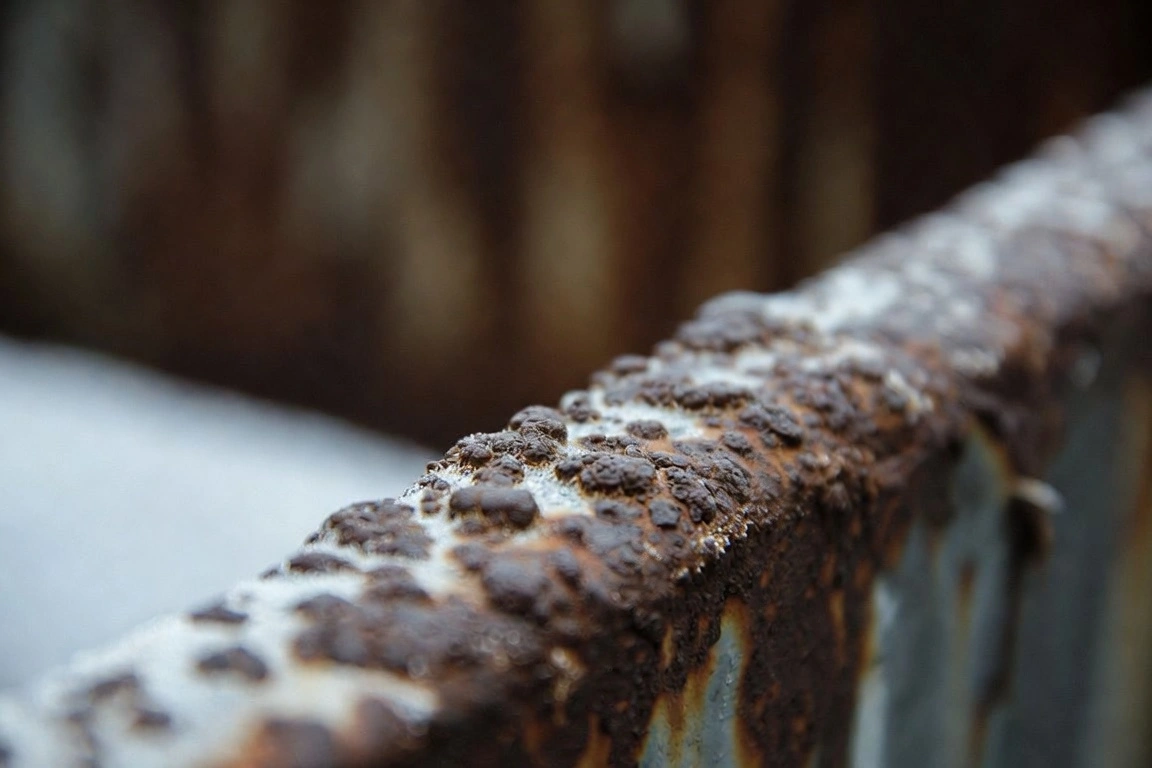
Different materials respond to salt air differently. Knowing which surfaces on your property are most vulnerable helps you prioritize.
- Concrete – parking lots, sidewalks, and aprons. Salt accelerates the freeze-thaw cycle damage in concrete, but in coastal NC the bigger issue is chloride-induced corrosion of the steel reinforcement inside. You won't see it until it's already happening – rust bleeds to the surface, concrete spalls away from the rebar, and what looked like a surface stain turns out to be a structural problem. Regular pressure washing removes surface salt deposits before they work inward.
- EIFS and stucco. Exterior insulation and finish systems are common on commercial buildings across Wilmington, and they're particularly vulnerable to moisture intrusion when coatings are compromised. Salt deposits on EIFS can degrade the surface finish, and the micro-fractures that result become pathways for water. Once water's behind the cladding, you're dealing with a remediation job, not a cleaning job.
- Brick and masonry. Brick is more durable than stucco, but the mortar joints are the weak point. Salt deposits combined with moisture cause efflorescence – that chalky white mineral residue you've probably seen on older masonry – and over time, erode the mortar. Left untreated, repointing becomes necessary. Caught early and cleaned properly, the brick stays tight.
- Metal – handrails, door frames, HVAC equipment, light fixtures. These corrode fastest. In a coastal environment, galvanized or powder-coated metal that would last 15-20 years inland might show significant corrosion in 5-7 years if it's not maintained. Regular cleaning removes the salt film before electrochemical corrosion gets traction.
- Roofing. This one gets overlooked. Salt deposits on roofing membranes, metal flashing, and gutters hold moisture and degrade protective coatings. For flat commercial roofs in particular, pooled water mixed with salt accelerates membrane breakdown. Carolina Sweepers offers a coastal roof maintenance program that accounts for exactly this – the combination of salt, organic growth, and storm debris that Wilmington roofs deal with year-round.
Why Coastal NC Properties Need 2-3× More Frequent Cleaning
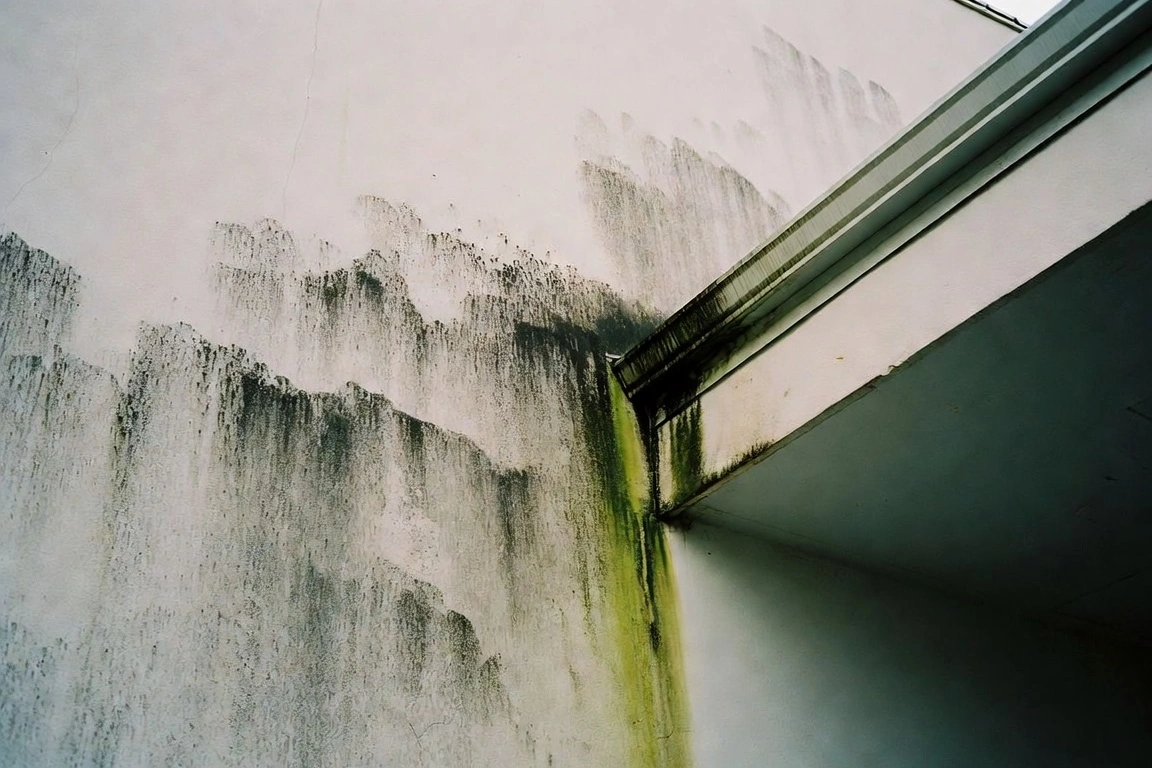
There's no universal answer, but the general rule our crews have observed across Wilmington-area properties is this: what needs annual cleaning inland needs cleaning two to three times per year on the coast. In some cases – waterfront commercial buildings, properties near the inlet, high-traffic retail with exposed concrete – quarterly makes sense.
The reason isn't just the salt. It's the combination. Salt deposits plus humidity plus warm temperatures plus organic load (pollen, algae spores, bird activity near the water) creates a compounding effect. Each factor makes the others worse. Mold spores that would struggle to establish themselves on a dry inland surface find ideal growing conditions on a salt-moistened coastal facade.
If your current pressure washing schedule is annual, you're almost certainly not keeping up. The damage doesn't announce itself dramatically – it accumulates quietly and shows up as a capital expenditure when it's too late to address it with a cleaning.
Building an Annual Maintenance Schedule Around Wilmington's Seasons
Wilmington's calendar has some specific pressure points that should shape your maintenance schedule.
- Late winter / early spring (February-March). This is when you want your first thorough pressure washing of the year. Winter salt accumulation – from both atmospheric deposition and any road salt that tracked onto your property during cold snaps – needs to come off before spring biological growth kicks in. Hit building facades, walkways, and any concrete surfaces.
- Post-pollen (May). The Carolinas have some of the heaviest pollen loads in the country, and it coats everything. Pollen that sits on surfaces mixed with moisture becomes a nutrient source for mold and algae. A targeted cleaning in May – after the worst of the oak and pine pollen has settled – keeps organic buildup from establishing.
- Post-hurricane season (October-November). This is the most critical window of the year for Wilmington commercial properties. After any named storm – and after the accumulated stress of the Atlantic hurricane season, which runs June through November – surfaces need a full assessment and cleaning. Storm surge and wind-driven rain carry concentrated salt deposits deep into porous materials. Debris that sits against building foundations and concrete after a storm holds moisture. The sooner you get it off, the less damage it does.
- Year-round monitoring. Between scheduled cleanings, keep an eye on areas where water pools, where organic growth streaks appear early, and where metal shows surface rust. These are the spots that need attention before the next scheduled service.
When to Bundle Pressure Washing With Other Services
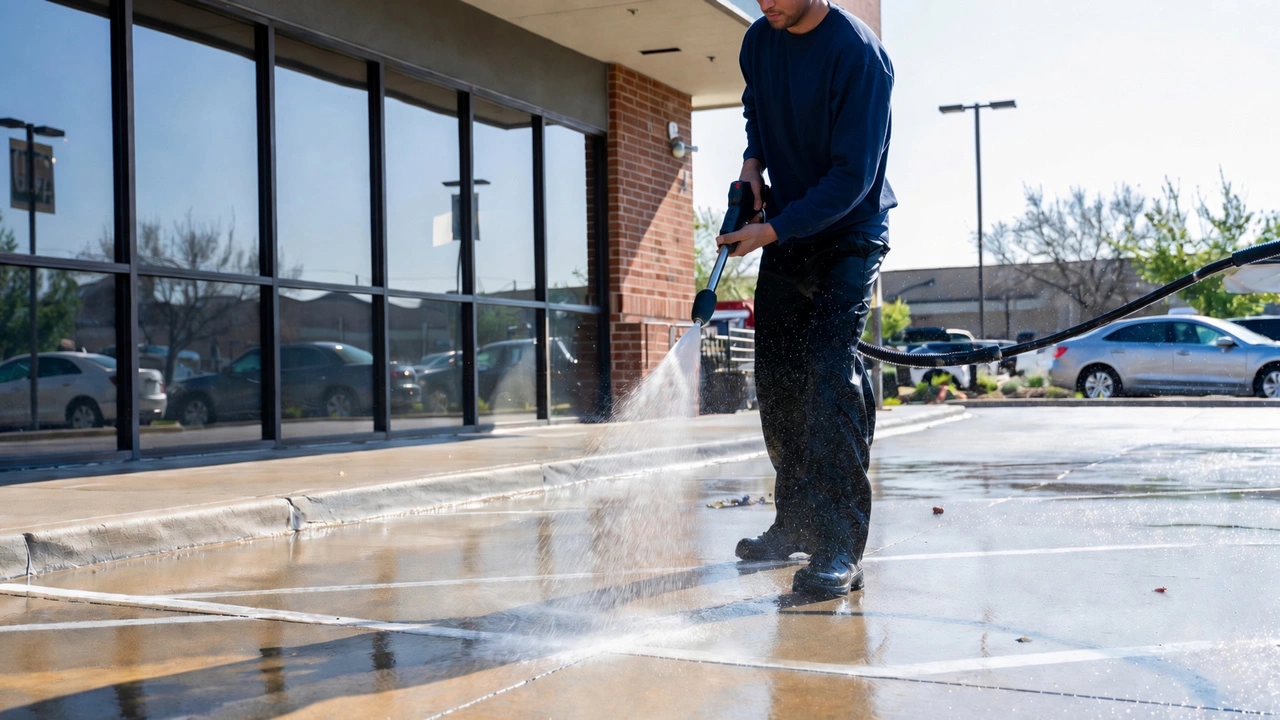
Here's an honest observation: the property managers who get the most out of their maintenance budgets in coastal environments aren't the ones who manage each service independently. They're the ones who think about their property as a system.
Salt air doesn't just damage your building facade. It damages your parking lot, your roof, and any metal infrastructure on the property simultaneously. Scheduling a pressure washing visit and ignoring the parking lot debris that's trapping moisture against your curbs – or the roof drainage that's backing up salt-laden water onto your parapet – means you're solving part of the problem.
Understanding how parking lot sweeping and pressure washing work together is worth reading if you're not already thinking about both in the same maintenance window. In short: regular sweeping removes the debris that holds moisture and salt against concrete surfaces; pressure washing removes what's already embedded. Each one makes the other more effective.
For coastal properties specifically, we recommend considering a bundled service that covers building exterior washing, parking lot sweeping, and a roof maintenance inspection at the same visit – at least twice per year. Carolina Sweepers offers bundled service programs that can reduce overall maintenance costs by up to 30% compared to managing separate vendors. More importantly, you're getting a single crew with a full picture of what's happening to the property.
How Carolina Sweepers Approaches Coastal Properties
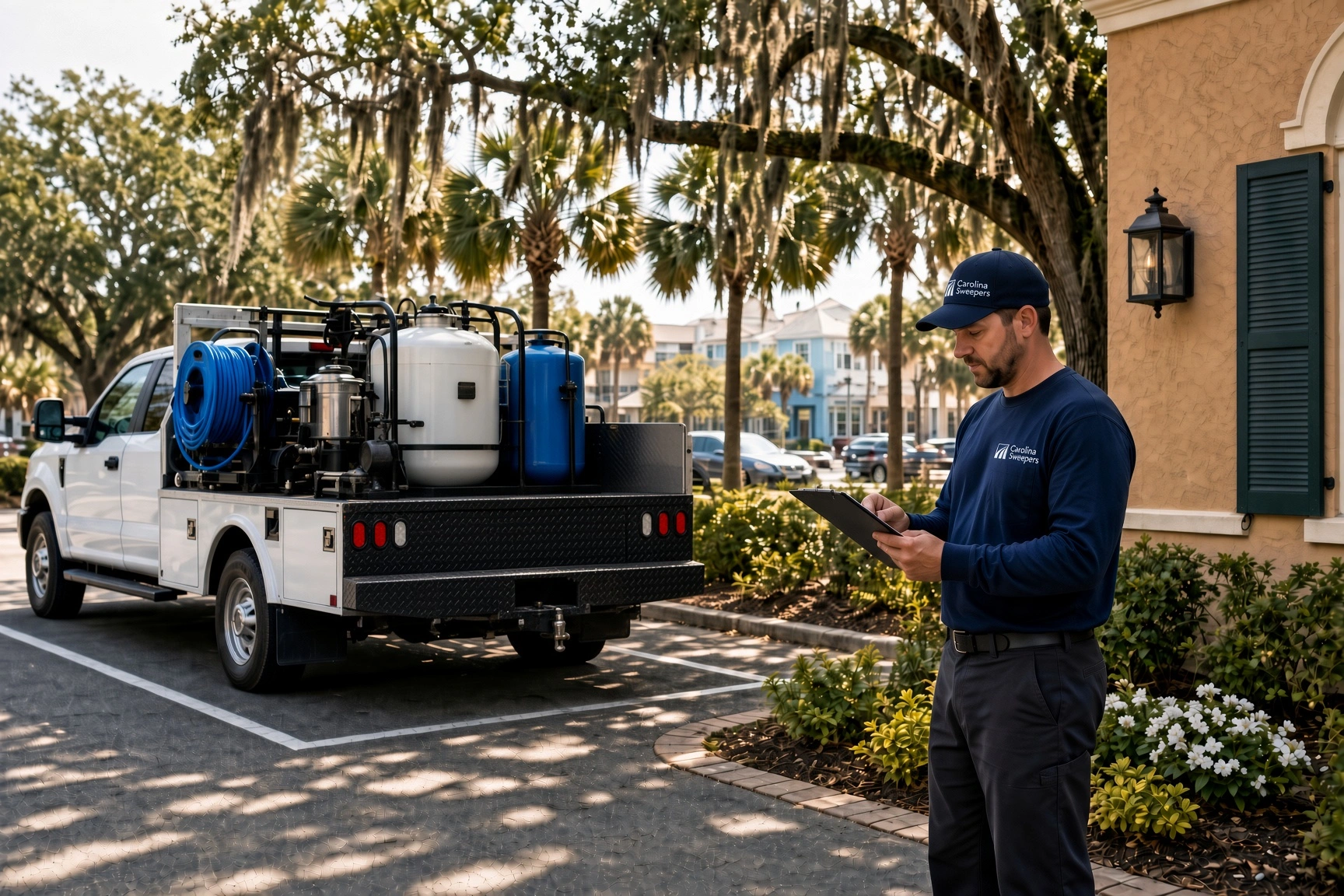
When Carolina Sweepers takes on a new property in Wilmington or the broader Cape Fear coast, the first step is a walk-through that's specific to coastal conditions – not a generic inspection checklist. We're looking at surface porosity, existing salt damage indicators, drainage patterns, and where organic growth is already establishing.
From there, we build a service schedule that reflects the actual conditions on your property. Not every building in Wilmington needs the same frequency. A newer construction with sealed concrete and intact cladding needs different treatment than a 1990s strip center with weathered brick and patched asphalt. We'll tell you what we see and what we recommend – including when the honest answer is that something needs repair rather than just cleaning.
Our crews at Carolina Sweepers run 100+ trucks across the Carolinas, Virginia, and Georgia, with 24/7 emergency response for post-storm situations. When a tropical system moves through Wilmington, we're not calling you two weeks later to schedule a follow-up. We're available when the need is immediate.
If you're managing a commercial property on the North Carolina coast and you're not sure whether your current maintenance schedule is keeping up with what salt air is doing to your surfaces, give us a call. We'll walk the property with you and give you a straight assessment.
Carolina Sweepers — (919) 481-9003. Available 24/7. Serving Wilmington and the Cape Fear coast.
FAQ
How Often Should a Coastal Commercial Property Be Pressure Washed?
Inland commercial properties typically need exterior cleaning once or twice a year. Coastal properties are different. Salt deposits accumulate on building facades, concrete, and metal surfaces year-round – not just after storms. In Wilmington and along the Cape Fear coast, we generally recommend pressure washing every three to four months for most building exteriors, with parking lots and sidewalks on a similar cadence depending on traffic volume and surface type.
If you're waiting until the mold streaks are visible from the street, you've already let the problem run longer than you should.
Does Salt Air Really Damage Parking Lots and Building Exteriors?
Yes – and it works faster than most property managers expect. Salt accelerates concrete surface deterioration, corrodes metal fixtures and expansion joints, and creates a film on EIFS, stucco, and brick that traps moisture against the surface. That trapped moisture is what feeds mold and algae growth.
Salt spray doesn't require oceanfront exposure to cause damage. Research indicates it can travel 50+ miles inland under the right wind conditions. Wilmington properties, even those several miles from the water, are in the zone.
What Surfaces Can Be Pressure Washed on a Commercial Property?
Most exterior surfaces respond well to commercial pressure washing when the right pressure settings and detergents are used for each material. Common surfaces include:
- Concrete – parking lots, sidewalks, loading docks, drive-throughs
- Brick and masonry – building facades, retaining walls
- EIFS and stucco – requires lower pressure and appropriate surfactants to avoid surface damage
- Metal panels and canopies – common on retail centers and gas stations
- Dumpster enclosures and service areas
What pressure washing won't fix is structural surface damage – spalling concrete, cracked stucco, or failing sealants. Those need repair before cleaning, not after. A good vendor will flag those issues during the walk-through.
How Does Coastal NC's Hurricane Season Affect My Cleaning Schedule?
Plan around it, not after it. The Atlantic hurricane season runs June through November, with peak activity in August and September. Post-storm cleaning needs – debris on building faces, mud and organic matter in parking areas, mold spike on shaded surfaces – can be significant and time-sensitive.
Carolina Sweepers offers 24/7 emergency response for exactly this reason. Building a post-storm cleaning scope into your annual maintenance agreement before June means you're not scrambling to find available equipment after a system moves through. Vendors with limited fleets book up fast after major weather events.
What Does Commercial Pressure Washing Cost in Wilmington?
Pricing varies based on surface area, surface type, soil load, and access. A straightforward building facade wash on a single-story retail space runs differently than a multi-story medical building or a large parking structure. Most commercial property managers can expect a per-square-foot range that reflects equipment type, labor, and detergent costs.
What we can tell you: bundling pressure washing with parking lot sweeping or concrete services under one contract typically reduces per-service cost – in some cases by up to 30%. One vendor managing multiple scopes eliminates the coordination overhead and usually produces better results than separate contractors working independently.
Can Pressure Washing Remove Mold and Algae from Building Exteriors?
In most cases, yes – with the right chemistry. Hot water combined with appropriate detergents breaks down the organic matter that holds mold and algae to a surface. Soft washing techniques (lower pressure, longer dwell time with a treatment solution) are often more effective than high-pressure blasting for mold on porous materials like stucco and brick, where high pressure can drive moisture into the substrate.
Recurring mold on the same surface after cleaning usually signals a drainage or moisture intrusion problem. Cleaning treats the symptom. If the issue keeps coming back in the same spot, it's worth looking at gutters, grading, or the surface itself.
Should I Bundle Pressure Washing with Other Property Services?
For most coastal commercial properties, yes – and here's why it matters beyond price. Salt air damage doesn't stop at the building wall. The same weather conditions that streak your facade are deteriorating your parking lot surface and collecting in your roof drainage system. Addressing each one in isolation means three separate vendors, three separate schedules, and nobody with a complete picture of your property's condition.
Carolina Sweepers handles pressure washing alongside parking lot sweeping, concrete repair, and a coastal roof maintenance program – all under one contract. Property managers who consolidate services through one vendor typically get faster response, more consistent quality, and a single point of contact when something needs attention. That matters after a storm more than any other time.
What Should I Look for in a Commercial Pressure Washing Vendor on the Coast?
A few things that matter more in a coastal market than they would elsewhere:
- Equipment availability – Vendors with limited trucks can't respond after a major weather event. Scale matters.
- Surface-specific experience – EIFS and stucco on coastal buildings require different handling than concrete. Ask if they've worked on your property type before.
- Chemical knowledge – Salt removal requires specific treatment protocols. Generic pressure washing without the right surfactants just moves the problem around.
- Communication – If a vendor finds surface damage during a wash, do they tell you? Or do they finish the job and move on? The answer to that question tells you a lot.
How Carolina Sweepers Handles Coastal Properties Differently
Carolina Sweepers has been maintaining commercial properties across NC, SC, VA, and GA since 2000 – 120,000+ completed projects, 1,000+ properties under ongoing maintenance agreements. The difference on coastal properties is preparation: we know what salt-accelerated surface wear looks like early, and we know how to build a cleaning schedule that stays ahead of it rather than reacting to it.
Our crews flag surface damage, drainage problems, and deferred maintenance issues when they're on-site – not because it generates extra work, but because property managers who know about a problem early have more options than those who find out late.
If you manage a commercial property in Wilmington or anywhere along the Cape Fear coast, we're happy to do a walk-through and give you an honest read on what your property needs. No guesswork pricing, no vague commitments.
Call Carolina Sweepers at (919) 481-9003 — 24/7. Or contact us via the website to learn more about commercial pressure washing services across North Carolina and how parking lot sweeping and pressure washing work together to protect your full property envelope.
No Comments yet!