 Serving NC, SC, VA & GA — 26 Years of Experience, Comprehensive Maintenance Services, Multi-Location Support
Here’s the short answer: sign your snow removal contract in September or October, before the first hard freeze. If you’re reading this in November and you still don’t have one, make the call this week, not the week a storm watch goes up.
That probably sounds conservative if you’re used to the mild winters Greensboro typically delivers. But Carolina Sweepers has been maintaining commercial properties across North Carolina since 2000, and we’ve seen how fast the calculus changes when a real winter event hits the Piedmont Triad. Dispatch slots fill. Equipment gets committed. Property managers who waited end up calling around for capacity that’s already spoken for, not because vendors don’t want the work, but because the routes are already full.
This article is for property managers who want to get ahead of that problem instead of inside it.
Table of Contents
- Greensboro Winters Don’t Give You Much Warning
- Why Pre-Season Contracts Actually Matter
- What Carolina Sweepers Recommends for Timing
- What a Commercial Snow Contract Should Actually Cover
- The Liability Question Property Managers Can’t Ignore
- Bundling Snow Services With Your Year-Round Maintenance
- Ready to Lock In Your Winter Coverage?
- Commercial Snow Removal FAQ: Greensboro, NC
Greensboro Winters Don’t Give You Much Warning
North Carolina sits in an awkward meteorological position. Winters here aren’t reliably brutal, but they’re not harmless either. Greensboro’s airport averages about seven and a half inches of snow a season, according to the State Climate Office of North Carolina, which sounds modest until you factor in the ice. The Piedmont Triad gets freezing rain events that can coat parking lots in a quarter-inch of ice with almost no lead time, and black ice can pass for wet pavement until someone steps on it.
Even when roads look clear, your lot may end up looking like a skating rink.
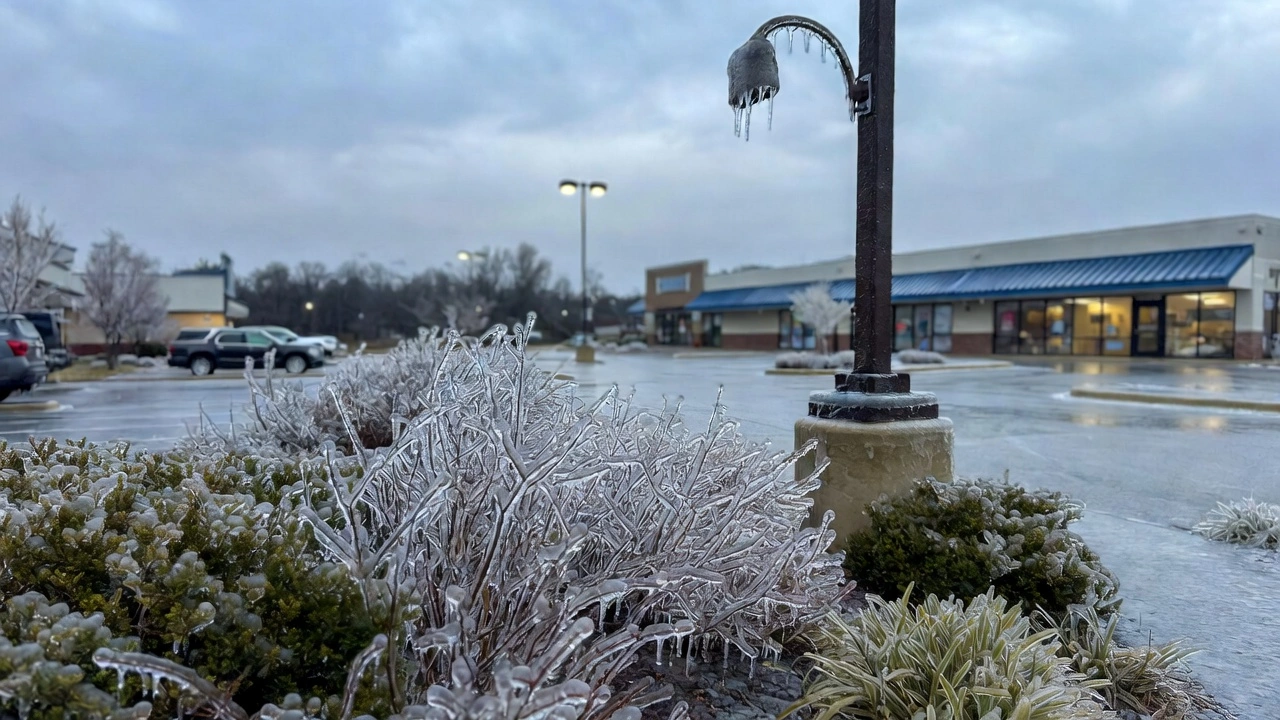
That variability is actually the harder management problem. When a city gets hammered every year, vendors and property managers both stay ready. In Greensboro, a slow winter or two can lull people into thinking they don’t really need a formal contract. Then a legitimate storm rolls through, or several arrive back-to-back, as they did in late January 2026 when the city was still clearing roads from one storm while preparing for the next. Everyone ends up scrambling at the same time.
It also helps to know where the public response stops. The City of Greensboro clears public streets by priority route, starting with major thoroughfares. Your parking lot, sidewalks, and entrances aren’t on that list; they’re yours to plan for. And the capacity still open mid-storm may not match what your property needs: a crew that knows your lot, carries pre-treatment equipment, and can be on-site at 4 a.m. before your tenants open.
Why Pre-Season Contracts Actually Matter
A pre-season snow removal contract isn’t mainly about price. It’s about securing your position in a dispatch queue that fills like any other finite resource.
Think of it like this: a commercial snow operation runs on trucks, equipment, and routes. Once those routes are committed, a vendor physically can’t take on more properties without degrading service to everyone. Well-run snow operations plan their capacity deliberately. When their routes are full, they’re full. New calls during an active storm become a problem they can’t solve, not an opportunity they’re passing up.
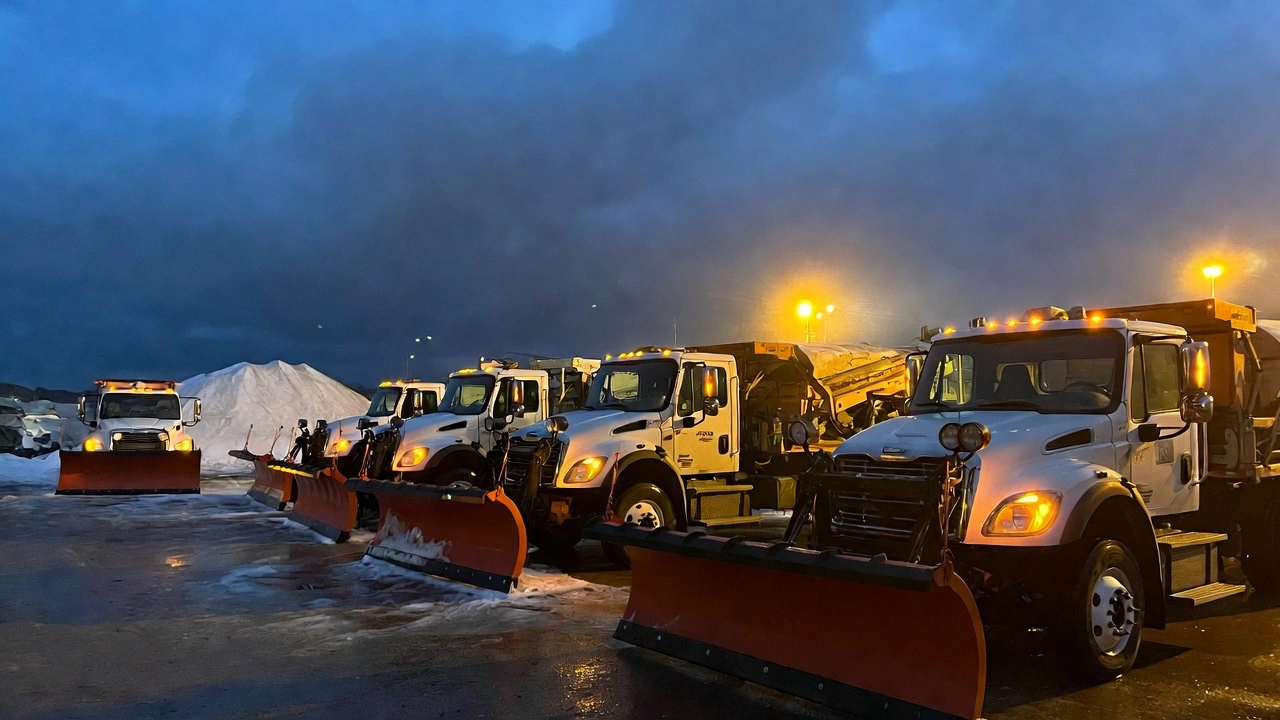
Pre-season contracts also give your vendor time to walk your property before there’s snow on it: to flag drainage problems, map accessible routes (businesses are required to keep accessible features in working condition), identify where ice tends to pool, and note the spots that need pre-treatment versus reactive response. That walkthrough is part of good commercial snow service. It doesn’t happen when you call at 11 p.m. during an active winter watch.
What Carolina Sweepers Recommends for Timing
The honest answer is that September is when we have the most flexibility to discuss contracts and walk properties without pressure. October is when most of our commercial contracts get finalized; it’s on our fall maintenance checklist for that reason. By November, especially if the extended forecasts are showing anything cold, the conversation is less about options and more about what’s still available.
That said, every property is different. A large multi-building HOA complex has different needs, and different lead time requirements, than a single-tenant retail strip center. If you manage a smaller property with straightforward lot access, you may have slightly more runway. But “more runway” doesn’t mean “wait until it snows.”
Our general guidance: if you’re a commercial property manager in Greensboro and you haven’t signed a snow contract by the end of October, start making calls now regardless of what the calendar says. Being proactive takes a conversation. Being reactive can mean a frozen lot, unhappy tenants, and a hazard you had no plan for.
What a Commercial Snow Contract Should Actually Cover
Not all snow contracts are written equally. Here’s what to look for, and what to ask about before you sign. (For a broader look at what a professional snow service looks like in practice, see our Raleigh guide.)
Trigger thresholds. A good contract specifies exactly when service begins. Is it at one inch of accumulation? Two? Some properties need aggressive early response (medical offices, grocery-anchored retail); others can wait until accumulation clears a practical threshold. Make sure the trigger matches your property’s actual needs, not a vendor’s default.
Pre-treatment and post-treatment. Pre-treating with liquid deicer before a storm arrives keeps ice from bonding to the pavement in the first place. Post-treatment after plowing handles refreeze, which is often when slip-and-fall incidents actually happen. Ask specifically whether your contract includes both.
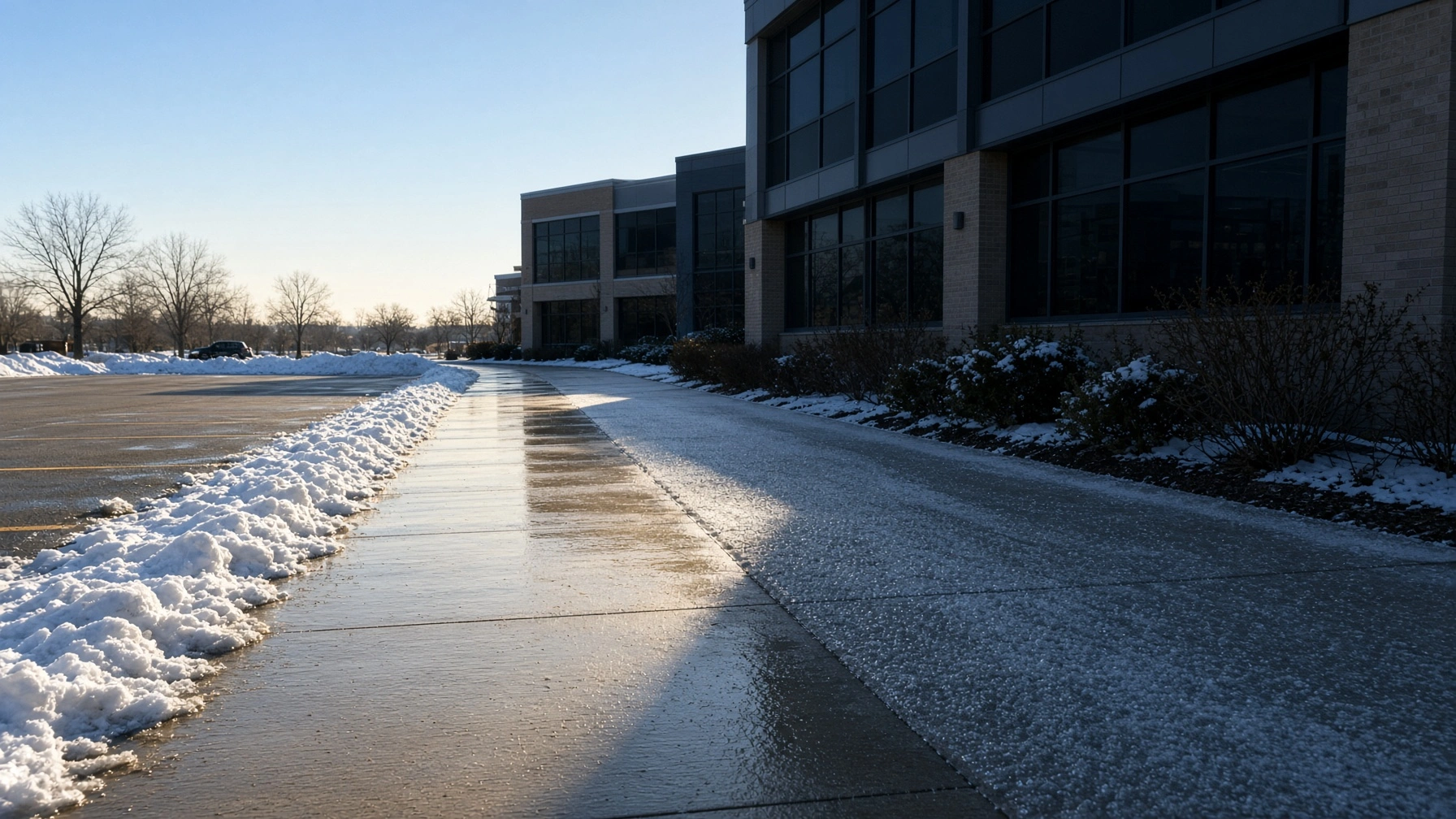
Response commitments. How quickly does a crew arrive after your trigger threshold is hit, and how is your property sequenced on the route? For high-traffic commercial properties, the gap between a two-hour and a six-hour arrival matters. Ask what response window the vendor commits to, and get it in writing.
24/7 dispatch. Storms don’t respect business hours. Make sure you’re contracting with a vendor who can actually respond at 2 a.m. on a Saturday, not just during the week.
Per-event vs. seasonal contract. A per-event agreement bills each time service is rendered. A seasonal contract covers the winter under one agreement and typically comes with priority dispatch. Ask your vendor to walk through both structures and how each one affects where your property sits in the queue.
The Liability Question Property Managers Can’t Ignore
If someone slips on ice at your property, what matters is how you can show you responded. Courts and insurers generally look at whether the property owner took reasonable steps to address the hazard, and waiting until a storm arrives to look for a vendor is hard to describe that way.
A documented pre-season contract with a credentialed commercial provider is evidence of due diligence. It shows you planned for the hazard before it existed, not after someone got hurt. That documentation matters if a claim is ever filed, and it matters to your insurance carrier. For specifics on your property, check with your attorney or carrier.
Greensboro’s pattern of ice events (quick, temperature-dependent, sometimes invisible until someone’s already down) makes this exposure real even in winters that feel mild overall. Don’t let an average season create false confidence.
Bundling Snow Services With Your Year-Round Maintenance
One angle worth considering: if you’re already working with Carolina Sweepers for parking lot sweeping, off-hours pressure washing, or other facility services, adding commercial snow plowing to your existing contract is the most efficient path. We already know your property. We’ve mapped the lot, we know the drainage quirks, we know where debris tends to collect after storms.
It also means one contract and one point of contact instead of several vendor relationships to coordinate before every storm. Here’s more on how bundling works for Greensboro properties.
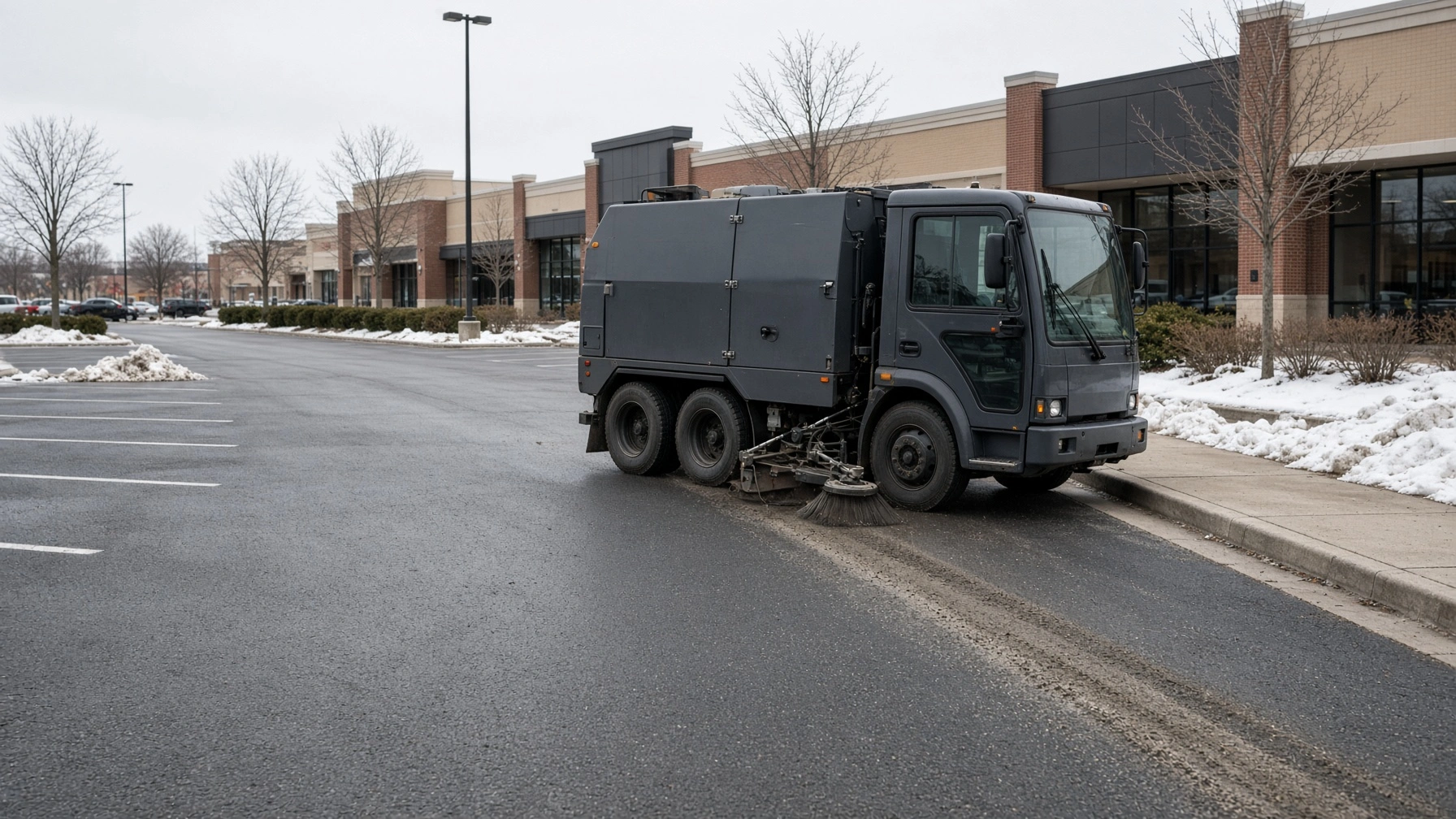
Commercial snow plowing pairs naturally with parking lot sweeping for a reason. After a storm, lots need both. Sand and deicing materials left on asphalt create their own debris problems. A crew that handles both services on a coordinated schedule, rather than two separate vendors working independently, keeps the lot cleaner and keeps your tenants from tracking grit through their storefronts.
You can learn more about winter property services on our seasonal landscaping and property services page.
Ready to Lock In Your Winter Coverage?
If you manage a commercial property in Greensboro and you’re reading this before your contract is signed, you’re in good shape, as long as you act now rather than bookmark this for later.
Carolina Sweepers serves commercial properties across North Carolina and the broader Southeast with a fleet of 100+ trucks and 26+ years of experience in exactly this kind of work. We’ve completed 120,000+ projects and maintained a 98% annual client retention rate. That’s not because we’re the flashiest name in the market. It’s because we show up when we say we will, we tell you what we found, and we don’t disappear when the weather gets difficult.
Pre-season snow removal contracts for Greensboro commercial properties are available now. Slots fill before the first storm; that part is just math, not a sales pitch.
Call us at (919) 481-9003, available 24/7, or request a walk-through online to learn more about pre-season snow plowing contracts for Greensboro properties.
Commercial Snow Removal FAQ: Greensboro, NC
Does Greensboro get enough snow to justify a commercial snow removal contract?
More than most people plan for. Greensboro averages roughly seven to eight inches of snow a season, but the real issue isn’t accumulation; it’s ice. The Piedmont’s temperature swings mean you’ll frequently deal with freezing rain, sleet, and refreeze events that are far more dangerous than a clean six-inch snowfall. A lot that looks clear at noon can be a sheet of black ice by 9 p.m. Properties that skipped a snow contract have called us mid-storm. We help when we can, but priority always goes to contracted clients.
What’s the typical snow season timeline for Greensboro?
December through February covers the core risk window, with late January and early February historically producing the most significant events. That said, ice storms have hit the Triad in November and as late as March. Pre-season contracts typically close before December; once routes fill, they fill.
What’s the difference between a seasonal contract and per-event service?
A seasonal contract covers all qualifying storm events within the contract period under one agreement. Per-event service means we’re dispatched and billed each time we mobilize. The bigger difference is priority: seasonal clients get guaranteed priority dispatch, while per-event clients are served after contracted properties are covered. For most commercial property managers, a seasonal contract is the lower-risk option. We’re happy to walk through both structures if you call.
What triggers a snow removal response?
That’s negotiable, and it matters. Carolina Sweepers works with clients to set accumulation thresholds, typically one, two, or three inches, before a response is triggered. Ice events are handled differently: pre-treatment and post-treatment protocols kick in based on forecast data, not just measured accumulation. If you manage a medical office, an assisted living facility, or high-foot-traffic retail, you probably want a lower trigger threshold than a light-industrial property with daytime-only hours.
Can I bundle snow removal with other services?
Yes. Property managers often pair snow plowing with parking lot sweeping and pressure washing, so one crew handles the lot through all four seasons. Route efficiency and equipment overlap make that easier to schedule, and it’s a lot less coordination on your end. Here’s more on how single-source maintenance works.
How fast will you respond when a storm hits?
Contracted clients are dispatched as accumulation reaches their trigger threshold. Carolina Sweepers runs 24/7 operations with 100+ trucks across our service area. We set response expectations in the contract based on your trigger and where your property falls in route sequencing; exact arrival times depend on the storm’s profile and timing. What we can guarantee: you’re on the route, and you’re not waiting behind a walk-in call.
Do you handle deicing, or just plowing?
Both. Plowing removes bulk accumulation; deicing treats the surface that’s left. We apply pre-treatment product before a storm when conditions allow, which reduces ice bonding and cuts the time needed for post-storm service. Post-storm deicing addresses residual ice, particularly in shaded areas and on ramps where refreeze is common. Getting both pieces right is what keeps slip-and-fall incidents off your incident log.
What areas and property types do you serve in Greensboro?
Retail centers, office parks, HOA common areas, apartment complexes, industrial facilities, medical campuses: if it’s a commercial property with pavement that people use, we service it. Our footprint covers Greensboro and the broader Triad, as well as properties across NC, SC, VA, and GA.
Who’s liable if someone slips on my property after a snow event?
In North Carolina, property owners bear the primary duty of care for maintaining safe premises. A documented snow removal contract with a qualified contractor, one that includes timestamps, service logs, and a signed scope, is a meaningful layer of protection when a claim arises. It won’t eliminate liability, but “we had a contracted professional on-site within threshold” is a much stronger position than “we were waiting to see if it stuck.”
Getting Started
Pre-season contract slots fill before the first forecast hits. If you’re managing a commercial property in Greensboro and you haven’t locked in snow service yet, now’s the time to have the conversation, not in January. Carolina Sweepers: (919) 481-9003, available 24/7. We’ll do a walk-through, talk through trigger thresholds and contract options, and get you on the route before winter arrives.
No Comments yet!