 Serving NC, SC, VA & GA — 26 Years of Experience, Comprehensive Maintenance Services, Multi-Location Support
Charlotte gets maybe two or three real winter events a year. Sometimes fewer. And that’s exactly the problem.
When a city gets hammered with snow every winter, the infrastructure adjusts – the roads get pre-treated, the contractors stay on standby, drivers learn to respect a slick road. Charlotte doesn’t work that way. One inch of ice can shut down the entire metro. Schools close. Roads go untreated for hours. And your retail tenants, your office park, your HOA common areas – they’re sitting there at 5:30 AM with residents and employees trying to navigate a parking lot that nobody thought to treat.
Carolina Sweepers has been managing commercial properties across the Carolinas since 2000, and the winter calls we get from Charlotte property managers are always the same: “I didn’t think it would be this bad.”
It’s not a failure of judgment. It’s a mismatch between how Charlotte experiences winter and how commercial properties need to respond to it. This article is for property managers who want to get ahead of that gap – before the weather app starts showing snowflake icons.
Table of Contents
- Why Charlotte Snow Events Hit Harder Than Northern Storms
- The Snow Trigger: Your First Line of Defense
- Liability Starts in the Parking Lot
- How Carolina Sweepers Handles Same-Night Winter Response
- Bundling Snow Removal With Your Existing Services
- What to Have Ready Before the First Freeze
- Keep Your Property Open – Get a Plan in Place Now
- FAQs
Why Charlotte Snow Events Hit Harder Than Northern Storms
A property manager in Cleveland sees a 4-inch snowfall and knows exactly what happens next: crews are staged, salt is pre-positioned, the lot is clear before first shift. The system is built around regular winter events.
Charlotte sees that same 4-inch event once every few years, and the city essentially has to improvise. NCDOT has a fraction of the pre-treatment resources that northern DOTs maintain. Local contractors who offer snow removal often do it as a side service – landscapers picking up winter work, not dedicated operators with staged equipment. When an event hits at 11 PM on a Tuesday, those part-time crews are hard to reach.
The property types most at risk aren’t the ones you’d guess. It’s not the massive distribution centers or the office towers with facilities teams. It’s the mid-size retail centers, the medical office parks, the apartment community common areas, and the strip mall anchors where tenants have lease agreements and foot traffic that can’t simply pause for a weather event. A grocery store anchor tenant who can’t open because the parking lot is a sheet of ice is a problem. A physical therapy clinic whose patients can’t walk from the car to the door is a liability.
Charlotte’s infrequent winter events create a false sense of security. And then an ice storm closes everything for three days and the post-mortem questions start: Why didn’t we have a contract? Why wasn’t someone out here overnight?
The Snow Trigger: Your First Line of Defense
If you’re going to have a real winter response plan, it starts with a single decision: what’s your trigger?
A snow trigger is the threshold – typically a measurable accumulation or forecast probability – at which your snow removal vendor automatically mobilizes. No phone call from you required. No waiting to see how bad it gets. The moment conditions hit that threshold, crews are dispatched and your property is in the queue.
Most commercial contracts use a 1-inch trigger. That means the moment accumulation reaches one inch – or a credible forecast projects it will – the vendor activates. For Charlotte properties, a 1-inch trigger makes sense given how quickly a light event can turn roads into ice rinks. Some medical facilities and high-traffic retail properties set a half-inch trigger.
Here’s what a trigger-based contract actually protects you from: the 2 AM decision. Without a trigger in your contract, someone has to watch the weather, make a call, and reach a vendor at midnight. That chain has failure points at every link – the vendor might already be committed to other properties, your facilities contact might not be reachable, or the event escalates faster than anyone anticipated.
When you review a snow removal contract, look for these specifics:
- The trigger threshold – stated in inches, not vague language like “significant accumulation”
- Mobilization window – how quickly after trigger is met do crews arrive?
- Re-service intervals – if the event continues overnight, how often does the contractor return?
- De-icing and salting scope – is this separate, or included?
- Priority queue language – where does your property sit if the contractor has multiple clients?
That last point matters more in Charlotte than most markets. Because snow removal contractors here don’t maintain deep bench capacity year-round the way northern operators do, an unexpected event can overwhelm a small local vendor. Make sure you know your vendor’s total fleet size before you sign.
Liability Starts in the Parking Lot

This isn’t a lecture – you already know slip-and-fall incidents are serious. But the liability framing that property managers sometimes miss is documentation.
It’s not enough to have someone show up and clear the lot. If a tenant’s customer slips at 7 AM after your vendor supposedly treated the property at 4 AM, the question becomes: what was applied, where, and when? Without service logs, that’s a conversation you don’t want to have.
Any credible commercial snow removal contract should include:
- Time-stamped service records for each visit
- Material logs – pounds of salt or de-icer applied per application
- Photo documentation before and after service
Some vendors consider this optional. It isn’t. Your property insurance carrier may ask for it. Your tenants will certainly ask for it if there’s an incident.
Ice is the specific hazard that Charlotte winter events produce more reliably than snow. A freezing rain event can leave parking lot surfaces and walkways with a nearly invisible glaze – black ice – that a crew salting at 2 AM can miss if they’re not treating the right surfaces. Make sure your contract specifies walkways, drive aisles, and any transition points between paved and unpaved areas. Handicap-accessible routes are non-negotiable.
How Carolina Sweepers Handles Same-Night Winter Response
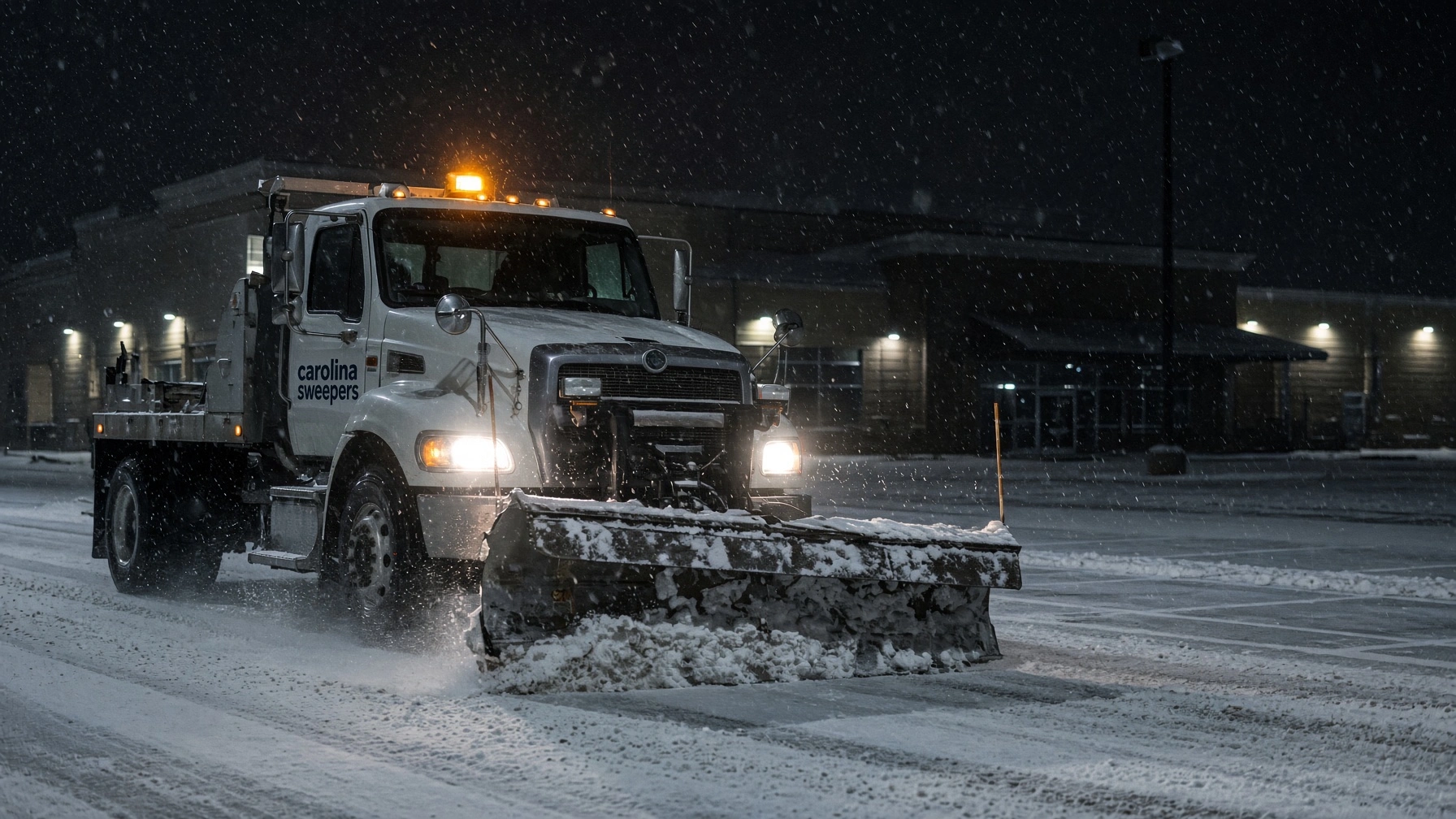
When Carolina Sweepers takes on a Charlotte property for winter service, the conversation starts with a walk-through. We want to see the lot before any weather happens – the drainage points, the slopes, the entry/exit transitions, any areas that tend to hold water. That walk-through informs where crews focus first and what material volumes we pre-stage.
Our fleet of 100+ trucks isn’t a marketing number. It’s the operational reason we can commit to same-night response across multiple Charlotte properties simultaneously. When a winter event hits the Triangle or the Charlotte metro at the same time – which happens – we’re not choosing between clients. We have the capacity to run concurrent routes.
The calls we get from property managers who’ve been burned by no-shows during winter events usually share a common detail: their previous vendor was a smaller operation taking on more properties than their equipment could handle. One event, and the wheels come off. Tenants are calling, the lot’s not clear, and the vendor’s phone goes to voicemail.
Property managers who work with Carolina Sweepers know to expect a call or update if conditions change during an active event – not silence until morning.
Bundling Snow Removal With Your Existing Services
Here’s the practical angle that a lot of Charlotte property managers overlook: if you’re already contracting parking lot sweeping or pressure washing through a facility services provider, adding snow removal to the same contract isn’t just convenient. It’s cheaper.
Carolina Sweepers offers bundled service packages that can reduce your total facility maintenance cost by up to 30%. The logic is straightforward – one contractor who knows your property, one point of contact, one invoice. When the same crew that sweeps your lot on Thursday nights is the crew that responds to a winter event at 2 AM, they already know where the storm drains are, they know the flow of the parking field, and they know your priority areas.
The spring transition also gets easier. A late February ice event followed by a March pressure washing service to clear salt residue and winter debris – that coordination happens automatically when it’s a single contract, not two vendors trying to hand off.
For properties already on a year-round seasonal maintenance agreement, winter response is a natural extension of what’s already in place. If you’re not sure whether your current sweeping or landscaping contract has room for that scope, it’s worth a conversation before December.
What to Have Ready Before the First Freeze
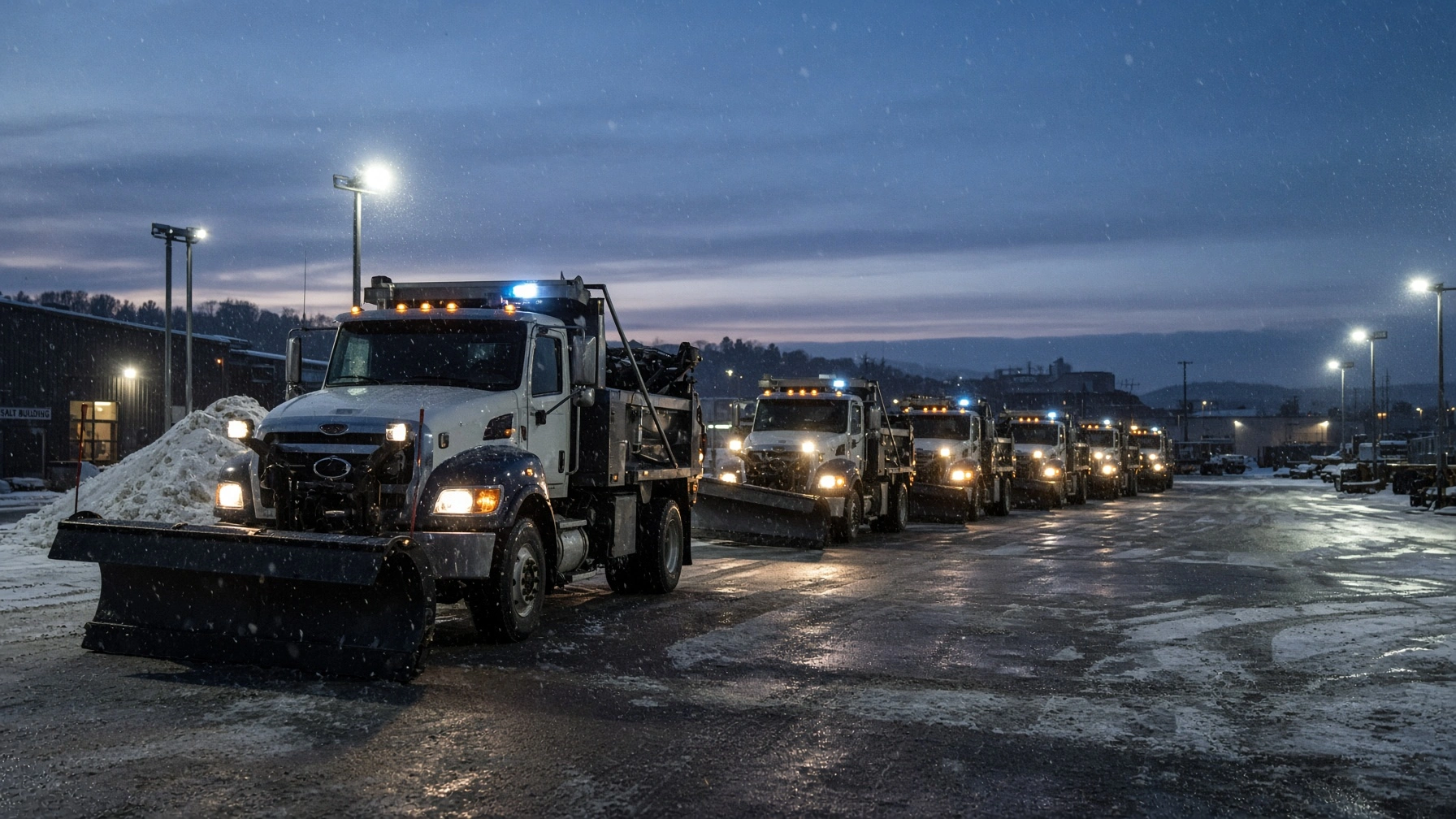
Charlotte’s first real winter event can arrive anywhere from mid-November to late January — and it almost always comes with less warning than anyone wants. Here’s a short checklist for what property managers should have confirmed before the cold sets in:
- Signed contract with trigger thresholds defined – verbal agreements don’t hold up at 3 AM.
- Vendor’s emergency contact number – not the main office line, the after-hours dispatch.
- Tenant communication template – a pre-drafted message you can send when a weather event is incoming, so tenants know the plan.
- Insurance certificate from your vendor – make sure it covers the scope of work on your property.
- Salt/de-icer inventory confirmed – ask your vendor what they pre-stage for your property specifically.
That last one is relevant in Charlotte because supply chains for ice melt products can tighten fast when an unexpected regional event hits multiple markets at once. A vendor who pre-stages material for your specific property is better positioned than one who sources reactively.
Keep Your Property Open – Get a Plan in Place Now
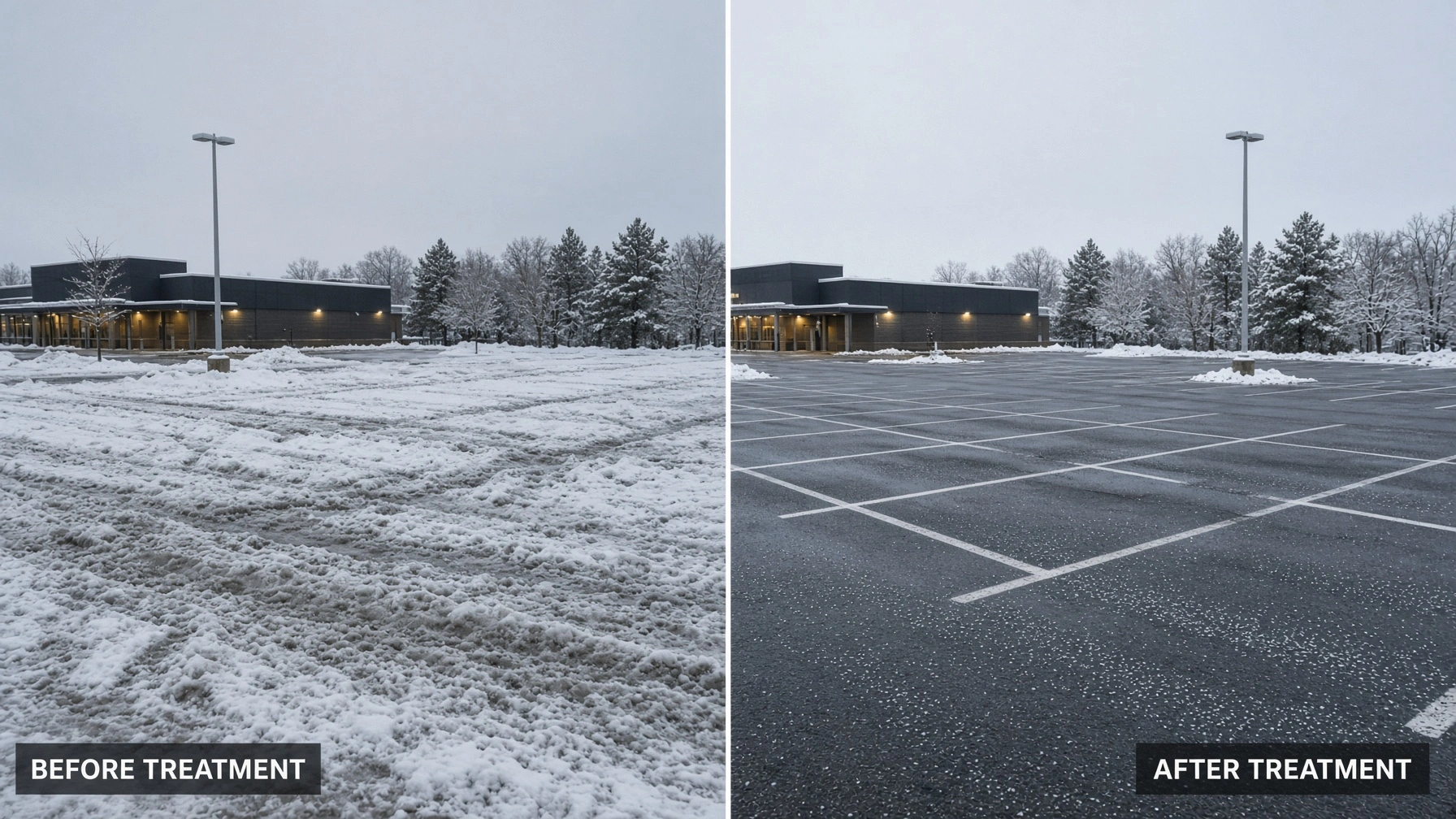
Winter in Charlotte is unpredictable by nature. The preparation doesn’t have to be.
A clear contract, a defined trigger, a vendor with actual equipment capacity, and a documentation process – that’s what keeps your property open when the rest of the city shuts down. It’s not complicated, but it does require getting it in writing before the first forecast shows up on your weather app.
Carolina Sweepers serves commercial properties across Charlotte and the broader Carolinas. We offer winter service as part of bundled facility agreements or as a standalone contract, depending on your property’s needs. Either way, the conversation starts with a free walk-through.
Call us at (919) 481-9003 – we’re available 24/7, year-round. Because when ice forms at midnight, that’s exactly when you need someone to pick up.
Charlotte Commercial Snow Removal: Your Questions Answered
How Quickly Can a Snow Plow Reach My Charlotte Parking Lot?
Response time depends on what’s in your contract, but our standard commitment for active service agreements is same-night dispatch when conditions meet your trigger threshold. We run 100+ trucks across our fleet and staff 24/7 emergency response – so when a storm rolls in at midnight, you’re not waiting until morning to hear from someone.
Properties without a pre-season contract go into a secondary queue. That’s not a scare tactic – it’s just logistics. Demand during a Charlotte ice event spikes fast, and contracted properties get priority routing.
Do I Need a Contract for Commercial Snow Removal?
For most commercial properties, yes – and here’s why it matters more in Charlotte than in northern markets. Snow events here are infrequent enough that some managers think they can call around when a storm hits. The problem is everyone else is calling at the same time. A seasonal contract locks in your response window, your pricing, and your place in the dispatch rotation before the first flake falls.
When Carolina Sweepers takes on a new property, we review the site layout before winter – entry points, drainage patterns, where ice tends to pool, where pedestrian traffic is heaviest. That walk-through makes same-night response faster and more effective.
What Is a Snow Trigger — and How Do I Set One?
A snow trigger is the accumulation or temperature threshold that automatically activates service – no phone call required from you. A common commercial trigger is one inch of snowfall or temperatures below 32°F with precipitation forecast. When conditions hit your threshold, crews dispatch.
You set the trigger based on your property’s tolerance. A medical office building with early patient arrivals needs a lower trigger than a warehouse with a 9 AM shift. We’ll help you think through what makes sense for your specific site during the contract setup conversation.
Does Carolina Sweepers Handle Ice and De-Icing, or Just Plowing?
Both. Plowing moves the snow – de-icing is what keeps your lot and walkways from becoming a liability after the plow leaves. Our winter response scope includes plowing, salting, de-icing treatment, and haul-off when accumulation warrants it. Pre-treatment (applying product before a storm hits) is also available and often more effective than reactive salting after ice has bonded to pavement.
Ice-only events – where there’s no plowable snow but the surface is glazed – are actually one of Charlotte’s most common winter scenarios. We handle those too.
Can I Bundle Snow Removal With My Existing Parking Lot Sweeping?
Yes, and this is one of the better ways to structure your facility care budget. Clients who bundle snow removal with parking lot sweeping and pressure washing through Carolina Sweepers typically see up to 30% in savings compared to managing those services with separate vendors. There’s also a practical benefit: one account manager who knows your property, one call when something goes wrong, one invoice.
If you’re already on a sweeping schedule with us, adding winter response is a straightforward conversation – not starting from scratch.
What Property Types Do You Serve in Charlotte?
Retail centers, office parks, HOAs, industrial properties, medical campuses, and mixed-use developments. The approach varies by property type. A retail strip center needs clear entry lanes and customer-facing areas prioritized. An HOA needs roads and common area walkways addressed before residents leave for work. Industrial sites often need loading dock access cleared on a specific timeline tied to shift changes.
We serve 1,000+ properties across NC, SC, VA, and GA – Charlotte is one of our active markets, not a secondary one.
What Happens If It Snows During Business Hours?
Mid-day events happen. When they do, the contract trigger still applies – if conditions hit your threshold, crews are dispatched regardless of the hour. For active shopping centers or properties with continuous foot traffic, we can structure service intervals into your agreement so that accumulation doesn’t get ahead of you during a storm that runs through the day.
How Is Pricing Structured for Commercial Snow Removal?
Most commercial contracts are structured one of two ways: per-event pricing (a set rate each time we respond to your trigger) or seasonal flat-rate pricing (a fixed cost regardless of how many events occur). Which is better for your property depends on your risk tolerance and Charlotte’s unpredictable storm frequency.
We’re direct about pricing. You’ll know what triggers a dispatch and what it costs before you sign anything.
What If We Only Get Ice – No Actual Snow?
Ice-only events are covered under our winter response agreements. Charlotte sees more of these than true snowstorms – a night of freezing rain with no accumulation can still make your lot impassable by morning. Pre-treatment is especially effective for these scenarios. If your forecast shows overnight temperatures dropping below freezing with any precipitation, that’s worth a conversation about your trigger settings.
How Far in Advance Do I Need to Set Up Service?
Before the first cold snap of the season – ideally September or October for Charlotte properties. That gives us time to do a site walk-through, finalize your trigger settings, and make sure your property is in the dispatch system before demand picks up. Contracts signed after a storm is already in the forecast aren’t always something we can accommodate at the contracted rate.
Ready to Set Up Winter Coverage for Your Charlotte Property?
Carolina Sweepers provides commercial snow removal, de-icing, and full winter response for Charlotte-area properties – same-night dispatch, 24/7 availability, and the option to bundle with parking lot sweeping and pressure washing for single-source facility care.
Call us at (919) 481-9003 to schedule a free walk-through before winter. We’ll look at your property, talk through your trigger thresholds, and put together a contract that fits how your tenants actually use the space.
No Comments yet!