 Serving NC, SC, VA & GA — 26 Years of Experience, Comprehensive Maintenance Services, Multi-Location Support
Table of Contents
- Why the Removal Method Matters More Than You Think
- How Pressure Washing Works on Graffiti — and Where It Falls Short
- When Chemical Cleaning Is the Right Call
- Surface-by-Surface Breakdown: Which Method Fits Which Material
- The Combined Method: Hot Water + Chemistry
- How Carolina Sweepers Handles Commercial Graffiti Removal
- Environmental Compliance in NC and SC — What Property Managers Should Know
- Speed Matters: Why Rapid Response Changes the Outcome
- Graffiti Removal FAQ: What Commercial Property Managers Need to Know
- Get Graffiti Off Your Property — Without Making It Worse
Why the Removal Method Matters More Than You Think
Graffiti shows up on a Monday morning. Your tenants see it. Their customers see it. You need it gone — fast, cleanly, and without leaving a ghost of it behind on the wall.
Here’s where most property managers get into trouble: they assume pressure washing is the default answer. Call a crew, point a pressure washer at it, done. Sometimes that’s exactly right. But applied to the wrong surface or with the wrong chemistry, pressure washing can drive paint deeper into porous materials, etch soft stone, or strip texture coatings off EIFS — turning a graffiti problem into a repair bill.
The right removal method depends on the surface, the paint type, and how long the graffiti has been sitting there. This article breaks down both approaches, surface by surface, so you can have an informed conversation with your vendor and know what to expect before the crew shows up.
Carolina Sweepers has handled commercial graffiti removal across retail centers, HOA common areas, and multi-tenant buildings throughout the Carolinas for 25 years. What follows reflects that field experience — not manufacturer marketing copy.
How Pressure Washing Works on Graffiti — and Where It Falls Short
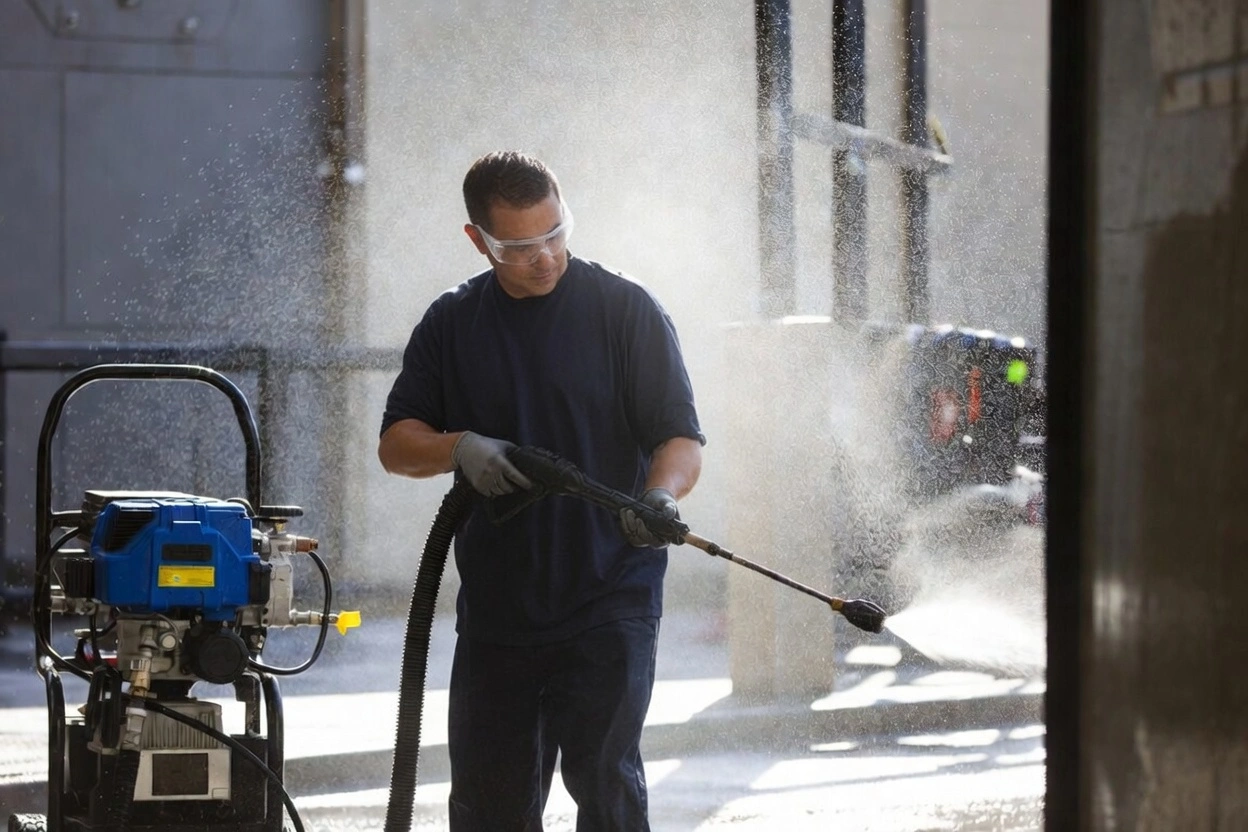
Pressure washing removes graffiti through mechanical force: a high-velocity stream of water physically strips material from a surface. At the right PSI — typically 1,500 to 4,000 depending on the substrate — that force is enough to shear fresh spray paint off dense, non-porous surfaces like sealed concrete, metal panels, and glazed brick.
The operative word is fresh. Spray paint that went up 48 hours ago behaves differently than paint that has been baking into a brick wall for two weeks. Fresh paint sits mostly on top of the surface, bonded by little more than surface adhesion. Age, UV exposure, and moisture cycles all drive paint deeper into pores, where mechanical force alone can’t follow.
Where pressure washing works well:
- Sealed concrete flatwork and walls
- Powder-coated or painted metal (railings, dumpster enclosures, roll-up doors)
- Glazed or dense brick with minimal porosity
- Poured concrete parking structures
Where pressure washing creates problems:
- Unglazed or older soft brick — high pressure opens the surface and can cause spalling
- EIFS (Exterior Insulation and Finish Systems) — the synthetic texture coat is fragile; excess pressure cuts through it
- Stucco — similar fragility to EIFS; water intrusion behind the coating is a real risk
- Natural stone (limestone, sandstone) — porous and relatively soft; high PSI etches the face
- Previously painted surfaces — pressure can lift the base coat along with the graffiti
The ghosting problem deserves a specific mention. When porous surfaces absorb pigment and then get hit with a pressure washer, the water can actually push paint deeper before it strips the top layer. The result is a faint but permanent shadow — the graffiti is gone, but the stain is not. Chemical pre-treatment is what prevents ghosting on porous substrates.
When Chemical Cleaning Is the Right Call
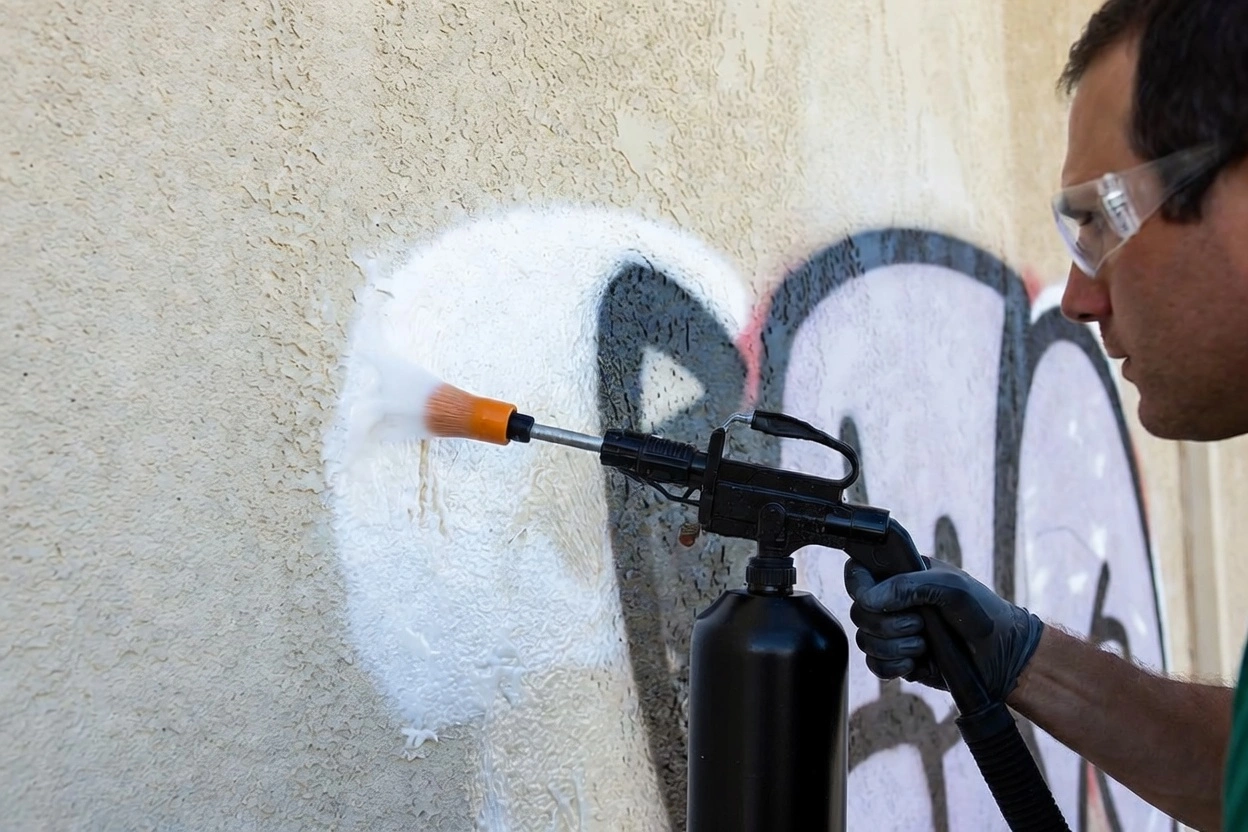
Chemical graffiti removers work through a different mechanism: they dissolve or break the bond between the paint and the substrate, so the graffiti can be wiped, rinsed, or lightly agitated away with minimal mechanical force.
Most commercial-grade graffiti removers fall into a few categories — solvent-based (petroleum distillates, acetone, xylene), caustic (alkaline compounds), and biochemical (enzyme-based or citrus-derived formulations). Each has a different performance profile. Solvent-based products are fast and aggressive — effective on fresh aerosol paints and markers — but require careful handling and proper waste containment. Biochemical products are gentler and environmentally preferable, but need longer dwell times to work.
Chemical cleaning is the primary method when:
- The surface is EIFS, stucco, or soft natural stone
- Pressure washing would void a roofing or cladding warranty
- The building is a historic structure with moisture-sensitive masonry
- The graffiti has been present long enough that mechanical removal alone would require damaging PSI levels
- There’s a risk of ghosting on uncoated brick or block
Chemical treatment also sets up better pressure washing results. Pre-treating a concrete wall before applying the pressure washer lowers the PSI needed, which reduces risk to the surface and shortens the job.
One trade-off worth naming honestly: chemical cleaners leave a residue. Proper neutralization and rinse-off is part of the job — which connects directly to environmental compliance, covered later in this article.
Surface-by-Surface Breakdown: Which Method Fits Which Material
This is the section to bookmark. Run your building’s exterior through this list before calling any vendor.
Sealed concrete (flatwork, walls, parking structures)
Pressure washing is usually sufficient for fresh graffiti. For older tags or heavy coverage, chemical pre-soak + pressure wash at 2,000–3,000 PSI delivers the cleanest result without surface damage.
Uncoated or soft brick
Chemical treatment first — always. Solvent or alkaline-based remover applied with dwell time, then a lower-pressure rinse (800–1,500 PSI) to clear the loosened paint. High-pressure alone risks spalling and drives pigment deeper.
Glazed brick
The glaze creates a dense surface that tolerates higher pressure. Pressure washing often works well. Chemical pre-treatment still improves results on older graffiti.
EIFS (synthetic stucco)
Chemical-only. No exceptions. Pressure washing EIFS above roughly 600 PSI risks punching through the finish coat and introducing moisture into the insulation layer — which can cause mold and structural issues that cost far more than the original graffiti tag.
Traditional stucco
Similar caution to EIFS. Chemical treatment with a low-pressure rinse. The surface is more tolerant than EIFS but still vulnerable to delamination from aggressive pressure.
Metal (doors, panels, railings)
Pressure washing works well on powder-coated and painted metal surfaces. Solvent-based chemical removers can strip base paint from bare or lightly coated metal — test on a small area first.
Natural stone (limestone, sandstone, marble)
Chemical treatment with biochemical or pH-neutral formulations. Pressure washing at any meaningful PSI risks etching the face permanently. Dwell time does the heavy lifting; light agitation with a soft brush and gentle rinse finishes the job.
Painted CMU (concrete masonry units)
The paint coat over the CMU determines your approach. If the base paint is in good condition, low-pressure wash with chemical pre-treat. If the paint is already peeling, you may lose the base coat regardless — factor in repainting as part of the scope.
The Combined Method: Hot Water + Chemistry
The most effective commercial graffiti removal process isn’t pressure or chemical — it’s both, applied in the right sequence.
Hot water (140°F–180°F) changes the behavior of both the paint and the chemical remover. Heat opens pores in porous surfaces temporarily, allowing the chemical to penetrate and work faster. It also accelerates the breakdown of the polymer chains in paint, particularly spray enamel and latex-based graffiti paint. The result: shorter dwell times, lower PSI needed, and cleaner extraction on the first pass.
The sequence:
- Apply chemical remover appropriate to the surface type
- Allow dwell time (typically 5–15 minutes; longer for aged paint)
- Apply hot water at calibrated PSI to flush loosened paint
- Rinse and neutralize as required by product and environmental protocol
This combined approach is what separates a professional graffiti removal crew from a standard pressure washing service. The equipment investment alone — hot water units capable of sustained high-temperature output — puts it out of reach for most general contractors and in-house maintenance teams.
How Carolina Sweepers Handles Commercial Graffiti Removal
When Carolina Sweepers takes on a graffiti removal job, the first step isn’t pointing equipment at the wall. It’s a surface assessment. What’s the substrate? What’s the paint type — aerosol, latex, oil-based? How long has it been there? Is there an anti-graffiti coating on the surface that changes the protocol?
That assessment drives the method selection. We carry chemical removers calibrated for different surfaces, hot-water pressure washing units, and the low-pressure rinse capability needed for sensitive materials like EIFS and natural stone. On multi-surface buildings — a retail center with brick columns, EIFS panels, and metal storefront — we run different protocols on the same job, section by section.
We also document the condition of the surface before and after. If there’s pre-existing damage near the graffiti site — spalling brick, a failing EIFS repair, surface cracks — you’ll hear about it before we start, not after we’re done.
Environmental Compliance in NC and SC — What Property Managers Should Know
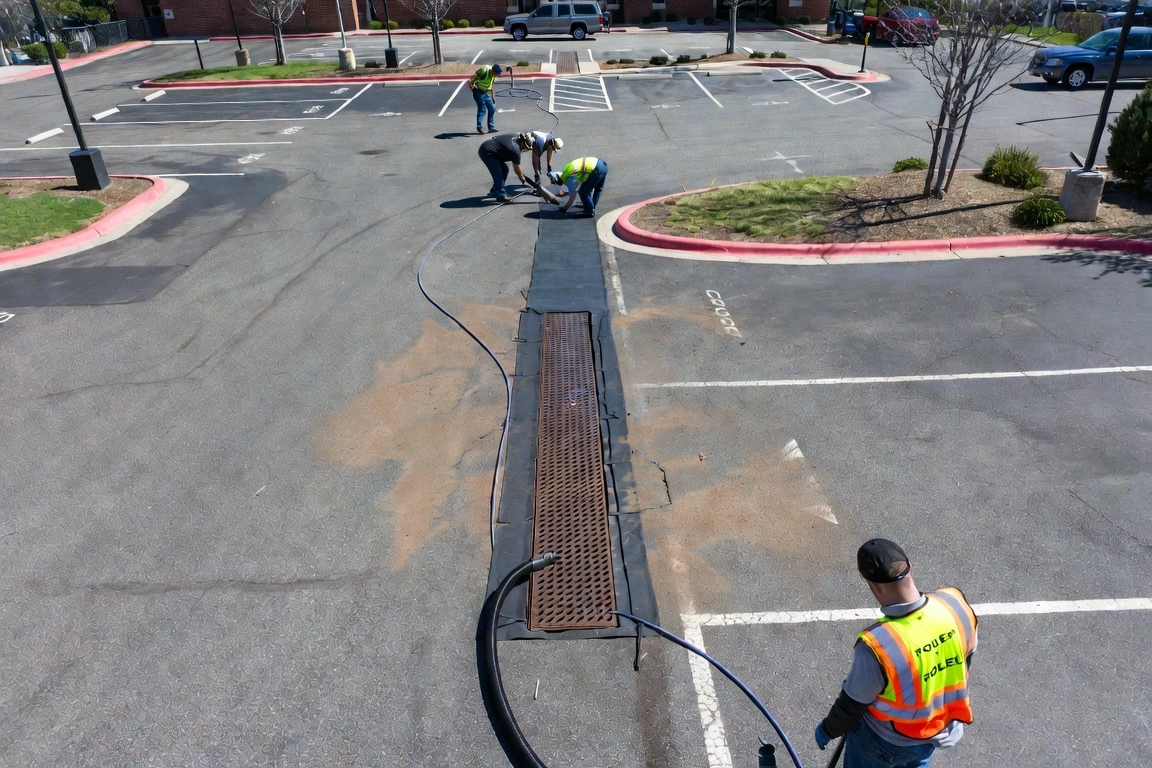
This is the piece most vendors skip. Wash water from graffiti removal is not the same as ordinary pressure washing runoff. It contains dissolved pigments, surfactants from the chemical removers, and sometimes heavy metals from older spray paints. In many NC and SC municipalities — including Raleigh, Charlotte, and their surrounding jurisdictions — allowing that water to reach a storm drain inlet without containment violates local stormwater ordinances and, in some cases, federal Clean Water Act standards.
What does proper containment look like? Berms or drain covers to block nearby inlets, vacuum recovery equipment to collect wash water, and proper disposal through a licensed waste hauler. Not every graffiti removal job requires full containment — a small tag on a sealed concrete wall near no drain infrastructure is a different situation from a large-scale chemical wash on a brick building directly upslope from a storm inlet.
Ask your vendor directly: what’s your wastewater containment protocol for this job? A vendor who doesn’t have a clear answer is either skipping the step or unaware of the requirement. Either way, liability for a Clean Water Act notice of violation lands on the property — not the vendor.
Carolina Sweepers operates with containment protocols in place and familiarity with local stormwater requirements across our NC and SC service areas.
Speed Matters: Why Rapid Response Changes the Outcome
Graffiti removal is one of those situations where waiting 24 hours costs you. Fresh paint — applied the night before, discovered at opening — is still surface-bonded. It responds to lower PSI, shorter chemical dwell times, and a single pass. It’s also less likely to ghost.
Paint that’s been exposed to sunlight and temperature cycles for even two or three days starts to chemically bond with porous surfaces. The job that would have taken one pass now takes two. The surface that would have cleaned without ghosting now needs a secondary chemical treatment to address shadow staining.
Beyond the cleaning difficulty, there’s a documented pattern in commercial property management: graffiti that stays up attracts more graffiti. A tag that sits for a week tends to draw additional tagging. Rapid removal breaks that cycle.
Carolina Sweepers offers 24/7 emergency response. If graffiti is flagged at 5:00 a.m. by your overnight security system, that’s a call we can take and respond to — not a ticket that gets routed through a scheduling queue on Monday morning.
Graffiti Removal FAQ: What Commercial Property Managers Need to Know
Can pressure washing remove graffiti from brick?
It depends on the brick. Dense, glazed brick handles pressure washing well. Softer, unglazed, or older brick requires chemical pre-treatment and lower-pressure rinsing — aggressive pressure washing on soft brick drives pigment deeper and can cause surface spalling.
Is chemical graffiti removal safe for EIFS?
Yes — chemical treatment is actually the preferred method for EIFS. Pressure washing above approximately 600 PSI risks puncturing the finish coat. Choose a pH-appropriate remover for the paint type, apply with dwell time, and rinse at low pressure.
How quickly does graffiti need to be removed?
As fast as possible. Fresh paint (under 48 hours) is significantly easier to clean than aged paint, requires lower PSI and shorter chemical dwell times, and is far less likely to ghost into porous surfaces. Beyond the cleaning difficulty, graffiti that stays visible tends to attract more tagging.
Does Carolina Sweepers handle graffiti removal in Raleigh?
Yes. Carolina Sweepers provides commercial graffiti removal throughout the Raleigh-Durham-Chapel Hill area and across NC, SC, VA, and GA. 24/7 emergency response is available for time-sensitive situations — call (919) 481-9003.
Will pressure washing leave a ghost stain on my building?
It can, on porous surfaces, if chemical pre-treatment isn’t used. The ghosting or shadowing effect happens when water pressure pushes pigment deeper into the material before extracting the surface layer. Proper chemical pre-treatment dissolves the pigment at depth, which prevents this outcome.
What’s the difference between hot-water and cold-water pressure washing for graffiti?
Hot water (140°F–180°F) breaks down the polymer chains in paint faster and allows chemical removers to penetrate more quickly. It typically means less PSI is needed, shorter job time, and better results on aged or deeply bonded paint. Cold water pressure washing works for fresh graffiti on non-porous surfaces but struggles with anything more complex.
Do I need to worry about environmental compliance for graffiti removal?
In most NC and SC jurisdictions, yes. Wash water from graffiti removal contains pigments, surfactants, and potentially heavy metals. Allowing it to reach a storm drain without containment can violate local stormwater ordinances. Ask your vendor about their wastewater containment protocol before the job starts.
Get Graffiti Off Your Property — Without Making It Worse
The wrong removal method doesn’t just fail to fix the problem — it can create a more expensive one. Etched stone, delaminated EIFS, ghosted brick: these are the outcomes when equipment gets pointed at a wall before anyone has assessed what they’re working with.
If graffiti has appeared on one of your properties, the call to make is one to a vendor who will assess before they act, communicate what they find, and handle wastewater containment without being asked twice.
Carolina Sweepers has maintained more than 1,000 commercial properties across the Southeast, completed 120,000+ projects, and built a 98% annual client retention rate by being the kind of contractor that calls you before something becomes a problem — not after.
For graffiti removal, full-service commercial pressure washing, or questions about the right approach for your specific building materials, reach Carolina Sweepers at (919) 481-9003. We’re available 24/7. For a broader look at how we support commercial properties across NC and SC, visit our full-service commercial property maintenance page.
No Comments yet!