 Serving NC, SC, VA & GA — 26 Years of Experience, Comprehensive Maintenance Services, Multi-Location Support
 Your parking lot doesn’t announce its maintenance needs with a calendar reminder — it whispers through accumulating debris until suddenly you’re fielding tenant complaints about “the mess outside.” By then, what started as routine sweeping has become emergency cleanup, and emergency anything costs more.
After 25 years maintaining properties across North Carolina, South Carolina, Virginia, and Georgia, Carolina Sweepers has seen property managers struggle with the same cost question: What should parking lot sweeping actually cost? The answer isn’t as simple as “$X per square foot” because your lot’s location, condition, and your specific needs create a unique maintenance equation.
This guide breaks down real-world parking lot sweeping costs using data from 120,000+ completed projects. You’ll understand what drives pricing, how to budget accurately, and why the cheapest quote often becomes the most expensive mistake.
Table of Contents
- Understanding Parking Lot Sweeping Cost Variables
- Detailed Cost Breakdown by Property Type
- Equipment Types and Their Cost Impact
- Hidden Costs and Budget Considerations
- Cost-Saving Strategies and Best Practices
- Avoiding Common Cost Mistakes
- Working with Sweeping Contractors: A Partnership Approach
- Technology and Future Cost Trends
- Making Smart Investment Decisions
Understanding Parking Lot Sweeping Cost Variables
Lot Size and Pricing Models
Most sweeping companies use one of three pricing approaches, and understanding the differences helps you evaluate quotes accurately.
Per-square-foot pricing typically runs $0.03 to $0.08 per square foot for routine maintenance. A 50,000-square-foot shopping center parking lot would cost $1,500 to $4,000 per visit. This model works well for large, open lots without complex layouts.
Hourly rates range from $65 to $125 per hour in the Southeast, depending on equipment type and operator experience. Smaller lots or properties with numerous obstacles often get hourly quotes because square footage doesn’t reflect the actual time investment.
Flat-rate service agreements bundle pricing based on frequency and scope. A retail center might pay $800 per month for twice-weekly sweeping, regardless of seasonal debris variations. This approach offers budget predictability but requires accurate initial assessment.
Here’s what we’ve learned: the pricing model matters less than the total annual cost and service quality. A contractor charging $0.04 per square foot who skips tight corners costs more than one charging $0.06 who actually cleans your entire lot.
Geographic Cost Factors in the Southeast
Labor costs drive significant regional pricing differences across our four-state service area. Atlanta market rates run 15-20% higher than rural Georgia due to higher living costs and competitive labor markets. Charlotte and Raleigh fall somewhere between Atlanta premiums and smaller city rates.
North Carolina specifics: Triangle and Charlotte metro areas see premium pricing due to rapid commercial development and skilled labor competition. Expect $75-$100 hourly rates in these markets versus $65-$85 in smaller cities like Wilmington or Asheville.
South Carolina considerations: Charleston’s historic district requirements and Columbia’s university-driven seasonal variations affect pricing. Stormwater regulations in coastal areas add compliance considerations that budget-focused contractors often miss.
Virginia and Georgia markets: Northern Virginia commands premium rates due to Washington D.C. proximity, while rural Virginia and Georgia offer more competitive pricing. However, equipment and fuel costs remain consistent regardless of location.
Don’t assume rural equals cheaper long-term. We’ve seen property managers save money hiring established regional companies that service multiple markets rather than the lowest-bidding local operator who lacks proper equipment or insurance coverage.
Frequency Impact on Per-Service Costs
Weekly sweeping costs more per visit than monthly service, but the math isn’t linear. Here’s real-world pricing data from our client portfolio:
- Daily service: $0.02-$0.04 per square foot per visit
- Twice weekly: $0.03-$0.05 per square foot per visit
- Weekly service: $0.04-$0.07 per square foot per visit
- Monthly service: $0.06-$0.10 per square foot per visit
The higher per-visit cost for less frequent service reflects heavier debris loads and longer cleanup times. A parking lot that takes 45 minutes to sweep weekly might require 2+ hours monthly as leaves, trash, and sediment accumulate.
Seasonal adjustments matter significantly in the Southeast. October through December leaf fall can triple debris volumes. Spring pollen season in the Carolinas creates cleanup challenges that Northern contractors often underestimate. Factor seasonal variations into annual budget planning rather than assuming consistent monthly costs.
Detailed Cost Breakdown by Property Type
Office Complexes and Business Parks
Mid-rise office complexes typically range from 40,000 to 150,000 square feet of parking. Weekly sweeping runs $600 to $2,200 per service, with quarterly deep cleaning adding $1,200 to $4,500.
Office properties present unique cost considerations. Employee parking areas need consistent maintenance for professional appearance, but service timing matters. Early morning sweeping (6-8 AM) often carries 10-15% premium pricing but avoids disrupting business operations.
Cost optimization strategy: Bundle sweeping with other parking lot maintenance like pressure washing and striping. Office complexes requiring quarterly striping touch-ups can save 20-25% by coordinating services with the same contractor versus managing multiple vendors.
Hidden cost factor: Cigarette butt cleanup around building entrances requires hand-picking rather than mechanical sweeping. Properties with designated smoking areas see 15-20% higher cleaning costs in those zones.
Retail Centers and Shopping Plazas
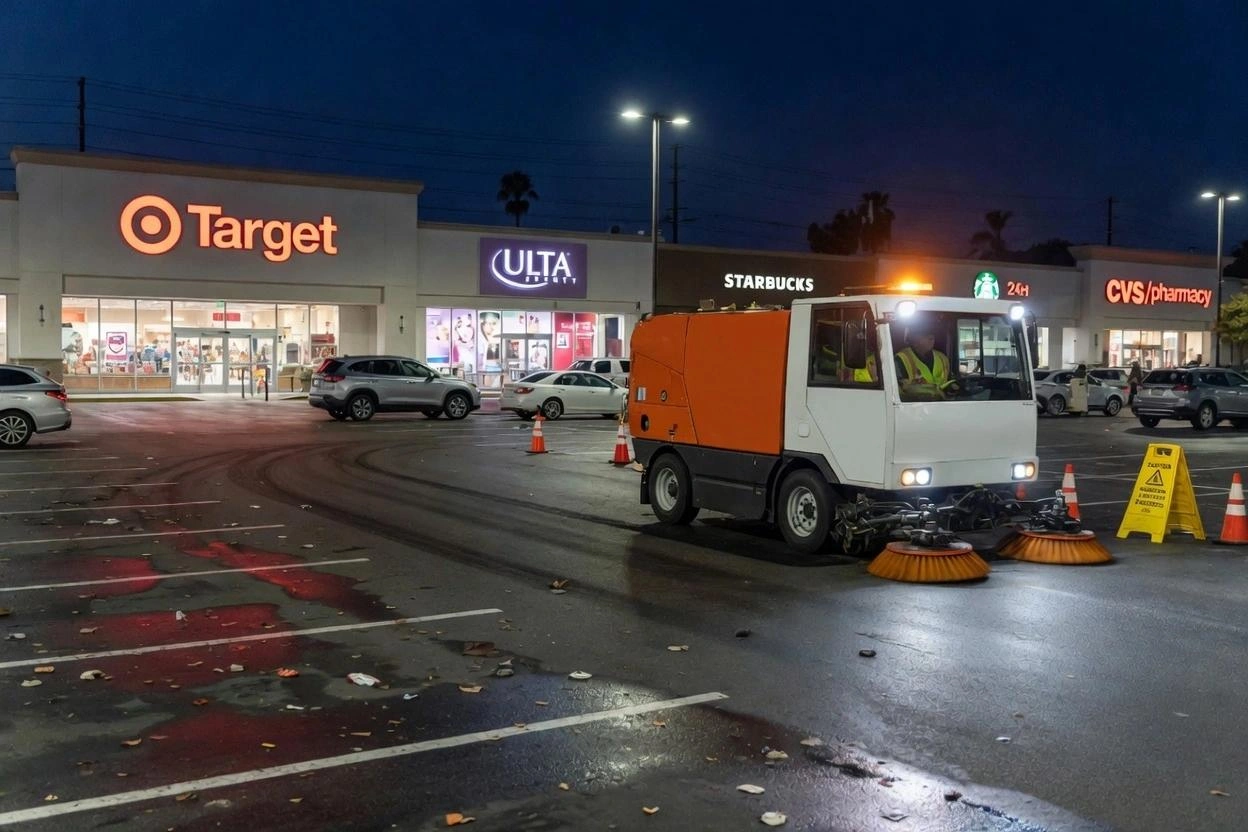
Retail properties face the most demanding sweeping requirements due to heavy traffic and diverse debris types. Strip centers averaging 75,000 square feet typically spend $1,000 to $1,800 per weekly service.
Food service tenants create specific cost challenges. Quick-service restaurants generate grease, food packaging, and attract wildlife that spreads trash. Parking areas near restaurants often require twice-weekly attention versus once-weekly for general retail sections.
Regional consideration: Shopping centers in college markets like Chapel Hill, Columbia, or Charlottesville see dramatic seasonal cost swings. Summer maintenance drops 30-40% when students leave, but fall startup requires intensive cleanup after months of lighter service.
Cost factor: Holiday shopping seasons demand increased frequency. November through January typically requires 50% more service calls to maintain professional appearance during peak traffic periods.
Industrial and Warehouse Facilities
Industrial properties average the lowest per-square-foot sweeping costs due to large, open lots with minimal obstacles. Warehouses with 200,000+ square feet of parking typically pay $0.02 to $0.04 per square foot for monthly service.
However, industrial sites present specialized cost factors. Manufacturing facilities dealing with metal shavings, chemical residues, or hazardous materials require specialized equipment and trained operators. These services can cost 200-300% more than standard parking lot sweeping.
Budget consideration: Industrial properties often combine parking lot sweeping with internal facility cleaning for operational efficiency. Bundling exterior and interior services typically reduces total costs 15-20% versus separate contractors.
Healthcare Facilities
Hospitals and medical complexes require premium service standards that affect pricing. Patient and visitor areas need consistent cleanliness, and emergency vehicle access areas require flexible scheduling for immediate cleanup.
Medical facilities typically pay 20-25% above standard commercial rates due to stringent cleanliness requirements and specialized insurance needs. Expect $0.05 to $0.09 per square foot for routine sweeping at healthcare properties.
Compliance cost factor: Medical waste regulations affect debris handling and disposal. Contractors servicing healthcare facilities need specialized training and equipment, which translates to higher service costs but necessary regulatory compliance.
Equipment Types and Their Cost Impact
Mechanical Broom Sweepers
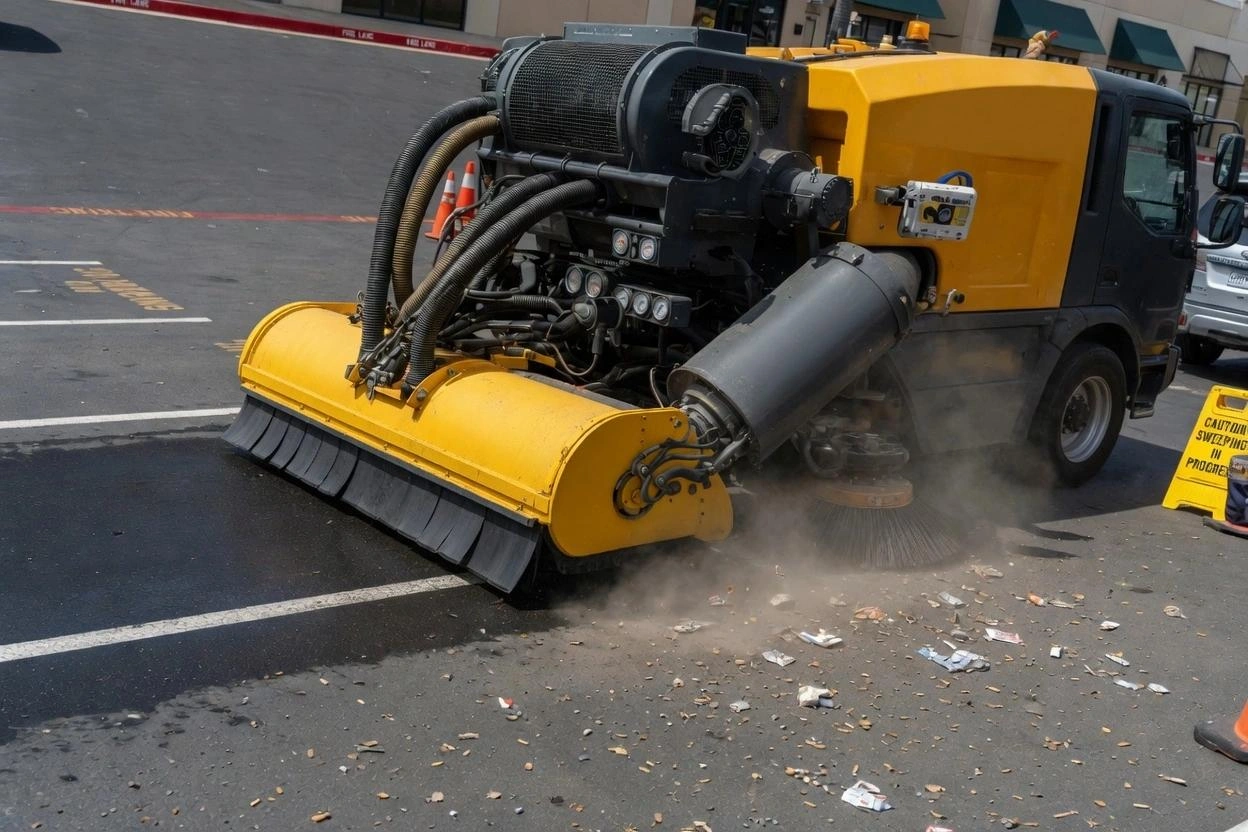
Traditional mechanical sweepers use rotating brushes to collect debris into a hopper. These workhorses handle most standard parking lot cleaning at competitive rates, typically reflecting the lower end of quoted price ranges.
Mechanical sweepers excel at collecting leaves, paper, and loose debris but struggle with fine dust and embedded materials. Properties in high-dust areas or those requiring detailed cleaning might need supplemental services that increase overall costs.
Regenerative Air Sweepers
Regenerative air technology uses controlled air circulation to lift debris from surfaces without physical brush contact. This method effectively removes fine particles and reduces surface wear, but equipment costs drive 15-25% higher service pricing.
For properties with decorative concrete, stamped asphalt, or aging surfaces, regenerative air sweeping prevents accelerated deterioration that mechanical brushes might cause. The premium pricing often pays for itself through extended pavement life.
Vacuum Sweepers
High-powered vacuum systems handle challenging debris like sand, gravel, and fine sediments that other methods miss. Coastal properties dealing with sand accumulation or construction sites with ongoing dust issues benefit from vacuum technology despite 25-40% higher costs.
Stormwater compliance benefit: Vacuum sweepers remove fine particles that contribute to stormwater pollution. Properties in municipalities with strict stormwater regulations often find vacuum sweeping cost-effective for maintaining compliance versus potential fines.
Hidden Costs and Budget Considerations
Stormwater Compliance Requirements
Southeast municipalities increasingly enforce stormwater management requirements that affect parking lot maintenance costs. Non-compliance fines range from $500 to $5,000 per violation, making prevention cheaper than remediation.
North Carolina specifics: Charlotte, Raleigh, and Wilmington have implemented strict stormwater ordinances requiring documented parking lot maintenance. Properties must maintain cleaning logs and use approved methods, which typically adds $150-$300 monthly to service agreements.
South Carolina considerations: Charleston County’s coastal protection regulations require special debris disposal methods. Standard sweeping contracts might not include compliant disposal, creating unexpected costs of $200-$500 per service call.
Seasonal Demand Fluctuations
Spring and fall create peak demand periods that affect pricing and availability. March through May pollen cleanup and October through December leaf removal often carry 20-30% seasonal surcharges.
Planning strategy: Lock in annual service agreements during off-peak periods (January-February) to avoid seasonal pricing spikes. Properties that wait until leaf season to book services often pay premium rates and face scheduling delays.
Emergency and After-Hours Service
Storm cleanup, vandalism response, and urgent maintenance requests typically cost 150-200% of standard rates. Properties without established service relationships pay the highest emergency premiums.
Risk mitigation: Maintain relationships with qualified contractors even during budget cuts. Emergency-only relationships cost significantly more than reduced regular service that maintains contractor availability.
Debris Disposal Costs
Standard sweeping quotes usually include normal debris disposal, but contaminated materials, construction waste, or excessive volumes create additional charges. Disposal fees range from $50 to $300 per load depending on material type and local regulations.
Hidden cost example: Properties undergoing renovations might generate construction debris mixed with normal parking lot waste. Contractors must separate materials for proper disposal, often doubling standard service costs during construction periods.
Cost-Saving Strategies and Best Practices
Multi-Service Bundling Benefits
Single-source maintenance contracts typically reduce total property costs 20-30% compared to managing multiple specialized vendors. Bundling parking lot sweeping with pressure washing, striping, snow removal, and minor repairs creates economies of scale that benefit both property managers and contractors.
Real-world example: A Charlotte office complex reduced annual parking lot maintenance costs from $18,500 to $13,200 by bundling sweeping, quarterly pressure washing, annual striping, and minor asphalt repairs with one contractor instead of four separate vendors.
Preventive Maintenance Investment
Regular sweeping prevents costly deep-cleaning emergencies and extends pavement life. Properties that defer maintenance to save money often face renovation costs 10-15 times higher than consistent preventive care.
Financial consideration: Weekly sweeping costs $300-$500 monthly for typical retail centers. Deferred maintenance leading to lot resurfacing costs $45,000-$85,000. The math strongly favors consistent maintenance investment.
Contract Timing and Negotiation
Service contracts negotiated during slow periods (winter months) typically offer better rates than peak season agreements. Contractors facing reduced winter demand often provide attractive annual pricing to secure guaranteed work.
Negotiation strategy: Multi-year agreements with inflation protection clauses provide budget predictability while offering contractors revenue security that translates to better pricing. Three-year contracts with 2-3% annual increases typically beat market rates by the second year.
Technology and Efficiency Improvements
GPS tracking, route optimization, and documentation technology reduce service costs by improving efficiency. Contractors using modern fleet management systems typically offer 10-15% better pricing than those relying on outdated operational methods.
Compliance benefit: Digital documentation simplifies stormwater compliance reporting and reduces administrative burden for property managers. Technology-enabled contractors often provide superior documentation at competitive prices.
Avoiding Common Cost Mistakes
Choosing Based on Price Alone
The lowest quote rarely delivers the best value. Under-priced contractors often cut corners on equipment maintenance, insurance coverage, or employee training that create liability risks exceeding any savings.
Red flag pricing: Quotes more than 25% below market rates often indicate corner-cutting that leads to poor service quality, safety issues, or unexpected additional charges. Competitive pricing should fall within 15-20% of the average among qualified contractors.
Ignoring Insurance and Licensing Costs
Properly licensed and insured contractors carry higher operational costs reflected in pricing. Choosing uninsured operators to save money creates enormous liability exposure that far exceeds potential savings.
Due diligence requirement: Verify general liability insurance ($1M minimum), workers compensation coverage, and business licensing. Uninsured contractors might charge 20-30% less but expose properties to lawsuit risks worth millions.
Overlooking Seasonal Planning
Properties that adjust service frequency seasonally without advance planning face scheduling conflicts and premium pricing during peak demand periods. Strategic seasonal planning reduces costs and improves service quality.
Planning horizon: Book increased fall services by August and spring cleanup by February to avoid peak-season surcharges and ensure contractor availability when needed most.
Inadequate Contract Specifications
Vague service agreements lead to disputes and unexpected charges. Clearly defined scope, performance standards, and pricing structures prevent misunderstandings that damage both service quality and budget predictability.
Contract essentials: Define specific areas to be cleaned, debris disposal responsibilities, emergency response expectations, and performance measurement criteria. Detailed specifications protect both parties and improve service outcomes.
Working with Sweeping Contractors: A Partnership Approach
Evaluating Contractor Capabilities
Contractor selection should consider equipment quality, operator training, insurance coverage, and local reputation rather than pricing alone. Established contractors with proper equipment deliver consistent results that justify competitive pricing.
Evaluation criteria: Review equipment maintenance records, employee training documentation, customer references, and safety records. Contractors investing in equipment and training typically provide superior long-term value despite potentially higher upfront costs.
Communication and Expectation Setting
Clear communication about service expectations, scheduling preferences, and performance standards prevents most contractor relationships problems. Regular check-ins and performance reviews maintain service quality and address issues before they become major problems.
Best practice: Monthly or quarterly performance reviews with contractors help identify improvement opportunities and recognize exceptional service. Contractors who understand property-specific needs deliver better results at competitive prices.
Long-Term Relationship Benefits
Contractors familiar with your property’s specific challenges, tenant requirements, and seasonal patterns provide more efficient service over time. Long-term relationships typically deliver 10-15% better value through improved efficiency and reduced coordination overhead.
Relationship investment: Treating contractors as partners rather than vendors encourages better performance and often results in preferential pricing, priority scheduling, and proactive problem-solving that benefits property operations.
Technology and Future Cost Trends
Automation Impact on Pricing
Autonomous sweeping technology gradually entering commercial markets will likely reduce labor costs but require significant equipment investments. Early adopters may see 10-20% cost reductions within 3-5 years, but technology adoption will be gradual in price-sensitive markets.
Environmental Compliance Costs
Increasingly strict stormwater and waste disposal regulations will likely increase service costs 10-15% over the next five years. Properties planning long-term budgets should factor regulatory compliance costs into future projections.
Labor Market Pressures
Commercial vehicle operator shortages across the Southeast continue driving wage inflation that affects service pricing. Annual cost increases of 3-5% should be expected as contractors compete for qualified operators.
Making Smart Investment Decisions
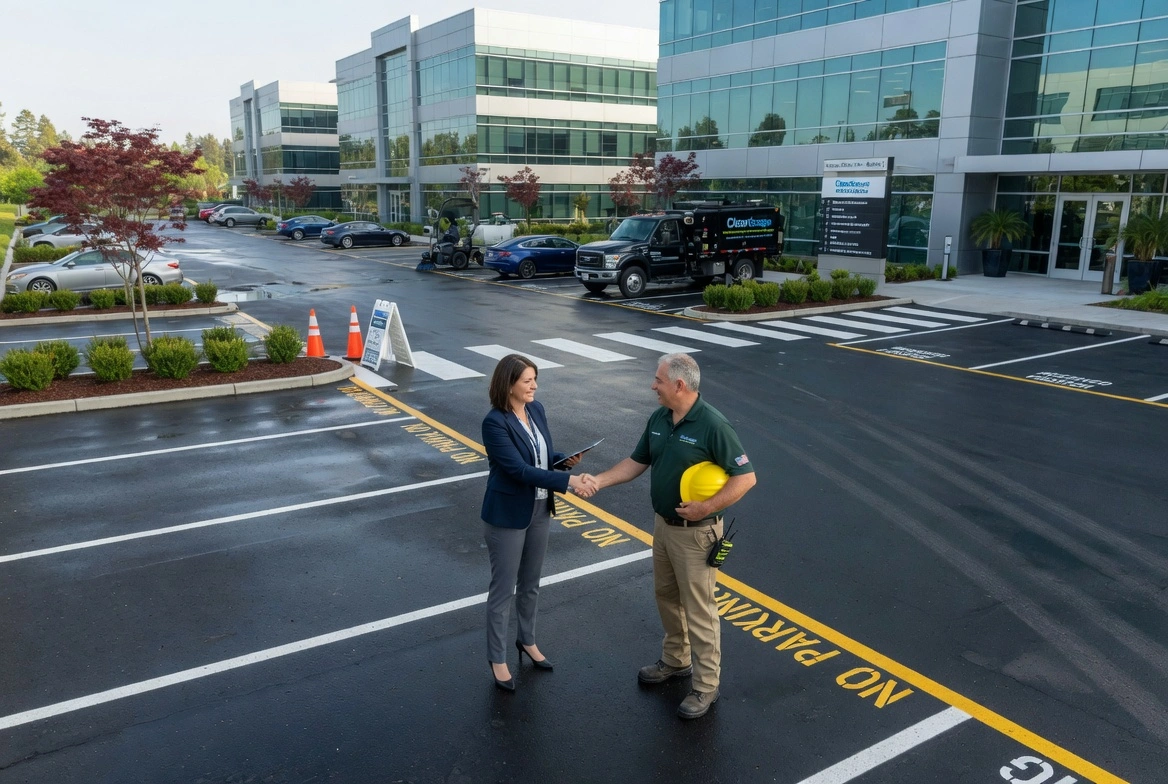
Your parking lot represents a significant property asset that directly impacts tenant satisfaction and property values. Investing in quality maintenance preserves this asset while avoiding costly emergency repairs and negative tenant feedback.
Financial perspective: Quality sweeping services typically cost 0.5-1.0% of property parking lot replacement value annually. A parking lot worth $150,000 to replace should justify $750-$1,500 annual maintenance investment to preserve its condition and appearance.
Operational benefit: Consistent maintenance reduces property management overhead by preventing tenant complaints, regulatory issues, and emergency cleanup situations that disrupt normal operations.
Value protection: Well-maintained parking lots maintain property values and support tenant retention better than deferred maintenance that creates negative first impressions and operational problems.
Regular parking lot sweeping isn’t an expense — it’s an investment in property performance that pays dividends through tenant satisfaction, regulatory compliance, and long-term asset preservation.
Carolina Sweepers has maintained parking lots across North Carolina, South Carolina, Virginia, and Georgia since 2000. Our single-source approach bundles sweeping with pressure washing, striping, snow removal, and facility maintenance to reduce your vendor management burden while saving up to 30% on total property maintenance costs. Call (919) 481-9003 for transparent pricing tailored to your property’s specific needs or contact us via the website to get the quote.
No Comments yet!