 Serving NC, SC, VA & GA — 26 Years of Experience, Comprehensive Maintenance Services, Multi-Location Support
 Pollen removal for parking lots in the Southeast should start in late February and continue through May, with peak season requiring 2-3 sweeps per week. Property managers who schedule proactive pollen removal starting early can reduce spring cleaning costs by 40-60% compared to reactive cleanup. Carolina Sweepers maintains 1,000+ commercial properties across NC, SC, VA, and GA through pollen season every year.
Table of Contents
- When Does Pollen Season Hit Southeast Commercial Properties?
- What Damage Does Pollen Cause to Parking Lots?
- Best Methods for Pollen Removal
- Pollen Season Maintenance Schedule
- Cost of Pollen Removal for Commercial Properties
- Why the Southeast Has More Severe Pollen Issues
- Frequently Asked Questions
- Conclusion: Protect Your Property This Pollen Season
- Free Property Assessment & Next Steps
When Does Pollen Season Hit Southeast Commercial Properties?
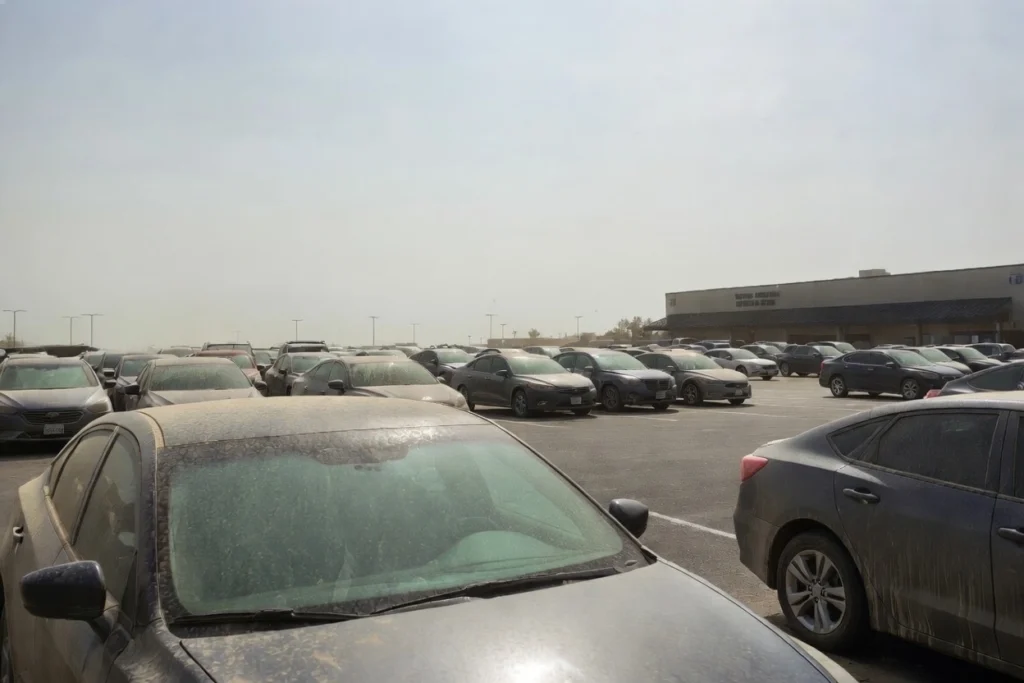
Pollen season in the Southeast kicks off in late February and peaks between mid-March and late April. That makes it one of the longest pollen seasons in the country. Cities like Raleigh, Charlotte, and Atlanta consistently rank among the top 20 worst allergy capitals in the United States, according to the Asthma and Allergy Foundation of America (AAFA).
Tree pollen drives the early season. Pine, oak, and birch trees start releasing massive amounts of pollen in February, and pine pollen is responsible for that unmistakable yellow coating on every surface. By March, property managers across the Triangle, Charlotte Metro, and Upstate SC are dealing with thick pollen layers on parking lots, sidewalks, building exteriors, and vehicles.
Here’s the thing about the Southeast’s warm, humid climate: it stretches pollen production well into May. Grass pollen picks up right as tree pollen fades, so commercial properties get almost no break between waves. A single pine tree can produce up to 2 billion pollen grains per season, according to North Carolina State University Extension.
And properties near wooded areas or tree-lined corridors? They get hit even harder. Retail centers surrounded by mature pines in areas like Cary, Durham, and Greenville SC often need twice-weekly sweeping during peak weeks.
What Damage Does Pollen Cause to Commercial Parking Lots?
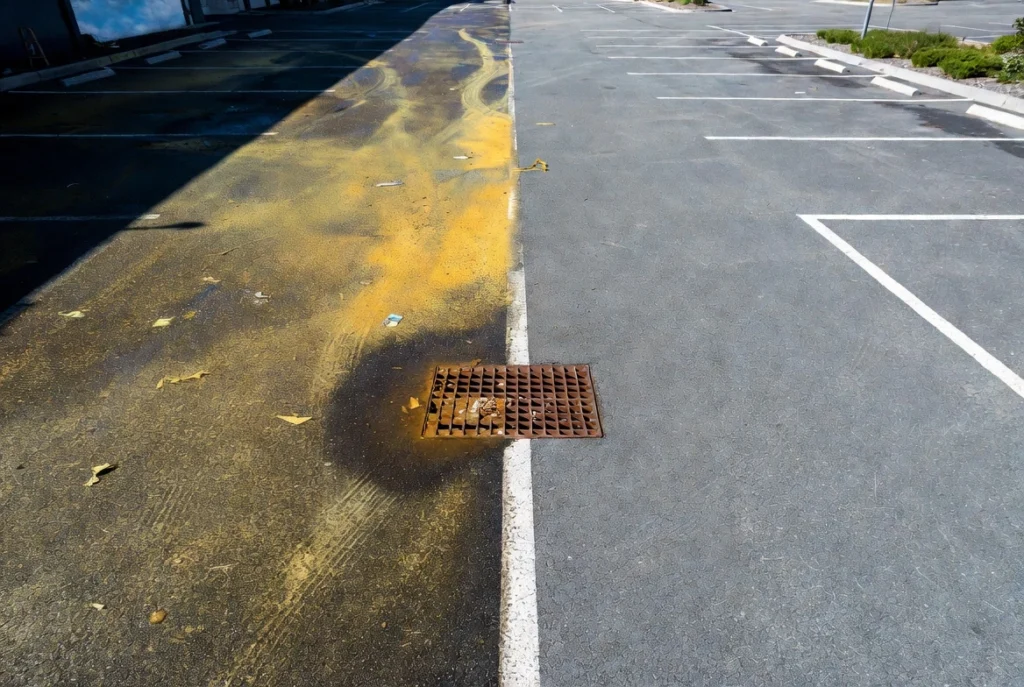
Pollen buildup goes well beyond a cosmetic issue. Left untreated for more than 7-10 days, it causes measurable damage to pavement, drainage systems, and building surfaces. The yellow-green coating turns into a slippery film when wet, raising slip-and-fall risk for customers and employees.
Pavement and Surface Damage
Pollen contains acidic compounds that break down asphalt sealant over time. Mixed with rain, it creates a paste that seeps into micro-cracks and speeds up deterioration. Properties that skip spring sweeping typically see 15-20% faster pavement degradation compared to those on regular maintenance schedules.
Concrete sidewalks and building entryways stain when pollen sits too long. Once that happens, you’re looking at commercial pressure washing to get them clean again, which adds unplanned costs to maintenance budgets.
Storm Drain Blockage
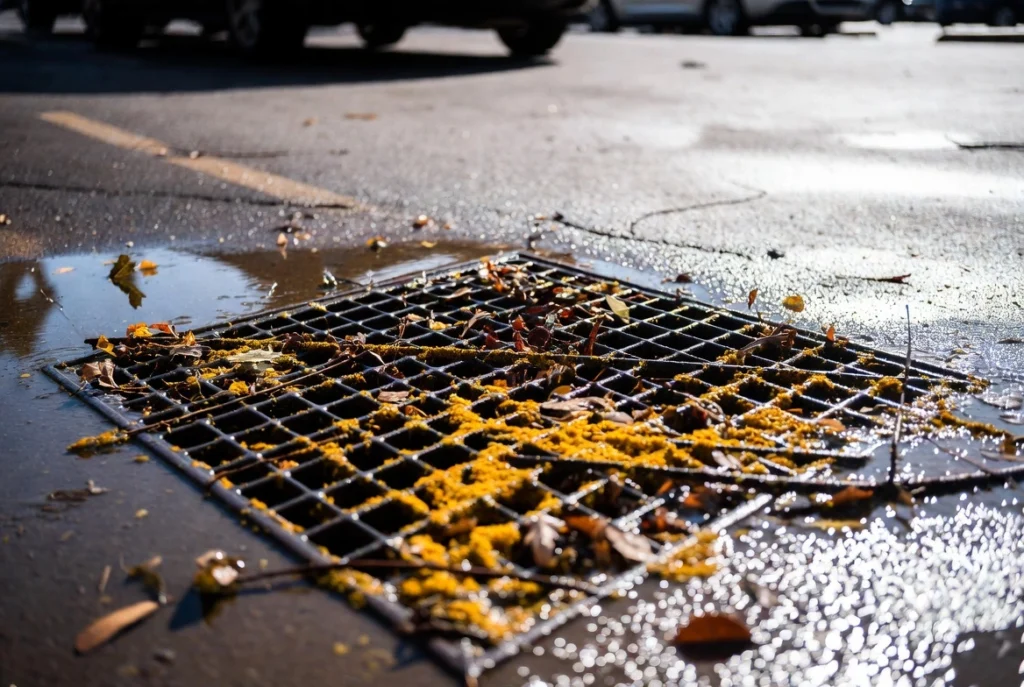
Pollen clogs storm drain grates and filters faster than most debris types. One blocked drain during a spring thunderstorm (common across NC and SC from March through May) can cause parking lot flooding in under 30 minutes. The EPA’s stormwater management guidelines classify pollen-related blockages as a preventable compliance risk under National Pollutant Discharge Elimination System (NPDES) permits.
Regular stormwater maintenance during pollen season keeps drains flowing and properties compliant.
Tenant and Customer Impact
A pollen-coated parking lot signals neglect. That’s not speculation. According to the International Council of Shopping Centers (ICSC), 52% of consumers say parking lot appearance directly influences whether they enter a retail establishment. Yellow-coated cars, dusty walkways, and hazy storefronts push foot traffic to cleaner competitors.
What’s the Best Approach to Pollen Removal for a Parking Lot?
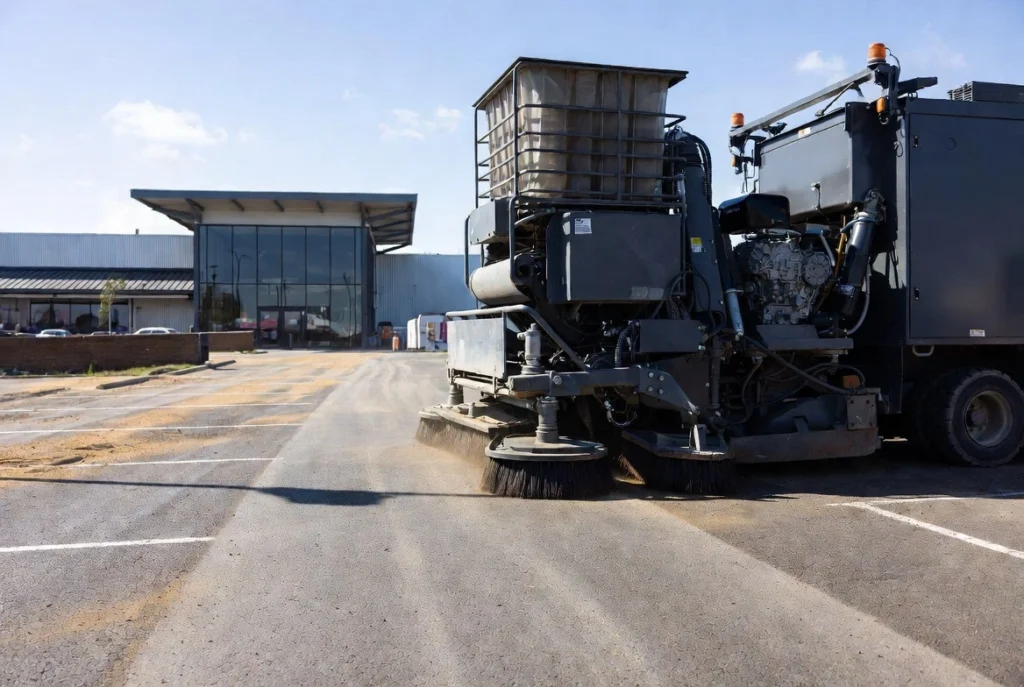
Combine mechanical sweeping for surface pollen with pressure washing for embedded buildup and staining. The right method depends on how long pollen has been sitting, the surface type, and whether rain has bonded it to the pavement.
Pollen Cleaning Methods Comparison
| Method | Best For | Frequency During Peak | Estimated Cost Per Visit* | Effectiveness |
|---|---|---|---|---|
| Mechanical sweeping | Fresh, dry pollen on asphalt/concrete | 2-3x per week | $100-$250 | High for loose pollen |
| Pressure washing | Embedded/wet pollen, stained surfaces | Every 2-4 weeks | $200-$500 | High for bonded pollen |
| Blowing/air sweeping | Light pollen on sidewalks, entryways | Daily during peak | $50-$100 | Moderate |
| Manual hosing | Small areas, entryways, loading docks | As needed | $75-$150 | Low-moderate |
*Costs vary by lot size. Based on a 50,000 sq ft retail parking lot in NC.
When to Use Sweeping vs. Pressure Washing
Mechanical sweeping handles 80-90% of pollen removal needs during active season. Regenerative air sweepers work best because they contain pollen rather than blowing it back into the air. Professional parking lot sweeping services use equipment built specifically for fine-particle collection.
But sweeping alone won’t cut it once rain bonds pollen to surfaces. A single heavy rainstorm during peak season turns loose pollen into a sticky film that sweepers can’t remove. Schedule a pressure washing pass after the first major spring rain for best results.
What Is the Best Pollen Season Maintenance Schedule?
A three-phase approach works best: pre-season preparation, peak-season response, and post-season cleanup. Together, they keep commercial properties presentable and protect long-term asset value.
Phase 1: Pre-Season (Late February – Early March)
Start before pollen arrives. Clear storm drains of winter debris so they’re ready for spring runoff. Pressure wash building exteriors and sidewalks to create a clean baseline. Inspect parking lot surfaces for cracks that pollen paste could worsen.
Have your landscaping service trim overhanging branches near parking areas. Reducing tree canopy over pavement surfaces decreases direct pollen drop by 25-30%.
Phase 2: Peak Season (Mid-March – Late April)
Bump sweeping frequency to 2-3 times per week during peak pollen counts. In the Raleigh-Durham area and Charlotte Metro, this period typically spans six to eight weeks. Atlanta and Upstate SC properties may need that higher frequency a week earlier because of warmer temperatures.
Monitor local pollen counts through the National Allergy Bureau. When counts exceed 1,500 grains per cubic meter, daily entryway maintenance prevents tracking into tenant spaces.
Schedule one mid-season pressure washing around early April to address rain-bonded buildup before it permanently stains surfaces.
Phase 3: Post-Season Cleanup (May)
Commission a thorough pressure washing of all parking surfaces, sidewalks, and building exteriors. Flush storm drains and detention ponds. Inspect and repair any pavement damage worsened by pollen season moisture.
This cleanup sets the foundation for summer maintenance and keeps pollen residue from hardening in the heat.
How Much Does Pollen Season Cleanup Cost for Commercial Properties?
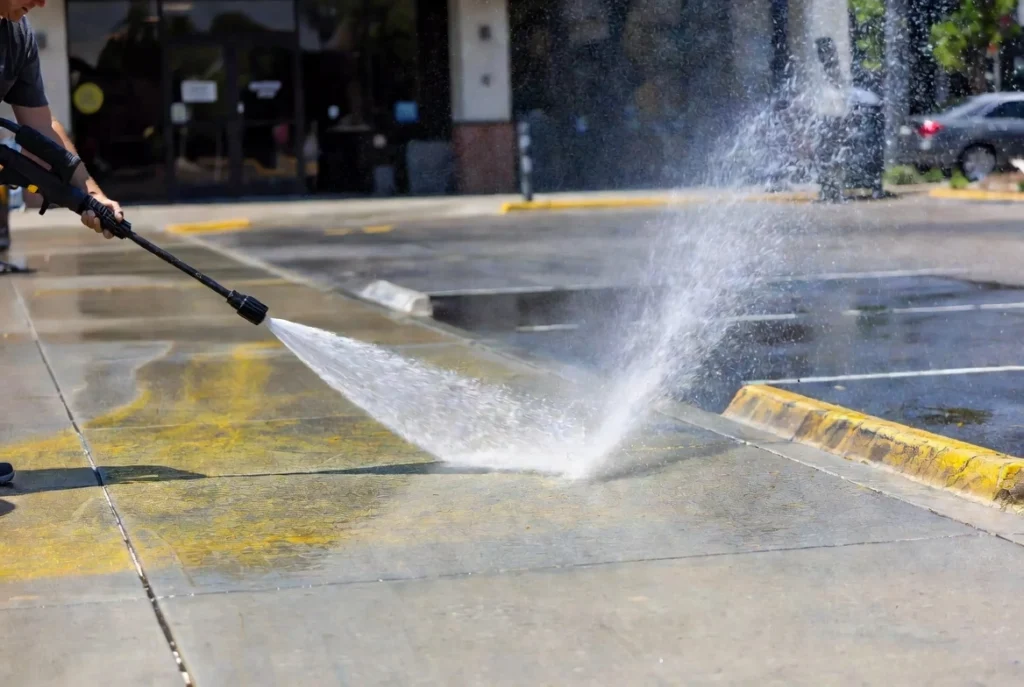
A proactive pollen management program for a mid-size retail center (50,000-100,000 sq ft parking lot) in the Southeast runs $2,000-$5,000 for the full season. Reactive cleanup after pollen has already caused damage? That jumps to $8,000-$15,000 once you factor in emergency drain clearing, pavement repair, and intensive pressure washing. Three to five times more.
Bundled service contracts bring costs down significantly. Carolina Sweepers clients who combine parking lot sweeping with pressure washing and stormwater maintenance save up to 30% compared to hiring separate vendors for each service.
Cost Breakdown: Proactive vs. Reactive
| Item | Proactive Program | Reactive Cleanup |
|---|---|---|
| Sweeping (8-12 weeks) | $1,200-$3,000 | $800-$1,500 (less frequent) |
| Pressure washing | $400-$800 (1-2 sessions) | $1,500-$3,000 (intensive) |
| Drain clearing | $200-$400 (preventive) | $1,000-$2,500 (emergency) |
| Pavement repair | $0-$200 (minor touch-ups) | $2,000-$5,000 (accelerated damage) |
| Total | $1,800-$4,400 | $5,300-$12,000 |
Bottom line: spending $3,000-$4,000 proactively saves $5,000-$8,000 in reactive costs.
Budget Planning Tips
Budget for pollen season by allocating 15-20% of your annual exterior maintenance budget to Q2 (April-June) services. If your properties are in the Triangle or Charlotte Metro, budget toward the higher end. Those areas see heavier pine pollen concentration than most of the region.
Why Do Southeast Properties Face Worse Pollen Than Other Regions?
The Southeast produces more pollen per square mile than any other region in the continental United States. Three factors are behind this: tree density, climate length, and species composition.
North Carolina alone has 18.6 million acres of forestland, according to the USDA Forest Service. Most of that includes high-pollen species like loblolly pine, red oak, and sweetgum. These trees surround commercial corridors throughout the Triangle, Triad, and Charlotte Metro areas.
The region’s growing season runs 220-240 days per year, nearly two months longer than the national average. Mild winters mean pollen production starts earlier and lingers later. And climate research from Duke University shows that rising CO2 levels have increased ragweed pollen production by 50-70% since 1990, a trend hitting the entire Southeast.
Humidity makes things worse. Morning dew collects pollen on surfaces, then afternoon thunderstorms bond it to pavement. This wet-dry cycle makes Southeast pollen much harder to remove than in drier climates like the Southwest.
So for property managers overseeing portfolios across NC, SC, VA, and GA, pollen season isn’t optional maintenance. It’s a predictable, plannable expense that calls for professional attention at every property.
Frequently Asked Questions
How often should I sweep my parking lot during pollen season?
Sweep commercial parking lots 2-3 times per week during peak pollen season (mid-March through late April) in the Southeast. Properties near pine forests or wooded areas may need daily sweeping during the highest pollen count weeks. Reduce to weekly sweeping in early March and May.
Does pollen cause permanent damage to asphalt?
Pollen itself doesn’t destroy asphalt, but it speeds up existing damage. When mixed with rain, pollen creates an acidic paste that penetrates micro-cracks and weakens sealant coatings. Properties that skip pollen-season maintenance see 15-20% faster pavement deterioration over a 3-5 year period.
Can regular sweeping help with stormwater compliance?
Yes. The EPA considers parking lot sweeping a Best Management Practice (BMP) for stormwater compliance under NPDES permits. Removing pollen and debris before it reaches storm drains reduces pollutant discharge and helps commercial properties meet regulatory requirements.
Is pressure washing or sweeping better for pollen removal?
Mechanical sweeping handles fresh, dry pollen most effectively and should be your primary pollen-season service. Pressure washing is necessary for rain-bonded pollen that sweepers can’t remove. Most commercial properties need 1-2 pressure washing sessions during pollen season on top of regular sweeping.
When should I schedule spring pressure washing?
Schedule your first spring pressure washing after the first major rainstorm following pollen onset, typically mid-to-late March in the Southeast. A second session in late April or early May catches the tail-end buildup. Washing before the first rain wastes money since pollen will re-accumulate within days.
How much does pollen cleanup cost for a small parking lot?
For a small commercial parking lot (10,000-25,000 sq ft), expect to spend $800-$2,000 for a full pollen season management program including increased sweeping frequency and one pressure washing session. That’s 40-60% less than the cost of reactive cleanup after pollen has caused drain blockages or surface staining.
Does pollen affect commercial building exteriors?
Pollen coats building facades, windows, awnings, and signage, creating a dull, yellowish appearance. Left for more than two weeks, it bonds to painted surfaces and requires professional pressure washing to remove without damage. Building exterior cleaning should be part of any spring maintenance plan.
Should I trim trees to reduce pollen on my property?
Trimming overhanging branches near parking lots and walkways reduces direct pollen drop onto high-traffic surfaces by 25-30%. That said, tree removal is rarely worth it since pollen travels miles on the wind. Focus trimming efforts on branches directly over parking areas, entryways, and storm drain locations.
Protect Your Commercial Property This Pollen Season
Pollen season hits Southeast commercial properties harder than almost anywhere else in the country. That yellow coating on your parking lot isn’t just ugly — and pollen removal for parking lots isn’t just about appearances. It clogs drains, damages pavement, repels customers, and creates compliance risks that cost far more to fix than to prevent.
The best time to act is before pollen arrives. Pre-season drain clearing, increased sweeping during peak weeks, and targeted pressure washing after spring rains keep your property looking professional and functioning properly.
Carolina Sweepers has maintained 1,000+ commercial properties through 26 pollen seasons across NC, SC, VA, and GA. Our crews know exactly when pollen peaks in your area, which surfaces need priority attention, and how to keep your storm drains flowing through the worst weeks.
Free Property Assessment & Next Steps
Request your free property assessment and get a customized pollen season maintenance plan before the yellow wave hits. Call (919) 481-9003 or visit our website to get started.
No Comments yet!