 Serving NC, SC, VA & GA — 26 Years of Experience, Comprehensive Maintenance Services, Multi-Location Support
As a commercial property manager or business owner in North Carolina, maintaining your building’s exterior isn’t just about curb appeal—it’s a critical investment in property value, tenant retention, and operational longevity. One of the most common questions we receive at Carolina Sweepers is: “How often should I pressure wash my commercial building?”
The answer is rarely a simple “once a year.” Optimal frequency depends on a complex interplay of building materials, local environmental conditions, and business type. This comprehensive guide leverages our 26+ years of experience in Raleigh, Durham, Charlotte, and Wilmington to help you build a high-ROI maintenance schedule.
Part 1: The Industry Standard for Cleaning Frequency
While every property has unique needs, industry-standard baselines serve as the foundation for any professional commercial property maintenance plan.
1. High-Traffic Areas: Monthly to Quarterly
Areas that endure constant pedestrian or vehicular use require the most aggressive cleaning schedule to maintain safety and professional standards:
- Main Entrances and Walkways: Monthly cleaning is recommended. First impressions are formed at the door; these areas rapidly accumulate gum, spilled drinks, and tracked-in debris.
- Dumpster Pads and Refuse Areas: Monthly to bi-weekly. Regular sanitization prevents odors, pest infestations, and health code violations.
- Drive-Through Lanes: Monthly. For banks and fast-food chains, pristine lanes are essential for brand image and customer satisfaction.
- Loading Docks: Quarterly minimum. These areas face heavy contamination from delivery vehicles, grease, and industrial equipment.
2. Building Exteriors: Bi-Annual to Annually
Vertical surfaces accumulate dirt more slowly than horizontal ones, but they still require consistent attention:
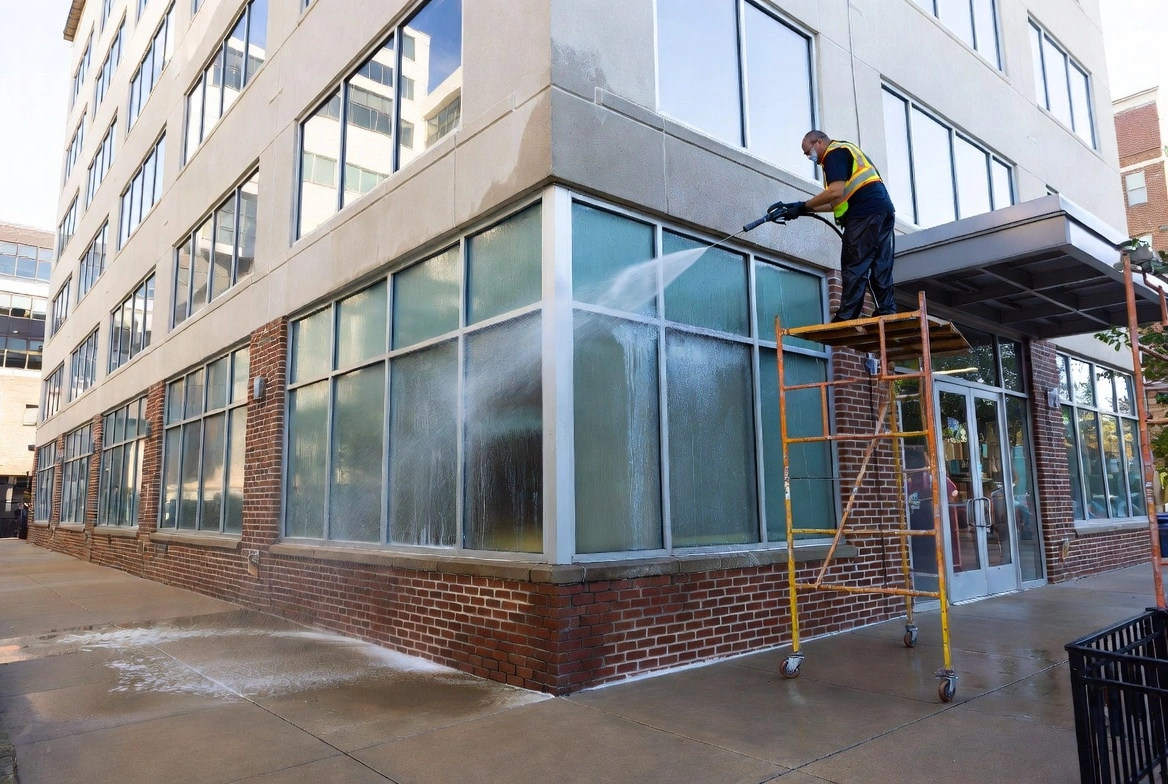
- Primary Facades: Annual to bi-annual for most properties. High-visibility retail centers in urban Raleigh or Charlotte may require quarterly service to stay competitive.
- Windows and Glass: Quarterly professional cleaning is the standard.
- Awnings and Canopies: Bi-annual. These surfaces are prone to pollen accumulation in the spring and mildew in the humid NC summers.
3. Parking Lots and Pavement: Quarterly to Bi-Annually
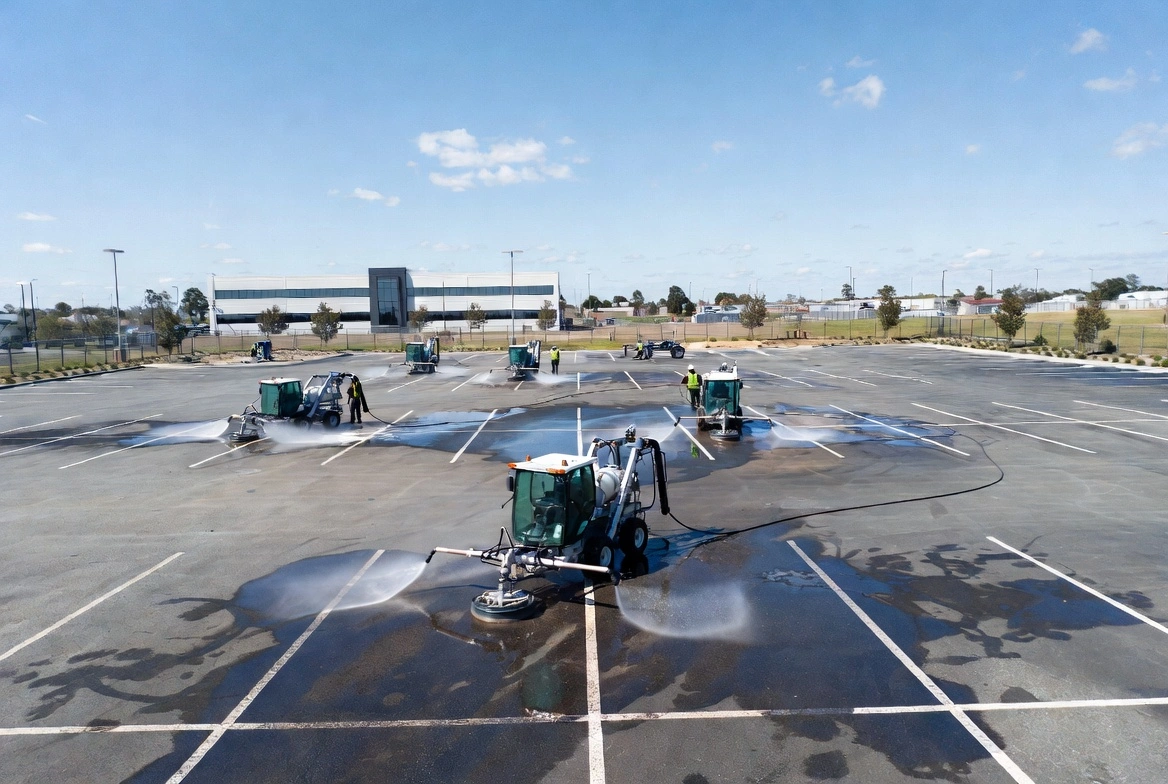
- Parking Lots: Quarterly cleaning is ideal. Removing automotive fluids early prevents asphalt deterioration and prepares the surface for future seal coating.
- Parking Garages: Bi-annual deep cleaning with quarterly spot treatments for high-traffic zones.

Part 2: Why North Carolina Properties Require Special Attention
The Carolinas’ humid subtropical climate creates unique challenges that often necessitate more frequent cleaning than properties in drier states.
The “Pollen Punch” (March – May)
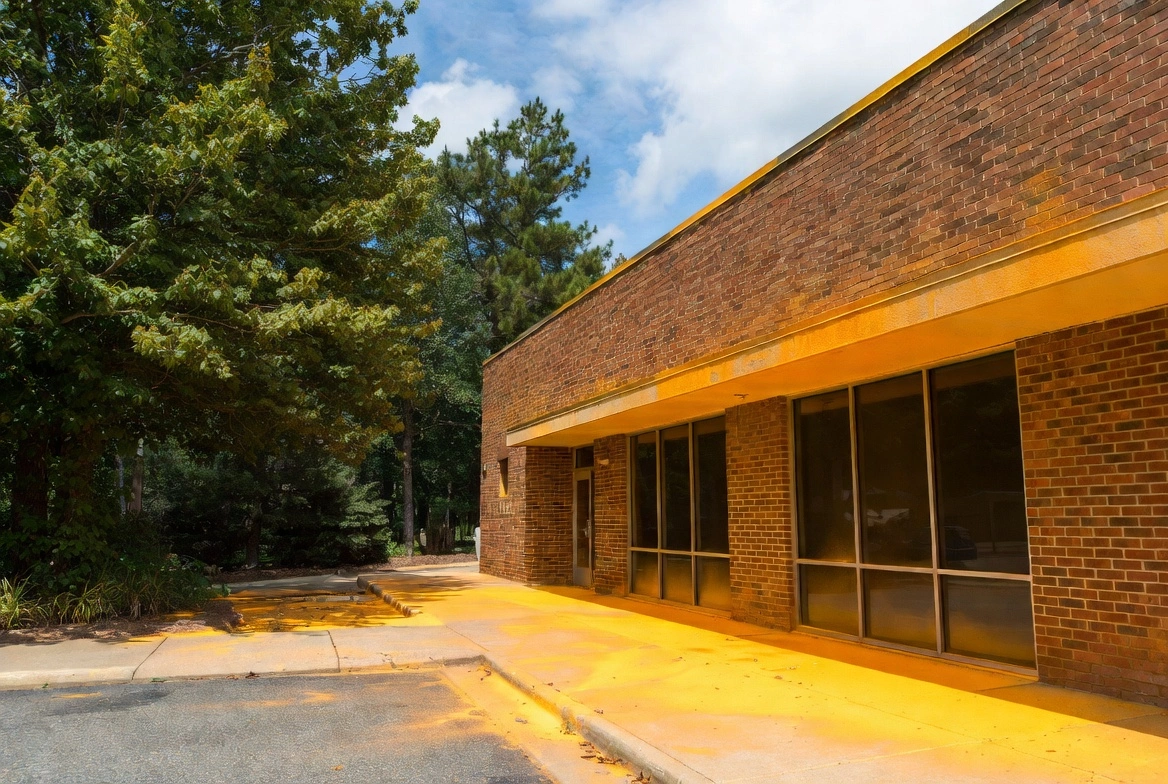
North Carolina’s notorious pollen season leaves a thick yellow coating on everything. We recommend a major cleaning in late May to remove this residue before it “bakes” onto surfaces during the summer heat.
Humidity and Organic Growth
With average humidity levels between 60-70%, Raleigh and Charlotte properties are breeding grounds for algae, mold, and mildew—especially on north-facing walls. Soft washing is often required bi-annually to keep these organisms at bay.
The Coastal Factor (Wilmington and Beyond)
Properties near the coast face salt air, which accelerates the deterioration of metal fixtures and porous stone. These buildings typically require 25-40% more frequent cleaning than inland properties.
Part 3: Factors That Shift Your Schedule
Your specific commercial building cleaning frequency will fluctuate based on several localized variables:
- Surrounding Vegetation: Properties with heavy tree coverage experience more bird droppings, leaf tannins (which stain concrete), and moisture retention. Expect to increase cleaning frequency by 40-60%.
- Building Age: Older, porous materials like historic brick or unsealed stone trap dirt more easily than modern, glass-heavy structures.
- Urban Pollution: Downtown buildings face increased automotive exhaust and “city grime,” requiring more frequent attention than suburban office parks.
- Irrigation Overspray: Improperly aimed sprinklers can lead to hard water stains and localized algae growth, requiring spot-cleaning between major service dates.
Part 4: The Seasonal Cleaning Strategy
To maximize your budget, align your pressure washing schedule with the seasons:
- Spring (Post-Winter Recovery): Focus on removing road salt, de-icing chemicals, and pollen. This is the best time for a full property “refresh.”
- Summer (Humidity Management): Monitor for green or black algae growth. Use soft washing to kill spores without damaging siding.
- Fall (Winter Readiness): Clear gutters and remove leaf stains before the first frost.
- Winter (Strategic Maintenance): Focus on salt removal from entryways when temperatures rise above 40°F.
Part 5: The Financial Impact of Consistent Maintenance
Smart property managers view pressure washing as a preventive maintenance tool rather than an aesthetic luxury.
Asset Longevity
Contaminants like mold and road salt can physically degrade building materials. Regular cleaning prevents permanent etching on concrete and the rot of wooden or composite structures.
Energy Efficiency
A clean, reflective roof and exterior can reduce cooling costs by 10-25% by minimizing the “heat island” effect.
Maintenance Contract Savings
By bundling services into an annual maintenance agreement with Carolina Sweepers, property managers typically save 15-25% compared to one-off emergency calls.
Part 6: Frequently Asked Questions (FAQ)
Q: Can I wait until the building “looks dirty” to clean it?
A: We advise against this. By the time you see visible black streaks (algae), the roots have already begun to penetrate the surface. Preventive cleaning is always cheaper than restorative cleaning.
Q: Will pressure washing damage my old brick facade?
A: Not if done correctly. We use soft washing for delicate materials, which uses low-pressure (under 500 PSI) and specialized solutions to clean without the “blasting” force that can damage mortar.
Q: Is pressure washing environmentally safe?
A: At Carolina Sweepers, we follow all NC environmental regulations and use biodegradable, EPA-approved solutions.
Conclusion: Protect Your Investment
Establishing a customized commercial building washing schedule is a hallmark of professional property management. Whether you are managing a retail hub in Raleigh or an industrial warehouse in Charlotte, consistency is key.
Ready to build your plan? Contact Carolina Sweepers or call us at (919) 481-9003 for a complimentary property assessment. Let us help you keep your North Carolina property pristine year-round.
No Comments yet!