 Serving NC, SC, VA & GA — 25 Years of Experience, Comprehensive Maintenance Services, Multi-Location Support
When maintaining a commercial property in Raleigh, Durham, or Charlotte, choosing the right exterior cleaning method is the difference between a pristine storefront and costly structural damage. While both pressure washing and soft washing effectively remove grime, understanding their unique applications is vital for property managers looking to maximize their ROI.
At Carolina Sweepers, we have over two decades of experience providing commercial exterior cleaning throughout North and South Carolina. This guide explains the science behind each method to help you make the best choice for your facility.
Part 1: The Mechanics of Commercial Pressure Washing

Pressure washing (or power washing) uses high-force water streams, typically between 1,500 to 4,000 PSI, to mechanically blast away stubborn contaminants like grease, gum, and heavy dirt.
The Role of PSI and GPM
Understanding the technical side helps in choosing a service provider.
- PSI (Pounds per Square Inch): Measures the “punch” or force of the water. For concrete, a higher PSI is necessary to reach into the pores.
- GPM (Gallons per Minute): Measures the volume of water. Higher GPM allows for faster rinsing and debris removal, which is critical for large parking lot cleaning projects.
Ideal Surfaces for High-Pressure Cleaning
Pressure washing is best suited for durable, non-porous surfaces that can withstand significant force:
- Concrete Surfaces: Ideal for parking lot cleaning, sidewalks, and loading docks to remove oil stains and tire marks.
- Asphalt Pavement: Used at lower PSI levels to prep surfaces for seal coating.
- Brick & Stone Masonry: Effectively removes years of industrial pollution and organic growth from historic facades.
- Metal Structures: Cleans industrial siding and dumpster enclosures by removing oxidation.
Strategic Benefits of High-Pressure Cleaning
- Instant Curb Appeal: Provides immediate visible results for time-sensitive projects.
- Deep Stain Removal: The only effective way to remove embedded gum and automotive fluids.
- Chemical-Free Options: Relies primarily on water force, reducing environmental impact in high-traffic areas.
Part 2: The Science of Soft Washing
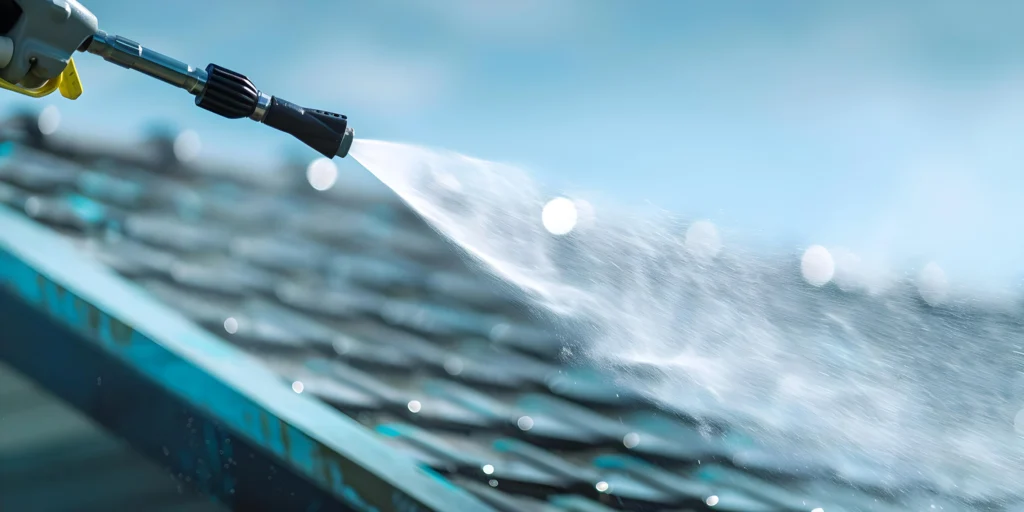
Soft washing is a low-pressure cleaning method (100–500 PSI) that uses specialized, biodegradable cleaning solutions to chemically break down organic growth like algae, mold, and mildew.
The Chemical Advantage
Unlike pressure washing, which uses mechanical force to scrape off growth, soft washing uses a surfactant-based solution to kill it. This prevents the immediate regrowth of spores, which is particularly important in the humid climate of the Carolinas.
When to Choose Soft Washing for Your Business
Soft washing is the industry standard for delicate materials that high pressure would destroy:
- Commercial Roof Cleaning: Safely cleans asphalt shingles and metal roofs without damaging coatings or granules.
- Vinyl Siding & EIFS: Prevents water from being forced behind panels, which often leads to mold growth inside walls.
- Stucco & Painted Surfaces: Preserves paint adhesion and prevents the “etching” caused by high-pressure streams.
- Windows & Awnings: Gently cleans fabric canopies and large glass installations without risking seal failure.
Long-Term Strategic Benefits
- Longer-Lasting Results: Because the chemicals kill organisms at the root, surfaces stay clean 4-6 times longer than pressure washing alone.
- Water Conservation: Uses 60-75% less water, supporting your company’s sustainability goals.
- Eco-Friendly Integrity: Carolina Sweepers uses EPA-approved solutions that are safe for your property’s landscaping.
Part 3: Comparative Analysis & Decision Matrix
Choosing between the two methods often requires a hybrid approach. For example, a retail center may need high-pressure cleaning for its concrete walkways but soft washing for its storefront awnings and roof.
Quick Comparison Table
| Feature | Pressure Washing | Soft Washing |
|---|---|---|
| Pressure Level | 1,500–4,000 PSI | 100–500 PSI |
| Cleaning Agent | Mostly Water | Biodegradable Solutions |
| Best For | Concrete, Brick, Metal | Siding, Roofs, Stucco |
| Result Duration | 3–6 Months | 12–18 Months |
Part 4: Environmental Stewardship and Regulatory Compliance
For commercial property managers in North Carolina, environmental compliance is not optional.
Managing Runoff in the Carolinas
The Clean Water Act mandates that wash water must be properly managed. Carolina Sweepers ensures that all commercial building exterior cleaning projects follow local NC environmental regulations.
- Water Recovery Systems: For heavy oil or chemical removal, we utilize recovery systems to prevent contaminants from entering storm drains.
- Biodegradable Standards: Our soft wash solutions are designed to break down quickly, minimizing the impact on local flora and fauna.
Part 5: Seasonal Maintenance Schedules for NC Properties
The changing seasons in the Carolinas bring different challenges for exterior maintenance.
 Spring: The Post-Pollen Refresh
Spring is the peak season for soft washing. Removing heavy yellow pollen from siding and windows prevents it from baking into the surface during the summer heat.
 Summer: Algae and Mildew Control
High humidity in North Carolina leads to rapid algae growth, particularly on the north-facing sides of buildings. Regular soft washing treatments during these months keep your facade looking professional.
 Fall: Leaf and Debris Removal
Concrete pressure washing is vital in the fall to remove leaf tannins that can permanently stain sidewalks and parking lots.
 Winter: Salt and Brine Cleanup
If your property uses ice melt or brine, a mid-winter pressure wash is essential to prevent these chemicals from eating away at your concrete and metal doorways.
Part 6: Case Study – The Carolina Sweepers Difference
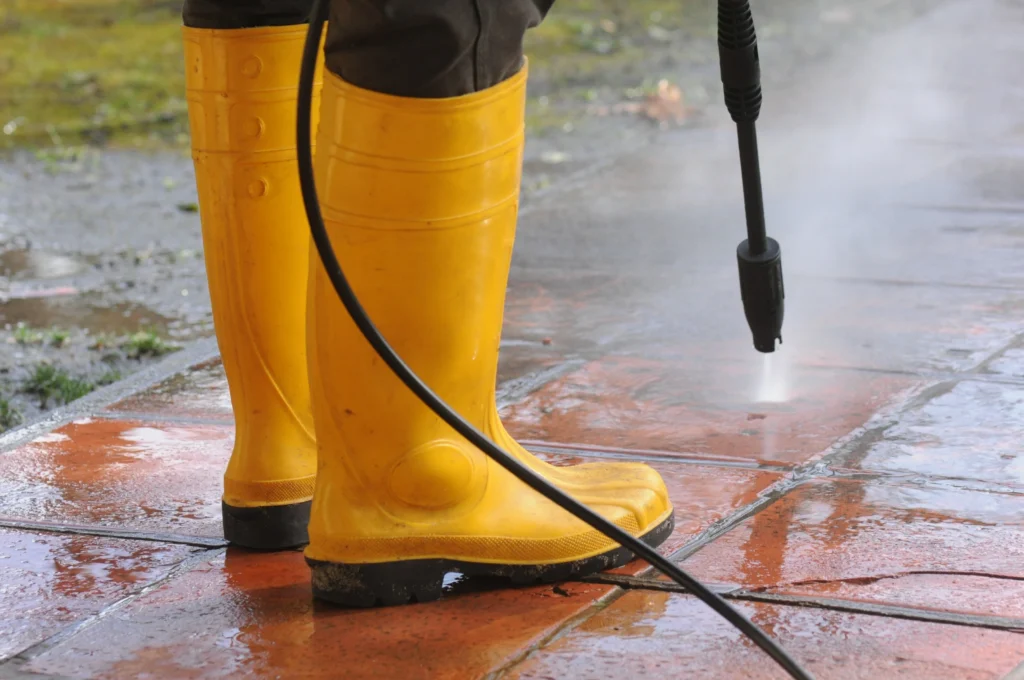
For over 20 years, we’ve served the Raleigh, Durham, Charlotte, and Wilmington markets with customized maintenance plans.
Scenario: A large retail plaza in Raleigh had significant “tiger stripping” on its gutters and heavy gum deposits on the walkways.
Solution: We implemented a dual-action plan. Using high-pressure cleaning for the walkways to remove gum and organic staining, followed by a specialized soft wash for the gutters and building envelope.
Result: The property was restored to a “like-new” appearance without any damage to the delicate EIFS siding, significantly increasing its curb appeal for high-end tenants.
Part 7: Frequently Asked Questions
1. Will soft washing kill my building’s landscaping?
No. When performed by professionals like Carolina Sweepers, we use pre-wetting techniques and plant-safe solutions to ensure your greenery remains healthy.
2. How often should a commercial building be cleaned?
While it depends on the environment, we generally recommend a full exterior soft wash once every 12–18 months and a concrete pressure wash every 3–6 months for high-traffic areas.
3. Is pressure washing safe for old brick?
It depends on the mortar. For historic properties in North Carolina, we often recommend a “low-pressure” wash or a modified soft wash to ensure the structural integrity of the masonry isn’t compromised.
Part 8: Why Professional Expertise Matters
We don’t just “spray and pray”–we assess your building’s specific materials to determine the safest, most effective approach. DIY or “discount” services often lead to:
- Blown Window Seals: Caused by improper pressure.
- Etched Concrete: Permanent swirl marks from inexperienced wand handling.
- Voided Warranties: Many commercial roofing warranties require specific “no-pressure” cleaning methods.
Schedule Your Free Property Assessment
Protect your investment with professional commercial building exterior cleaning. Contact Carolina Sweepers today for a transparent, detailed quote.


No Comments yet!