 Serving NC, SC, VA & GA — 25 Years of Experience, Comprehensive Maintenance Services, Multi-Location Support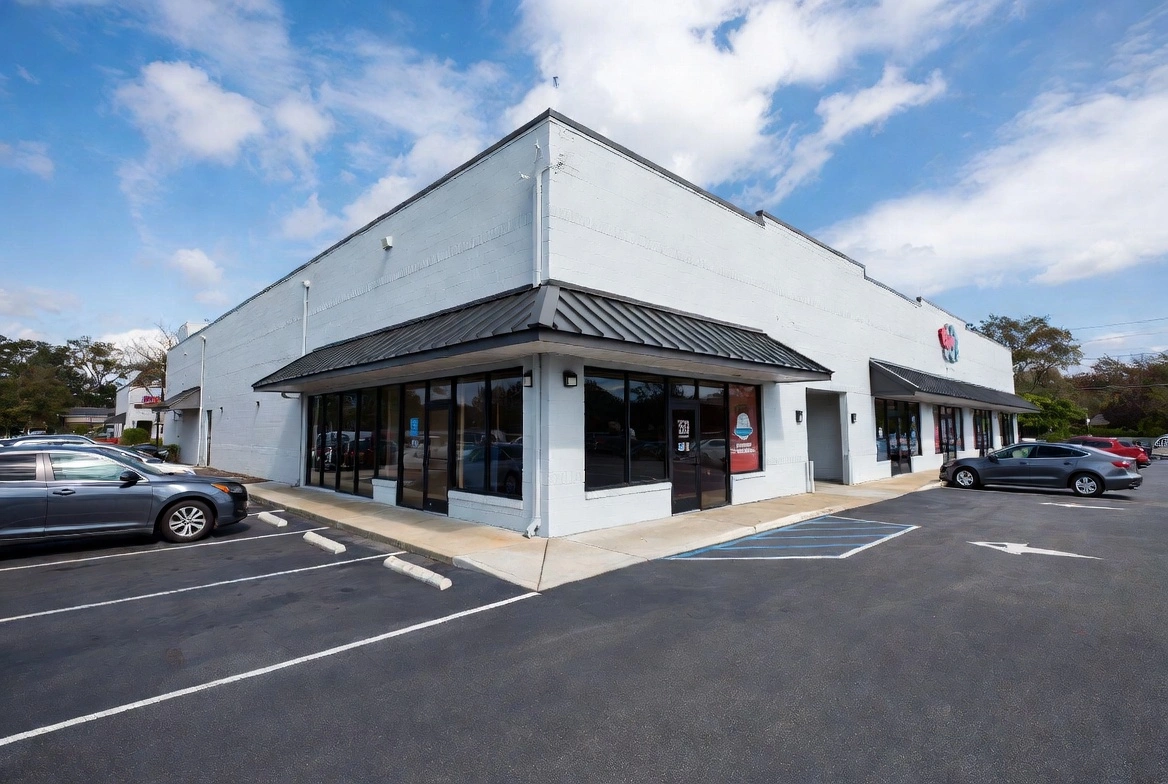
Last spring, a property manager in Charlotte called us about a tenant threatening to break their lease. The reason? The building’s exterior looked so neglected that the tenant’s own customers were complaining. Green algae streaked down the walls, the sidewalks were black with gum and grime, and the parking lot had oil stains visible from the street. One commercial pressure washing later, the tenant stayed. The whole job cost less than a single month’s vacancy would have.
We hear stories like this constantly. After 25 years maintaining over 1,000 commercial properties across North Carolina, South Carolina, Virginia, and Georgia, one thing is clear: pressure washing is one of those maintenance line items that pays for itself many times over when you do it right.
This guide breaks down what commercial pressure washing (sometimes called commercial power washing) actually involves, how to schedule it, what to budget, and how to avoid the compliance mistakes that catch a lot of property managers off guard.
Table of Contents
- Why Commercial Pressure Washing Matters for Your Property
- What Commercial Pressure Washing Services Include
- How Often Should You Pressure Wash a Commercial Property?
- Signs Your Property Needs Pressure Washing Now
- Choosing a Commercial Pressure Washing Company
- Environmental Compliance and Stormwater Regulations
- Making Commercial Pressure Washing Part of Your Maintenance Program
- Frequently Asked Questions
- The Bottom Line: A Smarter Approach to Exterior Maintenance
Why Commercial Pressure Washing Matters for Your Property
Most property managers think of pressure washing as cosmetic, a nice-to-have. It’s not. It directly affects your lease rates, your liability exposure, and whether you’re on the right side of stormwater regulations.
First Impressions Drive Business Decisions
Here’s a number that should bother you: 95% of shoppers would avoid a store with a visibly dirty exterior. And 76% of consumers form an opinion about a business before they even step inside.
Think about what that means for your retail tenants. You could have the best anchor tenant in the market, but if their customers pull into a parking lot with oil stains and stained sidewalks, they’re making judgments about that business within seven seconds of arrival. That’s not the kind of first impression any tenant is paying premium rent for.
We’ve watched properties in the same market, similar size, similar tenants. One with regular pressure washing services and one without. The clean properties consistently fill vacancies faster and hold tenants longer. It’s not complicated. People want to do business in places that look well-maintained.
Protecting Your Property Investment
Here’s what a lot of property managers don’t realize: dirt and biological growth aren’t just ugly. They’re actively destroying your surfaces.
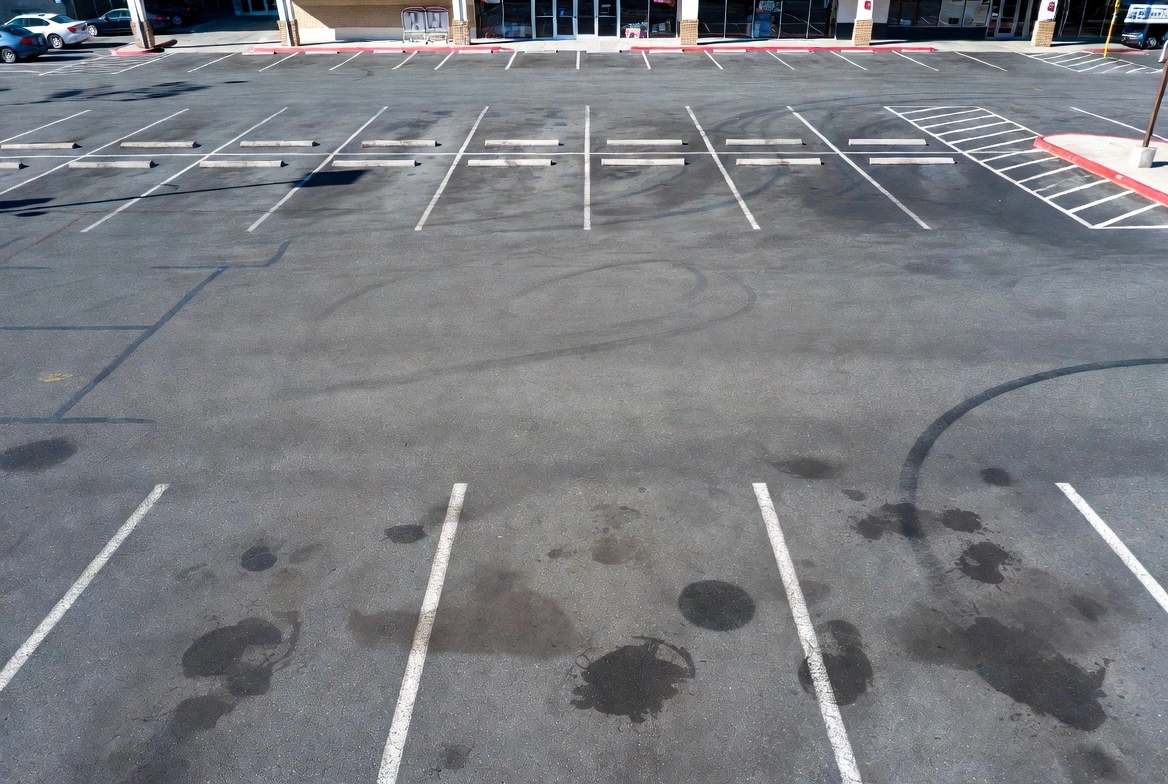
Algae holds moisture against concrete and brick, which accelerates deterioration. Oil stains don’t just sit on top of asphalt. They penetrate the surface and weaken the structure underneath. Mold and mildew eat into wood and composite materials over time. Left alone, these aren’t cosmetic problems anymore. They’re repair bills.
The math is straightforward. Concrete replacement runs $8–$12 per square foot. Pressure washing that same concrete costs $0.10–$0.30 per square foot. Property managers who keep a consistent cleaning schedule typically get 15–25% more life out of their concrete, sidewalks, and building exteriors compared to properties that only clean when something looks bad enough to trigger a complaint.
Reducing Liability and Safety Risks
This one’s simple. Slippery sidewalks, oil-slicked parking areas, and algae-covered walkways are slip-and-fall hazards. OSHA reports that slips, trips, and falls account for 15% of all accidental workplace deaths, and slip-and-fall claims are among the most common lawsuits commercial properties face.
If someone falls on your property, the first thing their attorney will ask is what you did to maintain safe conditions. A documented pressure washing schedule is strong evidence you took reasonable steps. No documentation? That’s a much harder conversation with your insurance company.
What Commercial Pressure Washing Services Include
When most people think of commercial pressure washing, they picture someone hosing down a parking lot. That’s part of it, but a full commercial program covers a lot more ground than that.
Parking Lot and Concrete Surface Cleaning
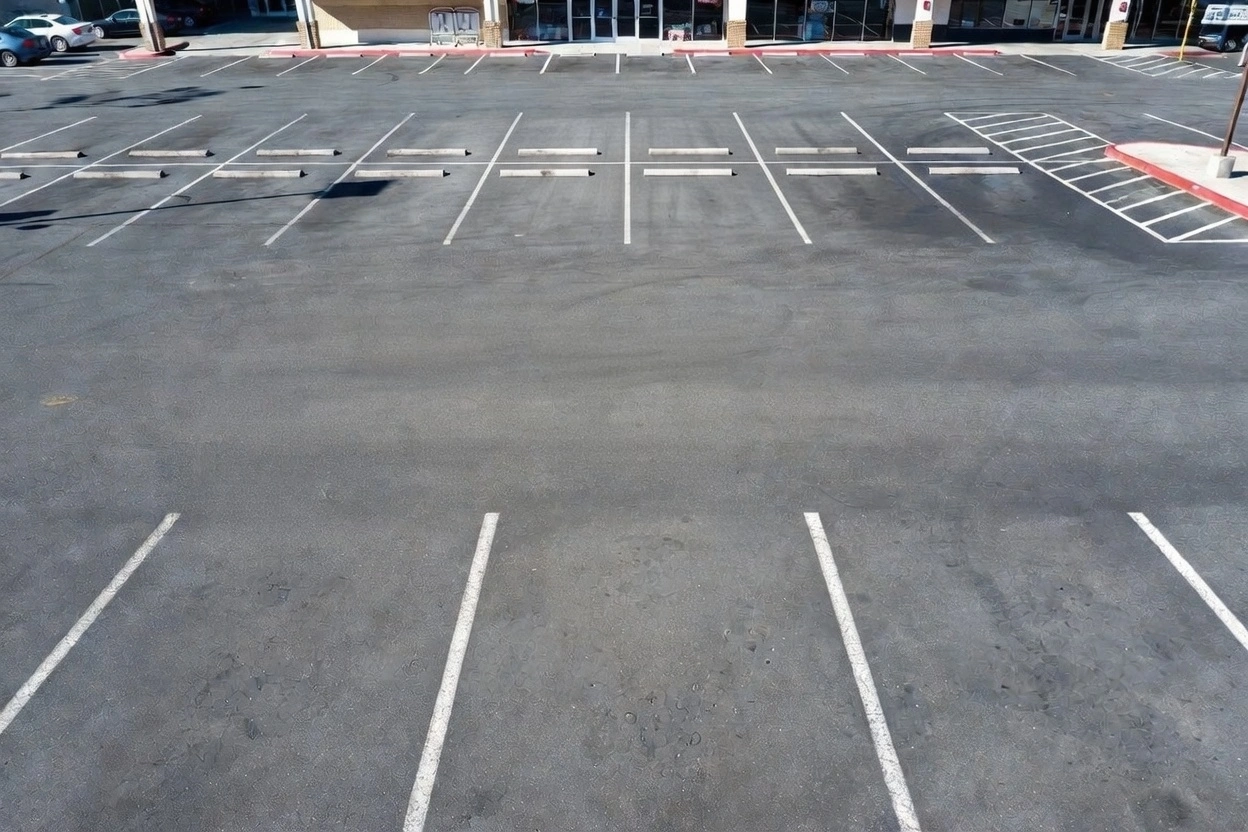
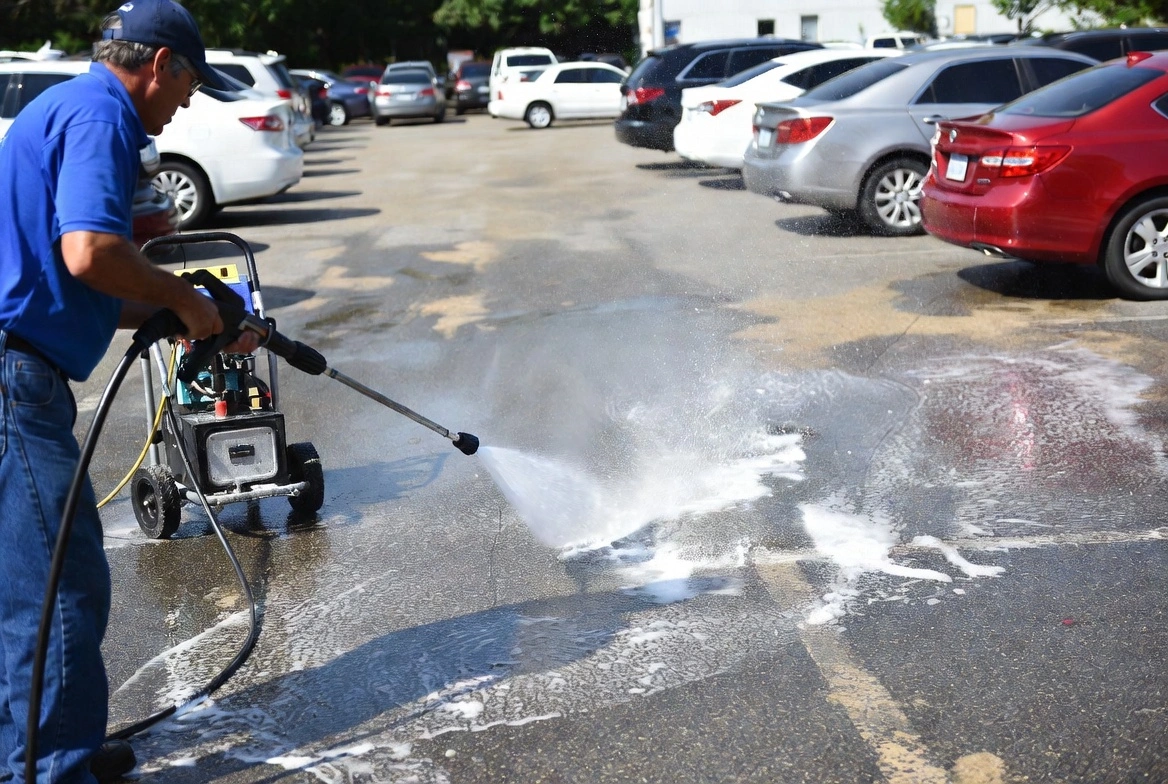
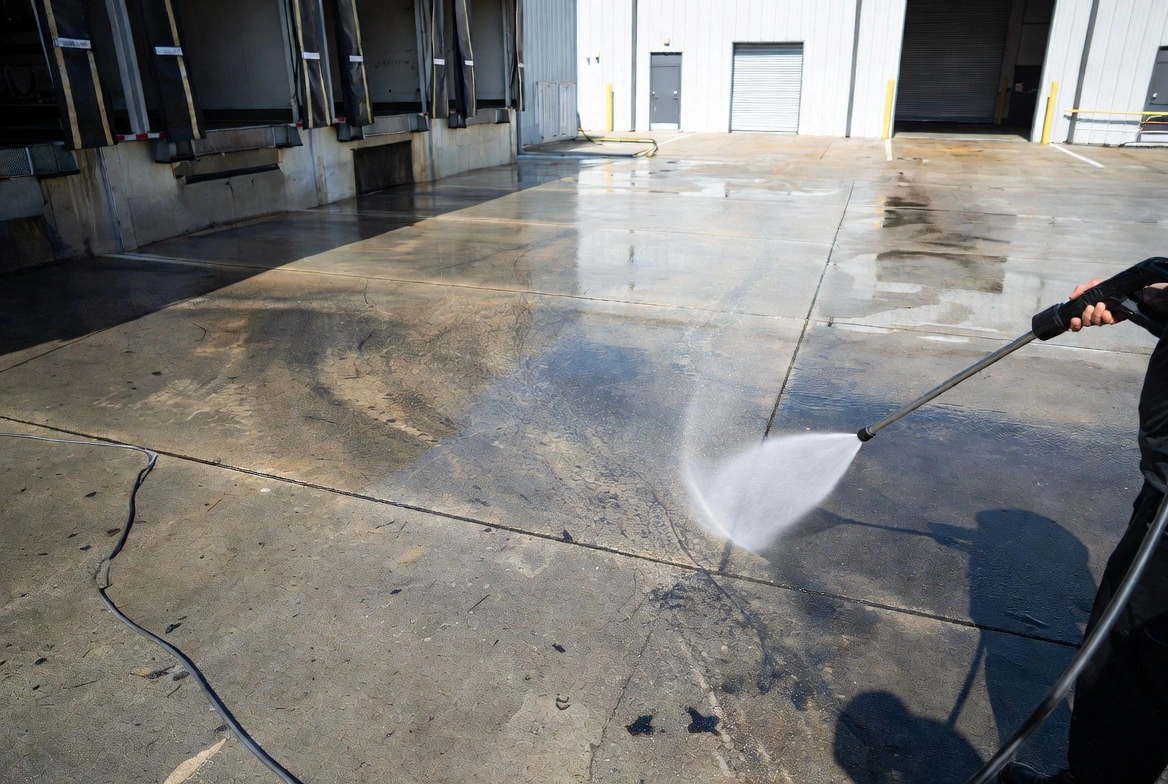
This is the bread and butter of commercial pressure washing. Your parking lot takes a beating: oil drips, tire marks, gum, food spills, and years of ground-in grime that regular sweeping alone can’t remove. Drive lanes, entrances, and loading zones typically get dirtier faster than the rest of the lot, so they often need extra attention.
If your property has automotive, restaurant, or grocery tenants, expect heavier oil contamination. Those lots usually need degreasing agents applied before the pressure wash to break down petroleum-based stains. Water alone won’t cut it.
Building Exterior and Facade Cleaning
Your building exterior collects dirt, pollution residue, and biological growth whether you notice it or not. It happens gradually enough that you stop seeing it until someone points it out (or a tenant does). The cleaning method depends on what your building is made of:
- Concrete and brick: Pressure washing at 2,500–3,500 PSI with appropriate nozzle selection
- Stucco and EIFS: Soft washing (low pressure with cleaning solutions) to prevent surface damage
- Painted surfaces: Low-to-medium pressure to avoid stripping paint
- Metal panels: Adjusted pressure based on panel type and coating
If you’re unsure about the right approach for your building, our guide on pressure washing vs. soft washing breaks down when each method is appropriate.
Sidewalk and Entryway Cleaning
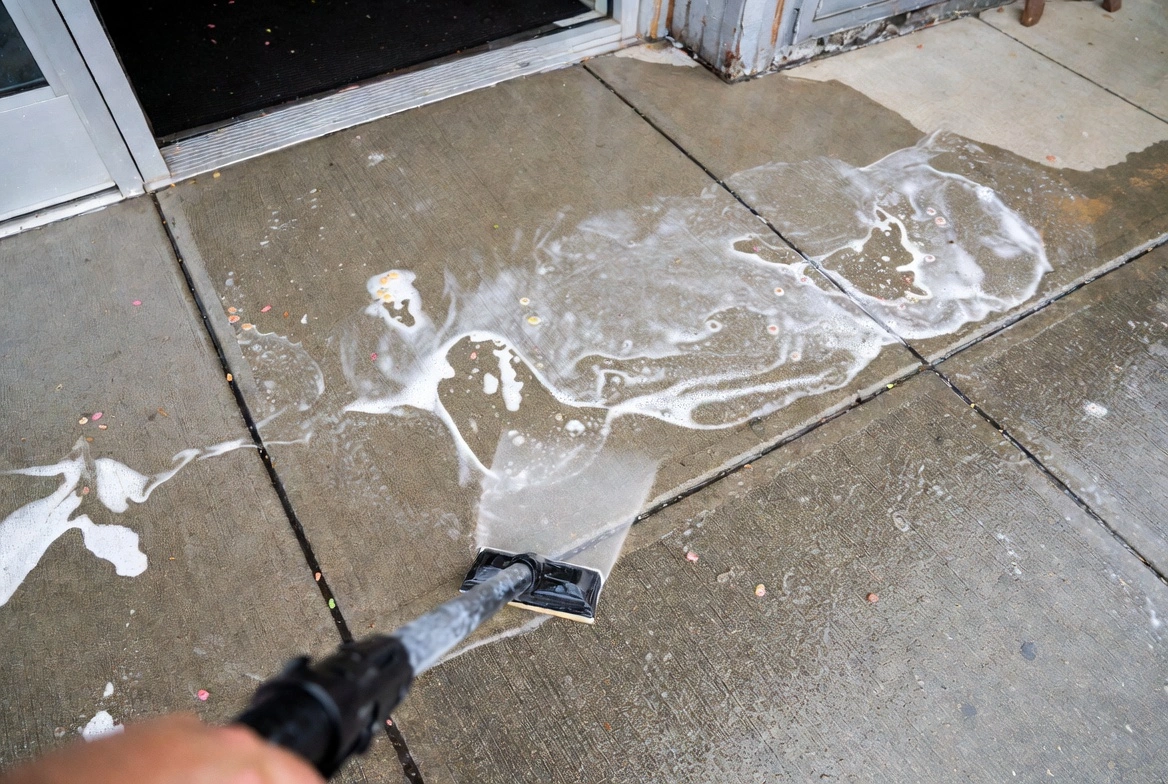
Walk the main sidewalk of any busy retail center that hasn’t been cleaned in six months. You’ll find gum spots every few feet, beverage stains around the trash cans, and organic growth creeping in from the edges. These high-visibility areas get dirty faster than anything else on your property, and they’re what visitors walk across first. Monthly or quarterly sidewalk cleaning is usually what it takes to keep them looking right.
Dumpster Pad and Loading Dock Cleaning
Nobody’s favorite topic, but dumpster pads and loading docks are usually the dirtiest areas on any commercial property. Grease, food waste, and chemical residue build up fast. The problems compound: odors lead to pest issues, pest issues lead to tenant complaints, and eventually you’re dealing with health code violations. Monthly pressure washing with sanitizing agents, especially for properties with food-service tenants, keeps these areas under control before they become everyone’s problem.
Specialty Surface Cleaning
Beyond the standard areas, most commercial properties have a few surfaces that need their own approach:
- Drive-through lanes: Oil and food buildup from vehicle traffic
- Fuel station areas: Petroleum contamination requiring specialized recovery
- Graffiti removal: High-pressure treatment with chemical pre-treatment
- Awning and canopy cleaning: Low-pressure washing for fabric and vinyl structures
- Parking garage floors: Confined-space cleaning with appropriate ventilation
How Often Should You Pressure Wash a Commercial Property?
This is one of the most common questions we get, and the honest answer is: it depends. But after maintaining thousands of commercial properties across the Southeast, we’ve landed on some solid baselines.
Recommended Frequency by Property Type
| Property Type | Parking Lot | Sidewalks & Entries | Building Exterior | Dumpster Areas |
|---|---|---|---|---|
| Retail Center | Quarterly | Monthly | 2x/year | Monthly |
| Office Park | 2x/year | Quarterly | 1–2x/year | Quarterly |
| Medical Facility | Quarterly | Monthly | 2x/year | Monthly |
| Industrial | 2x/year | 2x/year | Annually | Monthly |
| Restaurant/Food | Monthly | Weekly–Monthly | Quarterly | Weekly |
| Multi-Family | Quarterly | Quarterly | Annually | Monthly |
These are baselines. High-traffic properties or those in areas with heavy tree cover, construction activity, or environmental contamination may need more frequent service.
Seasonal Scheduling for Southeast Properties
If you manage properties anywhere in the Southeast, you already know the climate creates its own cleaning calendar. Here’s how we think about it:
Spring (March–May) is the big one. Pollen coats every surface in April and May, and if you’ve managed a property in the Triangle, Charlotte, or Atlanta, you know what a single bad pollen week does to a parking lot. It looks abandoned. The smart move is to schedule your major pressure washing once pollen season wraps, usually late April through May.
Summer (June–August) is when humidity does its damage. Algae and mold explode on shaded surfaces: building exteriors, covered walkways, north-facing walls. One thing worth knowing: schedule summer cleanings for early morning or overcast days. If crews apply cleaning solutions in direct afternoon sun, the solution evaporates before it actually works.
Fall (September–November) is about getting retail properties cleaned up before the holiday shopping rush. Leaf debris and organic matter stain concrete fast if you let it sit, so don’t wait until December to address it.
Winter (December–February) requires some judgment. You can’t pressure wash if temperatures are dropping below 40°F within 48 hours because residual water in the surface will expand and cause damage. But here’s something most people don’t know: winter is actually a great time for building exterior soft washing. Algae and mold are dormant, and they respond better to treatment.
Signs Your Property Needs Pressure Washing Now
Don’t wait for your next scheduled cleaning if you notice:
- Visible oil stains spreading across parking areas
- Green or black discoloration on building surfaces (algae or mold)
- Gum accumulation on sidewalks and entryways
- Tenant complaints about property appearance
- Upcoming property inspection or lease renewal
- Dark streaking on concrete surfaces
- Odor from dumpster pads or loading areas
- Standing water caused by drain blockage from debris buildup
Choosing a Commercial Pressure Washing Company
We’ll be direct here: the gap between a professional commercial pressure washing company and a crew with a rented machine from Home Depot is enormous. We’ve been called in to fix damage from inexperienced operators more times than we can count. Etched concrete. Water forced behind the building siding. Stripped paint.
What to Look for in a Provider
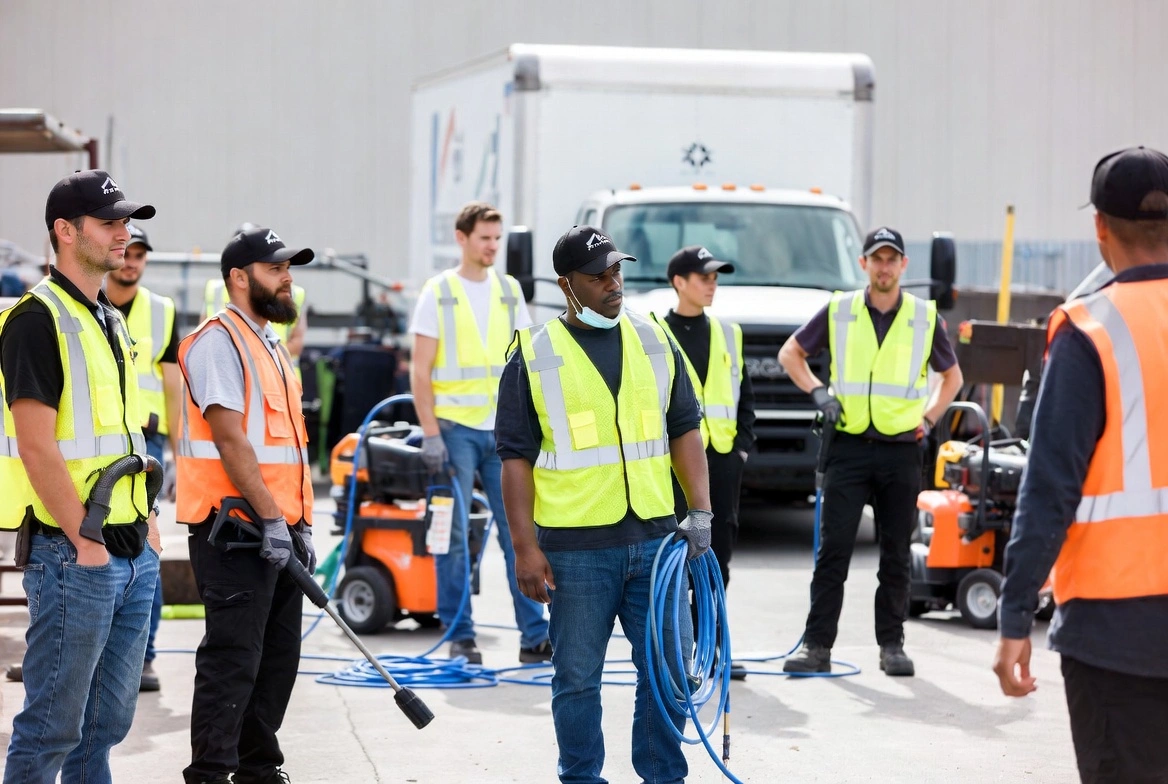
Start with the equipment. A legitimate commercial operation uses truck-mounted systems running 3,000–4,000+ PSI with large water tanks. If someone shows up with a residential unit on a trailer, they’re not equipped for commercial work. Period.
Insurance is non-negotiable. $1 million general liability minimum. Pressure washing at commercial pressures can crack concrete, damage facades, and break windows. Ask for a certificate of insurance before any work starts. Reputable companies also train their crews on OSHA safety guidelines for high-pressure equipment.
Beyond that, ask about stormwater management. If a provider can’t tell you how they handle wastewater and Clean Water Act compliance, that’s a problem. Ask about crew training. Surface-specific pressure settings and nozzle selection require real expertise. And ask about scheduling flexibility. Your retail tenants don’t want a pressure washing crew running during business hours.
One more thing worth considering: providers who handle pressure washing alongside sweeping, landscaping, striping, and other exterior services can coordinate better, deliver more consistent quality, and save you the headache of managing multiple vendors.
Questions to Ask Before Hiring
- What surfaces have you cleaned that are similar to mine?
- What insurance do you carry, and can you provide a certificate?
- How do you handle stormwater and wastewater?
- What cleaning solutions do you use, and are they EPA-compliant?
- Can you provide references from similar commercial properties?
- What does your service specifically include? (surfaces, areas, post-cleaning inspection?)
- Do you offer recurring service contracts with fixed pricing?
Red Flags to Watch For
- Won’t provide an insurance certificate (or doesn’t have one)
- Shows up with residential-grade equipment
- Goes blank when you ask about stormwater compliance
- Has never cleaned a property like yours
- Gives you a quote without walking the property first
- Prices way below everyone else – that usually means they’re cutting corners on insurance, chemicals, or equipment
Environmental Compliance and Stormwater Regulations
This is the section most pressure washing guides skip, and it’s the one that can cost you the most money.
EPA Requirements Property Managers Should Know

When you pressure wash a commercial property, that water (along with oil, chemicals, detergents, and whatever else it picks up) goes somewhere. Usually into your storm drain system. And under the EPA’s NPDES Stormwater Program, that can constitute an illegal discharge.
This isn’t hypothetical. EPA fines for improper stormwater discharge can hit $50,000 per day. We’ve seen property managers blindsided by this because their pressure washing vendor didn’t mention it. Key compliance points you need to know:
- Pre-treatment cleaning chemicals must be approved for stormwater contact or captured before entering drains
- Oil and petroleum contamination from parking lots requires special handling during pressure washing
- Food service areas may generate wastewater classified as industrial discharge
- Construction-related cleaning may fall under construction stormwater permits
Local regulations in Charlotte-Mecklenburg, Raleigh-Durham, Richmond, and Atlanta metro areas often add requirements beyond federal standards. Your pressure washing provider should know the specific rules for your property’s jurisdiction.
Water Recovery and Eco-Friendly Solutions
There are two main ways professional companies handle this.
The first is water recovery: vacuum systems that capture wastewater during pressure washing for proper disposal. This is required for properties with known contamination or those in sensitive watershed areas. The second is using biodegradable, EPA-compliant cleaning solutions that break down safely even if some water does reach the storm system.
We use biodegradable cleaning solutions on every job. For properties that require water recovery (and your provider should be able to tell you whether yours does), our equipment includes vacuum recovery systems that capture contaminated wastewater for proper disposal. You stay compliant without having to figure out the regulations yourself.
Making Commercial Pressure Washing Part of Your Maintenance Program
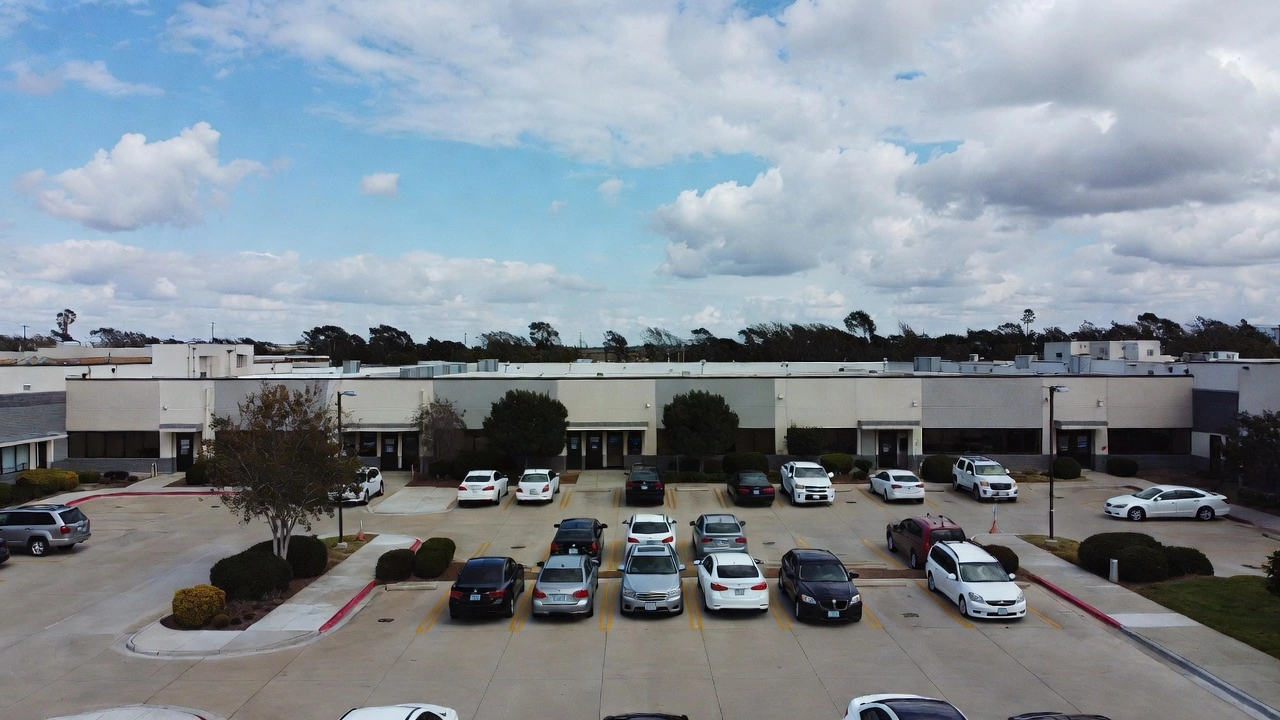
One mistake we see constantly: a property manager invests in a great pressure washing, then doesn’t follow up with regular parking lot sweeping. Three weeks later, the lot looks dirty again and they’re frustrated about the money they spent. Pressure washing isn’t a one-and-done fix. It works best as part of a maintenance rhythm where sweeping, landscaping, striping, and cleaning all work together.
A clean building facade next to an overgrown landscape sends mixed signals. A freshly swept lot with a grimy building does too. Everything has to pull in the same direction.
Sample Annual Maintenance Calendar
Here’s a rough annual calendar we use with a lot of our Southeast properties:
- January–February: Schedule spring pressure washing (book early, spring is peak season)
- March–April: Spring sweeping for pollen and winter debris
- May: Comprehensive pressure washing after pollen season
- June–July: Algae treatment on building exteriors
- August–September: Mid-year parking lot deep clean
- October: Pre-holiday pressure washing for retail properties
- November: Final exterior cleaning before winter
- December: Focus on indoor maintenance; schedule strategically around freezes
Frequently Asked Questions
How Much Does Commercial Pressure Washing Cost?
It depends on what you’re cleaning. Parking lots and concrete surfaces typically run $0.08–$0.25 per square foot. Building exteriors are higher at $0.15–$0.40 per square foot because they involve more complexity (height, surface material, soft washing vs. pressure washing). To put that in perspective, a 50,000-square-foot retail center parking lot costs somewhere between $4,000 and $12,500 per cleaning, depending on how dirty it is. If you’re bundling pressure washing with sweeping and other services under one contract, expect to save 20–30% compared to hiring separate vendors.
How Often Should a Commercial Building Be Pressure Washed?
For most commercial buildings in the Southeast, one to two times per year for the building exterior, and two to four times per year for parking lots and sidewalks. But there’s no universal answer. Restaurants need monthly cleaning, while a low-traffic office park might get by with twice a year. The Southeast’s humidity, pollen, and warm temperatures push everything toward the higher end of these ranges compared to drier climates.
What Is Included in Commercial Pressure Washing?
A full program usually covers parking lot and concrete cleaning, building exterior washing, sidewalk and entryway cleaning, dumpster pad sanitization, and loading dock degreasing. The equipment matters. Professional providers use truck-mounted systems operating at 2,500–4,000+ PSI. If someone shows up with a consumer-grade unit, they’re not equipped for commercial work.
The Bottom Line
Commercial pressure washing isn’t complicated, but it does require treating it as a regular program rather than something you call for when a property starts looking rough. By then, you’re paying more to fix problems that consistent maintenance would have prevented.
If you manage properties in the Southeast, the climate isn’t on your side. Humidity, pollen, and warm temperatures mean surfaces get dirty faster here than in most of the country. That’s not going to change. What you can control is how you respond to it.
Our recommendation (and we’re biased, but the math backs it up) is to work with a single provider who handles pressure washing alongside sweeping, landscaping, and your other exterior needs. Fewer vendors to manage, lower total cost, and one team that actually knows your properties.
Carolina Sweepers has been pressure washing commercial properties across NC, SC, VA, and GA since 2000. If you’re tired of coordinating separate vendors for every exterior service, we handle pressure washing, sweeping, landscaping, striping, and 12 other services under one contract. Get a free property assessment and we’ll show you exactly what your property needs and what you could save by consolidating.


No Comments yet!