 Serving NC, SC, VA & GA — 26 Years of Experience, Comprehensive Maintenance Services, Multi-Location Support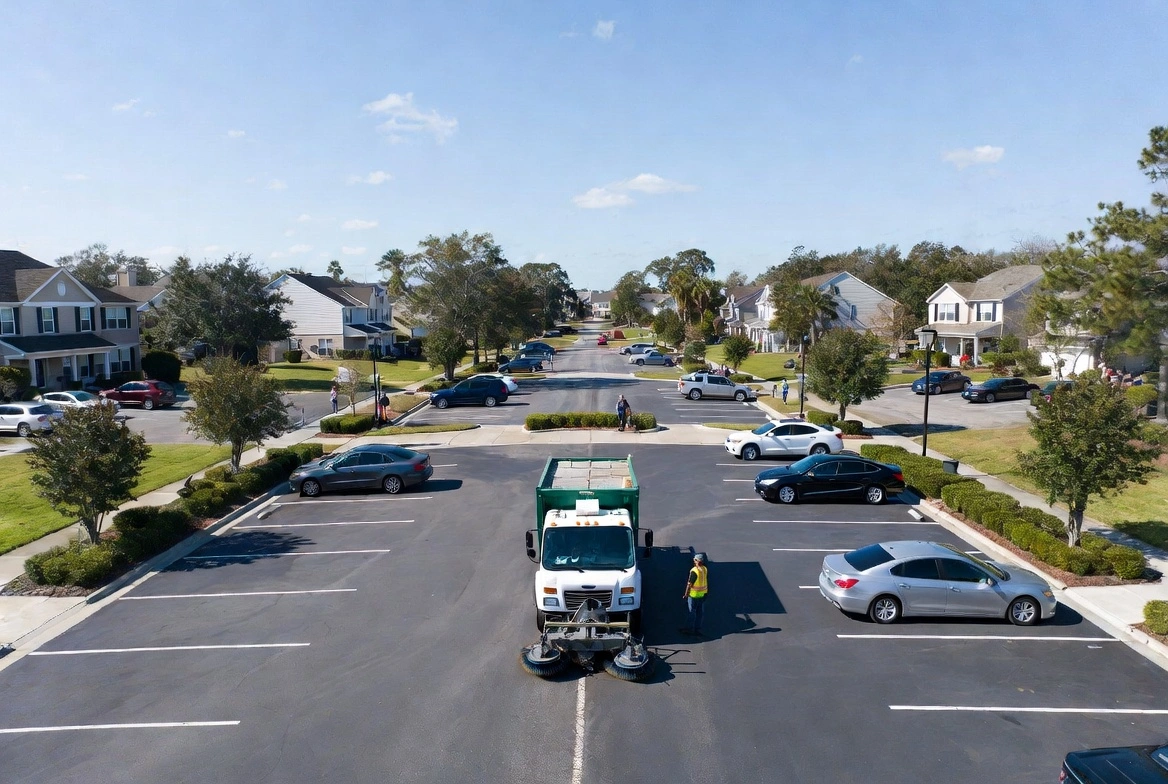
Key Takeaway: The right HOA sweeping schedule for Southeast communities means weekly service from March through November and bi-weekly in winter, with increased frequency during pollen season (March–April) and fall leaf drop (October–November). A well-planned HOA sweeping schedule costs $4,000–$12,000 annually for a typical 100–200 unit community, far less than the $15,000–$40,000+ in pavement repairs, stormwater fines, and resident complaints that neglected common areas generate. Carolina Sweepers maintains sweeping programs for HOA communities across NC, SC, VA, and GA with scheduling built around Southeast seasonal demands.
Table of Contents
- How Often Should an HOA Sweep Parking Lots and Common Areas?
- Recommended Sweeping Frequency by Community Type
- Month-by-Month HOA Sweeping Schedule
- What Areas Should HOA Sweeping Cover?
- How Sweeping Schedules Affect Resident Satisfaction
- How Should HOAs Budget for Sweeping Services?
- What to Look for in a Sweeping Vendor
- Frequently Asked Questions (FAQ)
- How much does HOA sweeping cost per month?
- Can sweeping help our HOA avoid stormwater fines?
- Should our HOA sweep in winter?
- What time of day is best for HOA sweeping?
- How do we handle sweeping around parked cars?
- Should the HOA or individual owners pay for sweeping?
- What is the difference between sweeping and portering for HOAs?
- How do we present sweeping costs to the HOA board?
- Conclusion
How Often Should an HOA Sweep Parking Lots and Common Areas?
A good HOA sweeping schedule calls for weekly service during active seasons (March–November) and bi-weekly during winter months at minimum. Your actual frequency depends on community size, tree coverage, traffic volume, and whether there’s construction or high-debris areas nearby.
The Community Associations Institute (CAI) recommends that community associations include regular exterior maintenance, including parking lot and street sweeping, in their annual operating budgets as a standard line item. Not optional. Communities that put off sweeping consistently face higher repair costs and lower resident satisfaction scores in annual surveys.
Recommended Sweeping Frequency by Community Type
| Community Type | Units | Recommended Frequency | Estimated Annual Cost |
|---|---|---|---|
| Small townhome community | 20–50 | Bi-weekly year-round, weekly spring/fall | $2,400–$4,800 |
| Mid-size HOA | 50–150 | Weekly March–Nov, bi-weekly Dec–Feb | $4,800–$9,600 |
| Large community / master-planned | 150–500 | Weekly year-round, 2x/week peak seasons | $9,600–$18,000 |
| Condo complex with garages | 50–200 | Weekly plus garage sweeping monthly | $6,000–$12,000 |
These estimates assume standard parking lots and common drive areas in the Southeast. Communities with heavy tree canopy, commercial-adjacent lots, or ongoing nearby construction should budget 20–30% above these ranges.
Here’s the thing: underscheduling is the most common mistake HOA boards make. A community that sweeps monthly instead of weekly doesn’t save 75% on sweeping. It shifts costs into pavement repair, drain clearing, and complaint management that exceeds the sweeping savings within 12–18 months.
What Should an HOA Sweeping Schedule Look Like Month by Month?
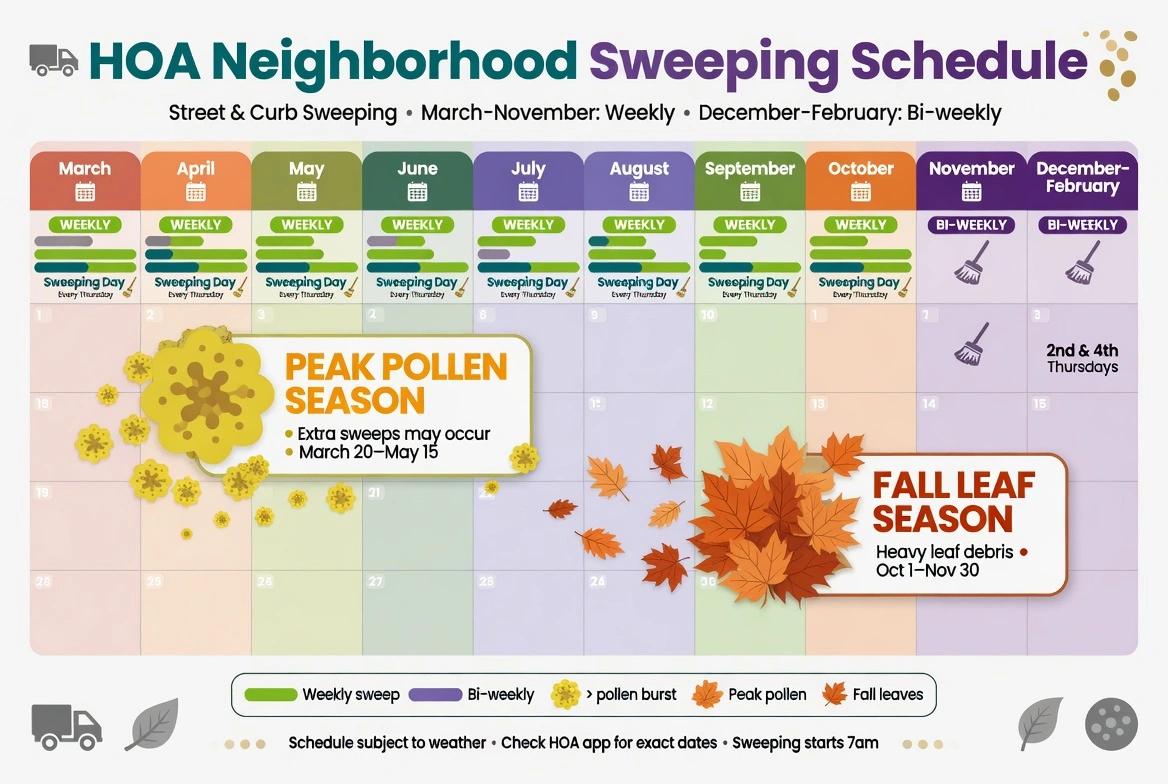
An effective annual sweeping calendar matches frequency to Southeast seasonal patterns, tackling the specific debris challenges each quarter brings. Below is a model calendar for HOA communities in NC, SC, VA, and GA.
Q1: January – March (Pre-Season to Pollen Onset)
January–February: Bi-weekly sweeping. Winter debris is minimal in the Southeast, but sand, gravel, and leftover leaf matter from fall still pile up. Get storm drains cleared of any winter buildup before spring rains arrive.
March: Time to switch to weekly sweeping. Pollen season kicks off in late February across most of NC and SC, and by mid-March, pine pollen coats every surface. Properties in the Triangle, Charlotte Metro, and Upstate SC see peak accumulation through April. Schedule a pre-season pressure washing of community buildings, pool areas, and entryways before pollen peaks.
Q2: April – June (Peak Pollen Through Summer)
April: Weekly sweeping at minimum, twice weekly for communities with heavy pine canopy. This is peak pollen season across the entire Southeast. Combine sweeping with monthly storm drain inspections to prevent pollen-clogged drains before thunderstorm season hits.
May–June: Back to weekly sweeping. Pollen subsides but summer thunderstorms increase debris wash. Landscaping maintenance generates grass clippings and mulch that migrate onto parking surfaces. Coordinate sweeping schedules with mowing days and sweep within 24 hours of mowing to catch blown clippings.
Q3: July – September (Summer Through Hurricane Season)
July–August: Weekly sweeping. Summer storms knock down branches, scatter mulch, and wash sediment onto paved surfaces. Hot pavement softens asphalt, and debris gets pressed into the surface by vehicle traffic, causing more damage than you’d expect.
September: Keep up the weekly frequency. Hurricane season peaks in the Southeast during August–September, and post-storm cleanup requires immediate sweeping to clear branches, leaves, and debris. Build emergency response capacity into your sweeping contract. Ask your vendor about guaranteed post-storm service windows.
Q4: October – December (Fall Leaf Season to Winter)
October–November: Bump up to twice weekly during peak leaf drop. Southeast deciduous trees shed heavily from mid-October through late November. Leaves clog drains faster than any other debris type and create slippery surfaces when wet. This is the second-highest maintenance period after pollen season.
December: Scale back to bi-weekly. Leaf fall tapers off and cooler temperatures reduce biological debris. In Virginia and northern NC, snow removal readiness takes priority. Make sure storm drains are clear before winter freeze-thaw cycles begin.
What Areas Should HOA Sweeping Cover?
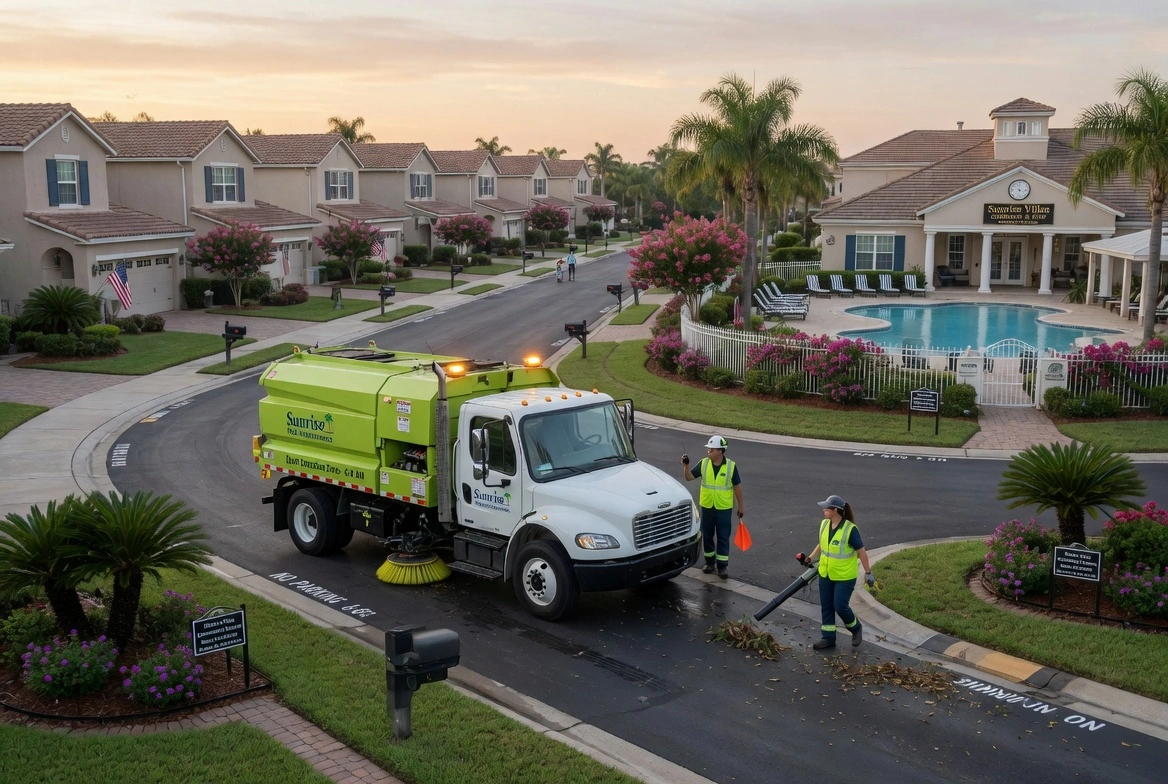
A solid sweeping program covers every paved and high-traffic surface in the community, not just the main parking lots. Skip secondary areas and you’ll get debris migration, drain blockages, and resident complaints about “the parts they forgot.”
Primary Areas (Every Scheduled Sweep)
- Main parking lots and visitor parking
- Community entrance drives and roundabouts
- Garage ramps and entry aprons (for communities with parking structures)
- Mailbox areas and package delivery zones
- Clubhouse, pool, and amenity parking
Secondary Areas (Bi-Weekly or Monthly)
- Internal community streets and fire lanes
- Walking paths adjacent to parking areas
- Dumpster pad surrounds and recycling areas
- Loading zones and moving truck staging areas
- Cul-de-sacs and dead-end drives
Seasonal Focus Areas
- Storm drain inlets and catch basins (critical before and during rain season)
- Areas beneath mature trees (pollen and leaf season priority)
- Construction-adjacent zones (if your community or a neighboring property has active building)
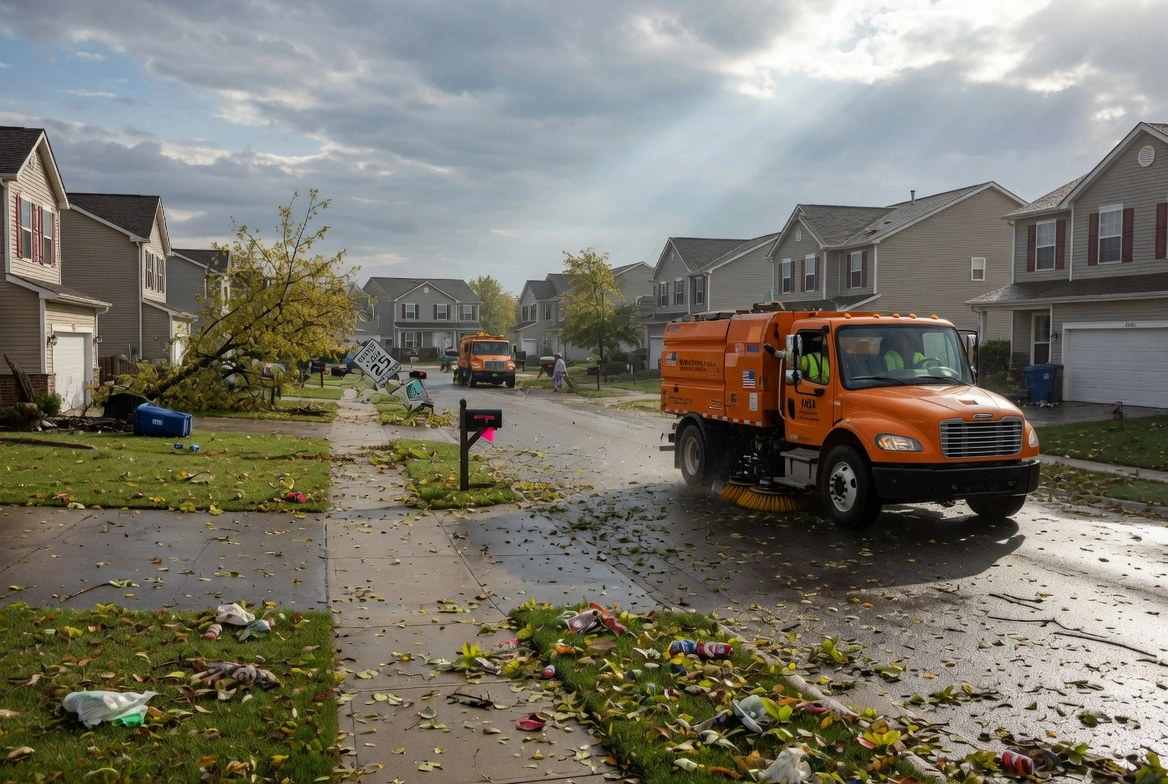
Map these areas with your sweeping vendor at the start of the contract. Carolina Sweepers conducts a property walk-through with every new HOA client to identify all service areas, drainage points, and seasonal trouble spots before the first sweep.
How Does a Sweeping Schedule Affect Resident Satisfaction?
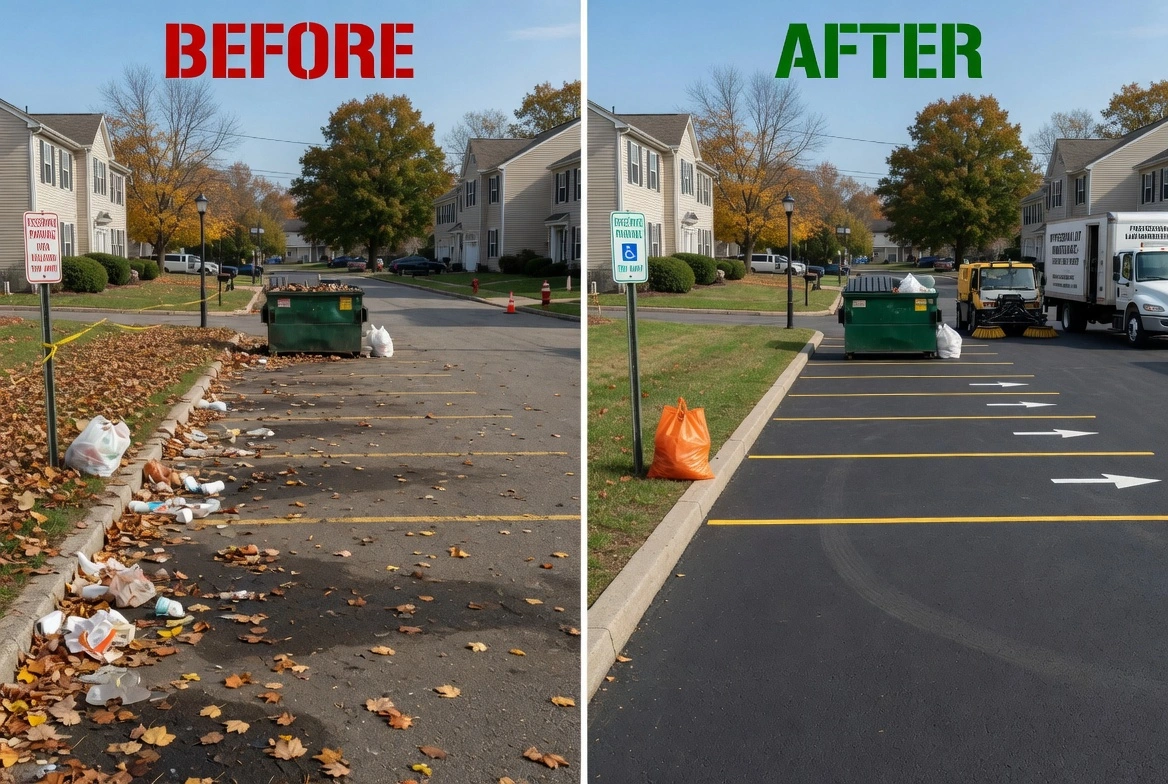
Clean common areas are the single most visible indicator of HOA management quality. And sweeping? It’s the maintenance activity residents actually see happening.
The Community Associations Institute reports that exterior maintenance consistently ranks among the top three factors driving resident satisfaction in community association surveys.
Residents notice dirty parking lots before they notice anything else. A 2024 J.D. Power property management satisfaction study found that exterior grounds maintenance was the strongest predictor of overall satisfaction scores, stronger than communication quality, fee transparency, or amenity access.
The connection is pretty straightforward. Residents who see clean parking lots and streets trust that their HOA dues are being spent well. Residents who see debris piling up, stained surfaces, and overflowing drains? They reach the opposite conclusion. And those perceptions drive complaints, board meeting conflicts, and ultimately, management company turnover.
For community managers who answer to a board and residents, a visible sweeping schedule delivers measurable results:
- Fewer complaints: Properties on weekly sweeping receive 60–70% fewer maintenance-related complaints than those on monthly schedules.
- Higher renewal rates: Resident lease renewals in rental communities increase 8–12% when exterior maintenance improves.
- Board confidence: Documented maintenance programs with photos and reports give boards the evidence they need for annual meetings.
Bottom line: consistency matters more than perfection. A reliable weekly sweep builds trust. An occasional deep clean after months of neglect does not.
How Should HOAs Budget for Sweeping Services?
Allocate 3–5% of total annual HOA operating budget for exterior sweeping and related maintenance. For a community with a $200,000 annual budget, that’s $6,000–$10,000, roughly in line with the cost tables above for a mid-size community.
Budget for sweeping as a fixed operating expense, not something you cut when money gets tight. Communities that treat sweeping as discretionary slash it first during budget pressures and end up spending 3–4 times more on the resulting problems within 18–24 months.
Budget Planning Tips for HOA Boards
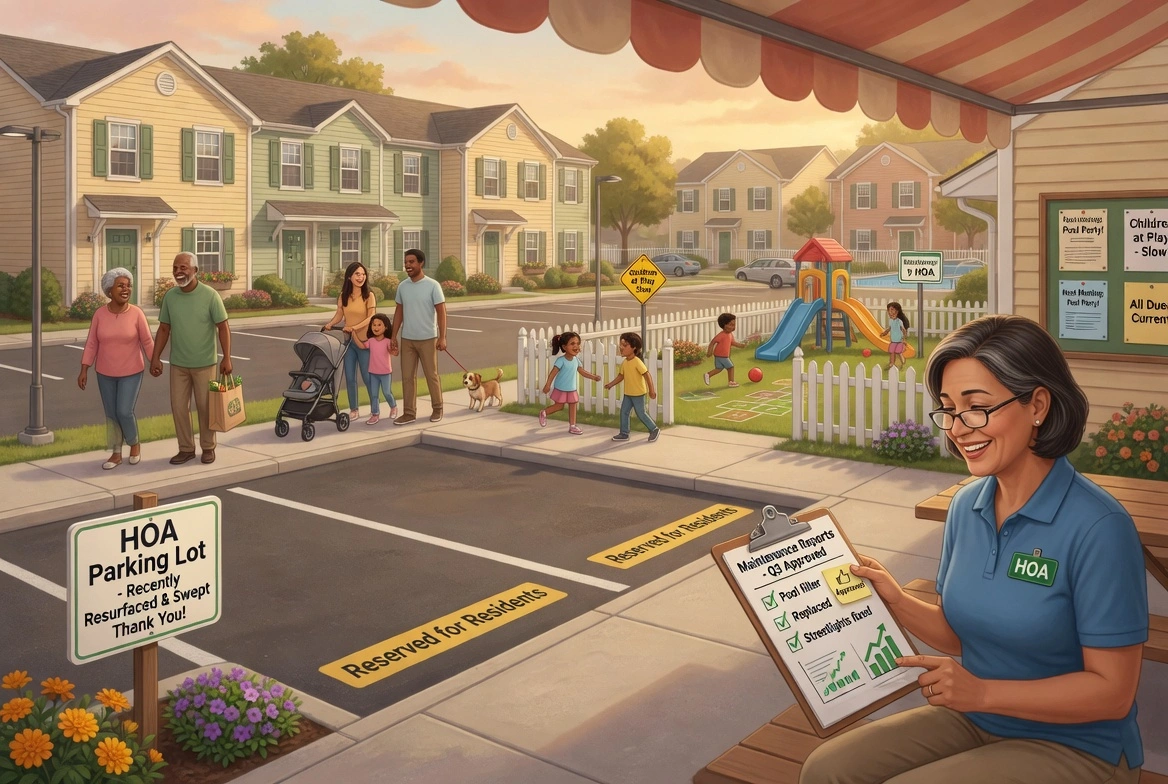
Get annual contracts, not per-visit pricing. Annual contracts with fixed monthly payments give you budget predictability and typically cost 15–25% less than on-call service. They also guarantee scheduling priority during peak seasons when vendors are busiest.
Bundle services for savings. HOA communities that combine sweeping with pressure washing, landscaping, and seasonal cleanup through a single vendor save up to 30% compared to separate contracts. Carolina Sweepers offers bundled packages designed specifically for HOA communities.
Build seasonal surges into the base budget. Don’t budget only for weekly sweeping and then scramble for funds when pollen or leaf season requires twice-weekly service. Bake the seasonal increase into the annual contract from day one.
Reserve 10–15% contingency for storm cleanup. Southeast communities face 2–4 significant storms per year that require immediate post-storm sweeping. A built-in contingency prevents emergency budget requests to the board.
Track cost-per-unit for board reporting. Translate the total sweeping budget into a per-unit monthly cost for board presentations. For a 100-unit community spending $7,200/year on sweeping, that’s $6/unit/month. Easy number for residents to understand and support.
What Should HOAs Look for in a Sweeping Vendor?
Choosing a sweeping vendor for an HOA community isn’t the same as hiring one for a shopping center. Community managers should evaluate vendors against criteria specific to residential environments.
Equipment appropriate for residential areas. Sweeper trucks vary a lot in noise level and size. Residential communities need equipment that operates at acceptable noise levels during early morning or evening hours. Ask vendors about decibel ratings and whether they use regenerative air sweepers (quieter) versus mechanical broom units (louder).
Flexible scheduling around community patterns. HOA sweeping should happen when parking lots have the fewest cars, typically mid-morning on weekdays after commuters leave, or early weekend mornings. Vendors who only offer night sweeping (standard for retail) probably won’t fit residential needs.
Insurance and liability coverage. Verify the vendor carries commercial general liability insurance ($1M+ per occurrence), auto liability, and workers’ compensation. Request your HOA be named as an additional insured on their policy. This protects the association if a sweeper truck damages a resident’s vehicle or property.
Documentation and reporting. Community managers need service reports for board meetings. Look for vendors who provide dated service confirmations, photos of completed work, and issue reports identifying potholes, drain problems, or damage found during sweeping. This documentation also supports stormwater compliance.
Multi-service capability. The most efficient HOA vendor handles sweeping plus related services: pressure washing, daily common area cleanup, seasonal leaf removal, and emergency storm response. One vendor relationship means one point of contact for your board.
References from similar communities. Ask for references from HOA communities of similar size and type in your area. A vendor experienced with retail centers may not understand the scheduling, noise, and communication demands that come with residential communities.
Carolina Sweepers serves HOA communities across NC, SC, VA, and GA with parking lot sweeping programs designed for residential environments: quiet equipment, flexible scheduling, detailed reporting, and a dedicated account manager who knows your community.
Frequently Asked Questions
How much does HOA sweeping cost per month?
Monthly sweeping costs for HOA communities range from $200–$1,500 depending on community size, frequency, and total paved area. A typical 100-unit community with weekly sweeping during active months and bi-weekly in winter pays $400–$800 per month on an annual contract. Per-unit costs typically fall between $4–$8 per month.
Can sweeping help our HOA avoid stormwater fines?
Yes. The EPA classifies parking lot sweeping as a Best Management Practice (BMP) for stormwater compliance. HOA communities with documented sweeping schedules demonstrate proactive pollution prevention during inspections. Stormwater violations can cost $2,500–$25,000 per day, far exceeding any annual sweeping budget.
Should our HOA sweep in winter?
Southeast communities should keep bi-weekly sweeping going through winter. Debris loads decrease, but sand, gravel, and residual organic matter still accumulate. Storm drains need to stay clear for winter rains, and freeze-thaw cycles push pavement debris into cracks that worsen over time. Skipping winter entirely leads to a heavy spring catch-up that costs more than just maintaining the schedule.
What time of day is best for HOA sweeping?
Mid-morning on weekdays (9–11 a.m.) works best for most HOA communities, after commuters leave but before midday activity picks up. Parking lots are mostly empty, which allows thorough coverage. Weekend early mornings (7–9 a.m.) are an alternative for communities where weekday scheduling doesn’t work. Avoid late evening or overnight sweeping in residential areas due to noise.
How do we handle sweeping around parked cars?
Professional sweeping crews work around parked vehicles, sweeping accessible areas and returning for blocked sections on the next visit. Communities that want 100% lot coverage can coordinate “sweep days” with advance resident notification, posting signs 48 hours ahead asking residents to move vehicles. Most communities find that regular weekly sweeping around parked cars keeps things clean enough without requiring car-free lots.
Should the HOA or individual owners pay for sweeping?
Sweeping common areas (parking lots, community streets, amenity areas) is typically an HOA responsibility funded through regular assessments. It qualifies as common area maintenance under most HOA governing documents. Some communities include garage or assigned-space sweeping as an optional add-on at individual owner expense. Check your CC&Rs for specific maintenance responsibility language.
What is the difference between sweeping and portering for HOAs?
Sweeping uses truck-mounted equipment to remove debris from paved surfaces on a scheduled basis (weekly or bi-weekly). Portering is daily on-foot maintenance: trash pickup, spot cleaning, light debris removal, and property appearance checks. Large communities benefit from both. Weekly sweeping handles thorough lot cleaning while daily portering maintains appearance between sweeps.
How do we present sweeping costs to the HOA board?
Frame sweeping as asset protection, not just another expense. Present the per-unit monthly cost ($4–$8/unit) alongside what it prevents: pavement repairs ($8,000–$25,000), stormwater fines ($2,500–$25,000/day), and the staff time spent fielding resident complaints. Include before/after photos from the first month of service. Boards respond to documented ROI, not abstract maintenance arguments.
Build a Sweeping Schedule That Keeps Your Community Looking Its Best
A well-planned HOA sweeping schedule is one of the simplest investments a board can approve. It protects pavement, prevents stormwater violations, cuts down on resident complaints, and supports property values, all for $4–$8 per unit per month.
The key is consistency. Weekly sweeping during active seasons, bi-weekly in winter, and seasonal bumps for pollen and leaf drop. That rhythm is something residents notice and appreciate. Pair it with a vendor who gets residential community needs (quiet equipment, flexible scheduling, clear reporting) and exterior maintenance becomes one fewer thing keeping your board up at night.
Carolina Sweepers has served HOA communities across NC, SC, VA, and GA for over 26 years. We know community managers answer to boards, residents, and budgets, and we build our sweeping programs around all three. Our dedicated account managers work with your board to set the right schedule, document every visit, and adjust seasonally without you having to ask.
Ready to build an HOA sweeping schedule for your community? Contact Carolina Sweepers for a free property walk-through and customized sweeping proposal. We’ll map your community, recommend the right frequency, and give you a fixed annual cost you can present at your next board meeting.
No Comments yet!